Dr. Camilo Ortiz:
So this is one of the biggest mistakes I think parents make is that they think the best way to teach behavior is the transfer of information through speaking as opposed to the natural consequences of kids making mistakes.
Elizabeth Koch:
Hi, I'm Elizabeth Koch. What's a perception box? It's this invisible mental box that each one of us lives inside, built from the material of our beliefs, life experiences and the meaning we've made out of those experiences. You could think of it as a reality filter that's constantly shaping how we see ourselves, other people and the world around us. This podcast explores how. Although the walls of this box are always present, they can expand in moments of curiosity, awe and wonder or contract in response to fear, anxiety and anger. In each episode, we invite experts to share how to create lasting shifts in our perception. I'd like to introduce our esteemed host, Heather Berlin, professor of Psychiatry and Neuroscience at the Icahn School of Medicine at Mount Sinai and Christof Koch, chief scientist for the Tiny Blue Dot Foundation and former president of the Allen Institute for Brain Science. Welcome to the Science of Perception Box.
Dr. Heather Berlin:
This week, our guest is Dr. Camilo Ortiz. We tend to think of childhood as a time when we're learning about the world, but it's also when our perception box is forming. Camilo's work shows us that these early beliefs, while they made sense at the time, they can become limiting as we grow older. They can hold us back from believing in ourselves, from connecting with others and from stepping into new possibilities. Through his independence therapy, Camilo is creating a new way forward, both for adolescents and their caregivers.
Dr. Christof Koch:
Heather, you have two children, I believe. How old are they and how do you deal with the question of their independence and their autonomy?
Dr. Heather Berlin:
So yes, I have a 12-year-old daughter and a nine-year-old son and I try to give them enough independence that they can learn from their mistakes and not sort of overcontrolling them, but with the exception that they're still child brains that are not fully developed and they don't have the same kind of decision-making capacity as adults and so there still needs to be some limits, right? So I think it's just sort of independence, but with guardrails. So to help us with this conversation, I'd like to welcome Dr. Ortiz to the show. Thank you for being here.
Dr. Camilo Ortiz:
Thank you.
Dr. Heather Berlin:
So how early in a child's life does their perception box start to form?
Dr. Camilo Ortiz:
Well, in cognitive behavioral therapy, which is the type of therapy that I practice, we think about what's called the cognitive triad. And that's how people think about themselves, think about other people and think about the future. And from a very early age, kids start to make assumptions about those things really soon after they can speak.
Dr. Heather Berlin:
So you think that it's that early. What about influences even before they can speak, safety behaviors of parents, and does that impact how the child sees the world?
Dr. Camilo Ortiz:
Probably a little bit, but the last message I want to give parents is to be overly stressed about every interaction they have with their little kids. But there are plenty of opportunities even with toddlers to help them learn that they are capable. And I sometimes tell the story of being at a party and I saw this little girl trying to take her sweater off and she was stuck in the neck of it. And out of nowhere, this dad comes running across the room to do what no one would think anything of other than a child psychologist and help her take her sweater off. And from my perspective, that's a lost opportunity for a child to learn that they can tolerate struggle a little bit and they can problem solve.
Dr. Heather Berlin:
So do you think that a parent's perception box acts as a blueprint for their child?
Dr. Camilo Ortiz:
It can. And I think there's a couple of ways that that happens. And so one is by what parents model for children, what they permit children to do and how they talk about risk. And so there's lots of opportunities there, even with little kids to start modeling the types of behaviors that might be healthy for them.
Dr. Christof Koch:
Is it likely or is it possible even likely that the perception box of parents has changed over the last 50 years, that they perceive the world to be a much more dangerous place for their children and then they transmit this implicitly to their child, "Oh my God, I constantly have to watch out for danger, for being kidnapped or all the other dangers"?
Dr. Camilo Ortiz:
I think it's more than possible. I think it's likely. And that's interesting, because objectively, we live in the safest time ever. But when you ask parents about risk, they tend to far overestimate the risk. So there was a recent study that came out, a survey of parents and it asked them, if two 10-year-old boys are playing by themselves in the park, what is the likelihood that one of them will get kidnapped? And the majority of parents said that it was likely that one of the two boys would get kidnapped.
Dr. Christof Koch:
It was likely.
Dr. Camilo Ortiz:
It was likely.
Dr. Christof Koch:
I remember when my kids were trick and treating, this was in the mid '90s, there was a rumor that someone in America had laced an apple with cyanide or with razor blades.
Dr. Camilo Ortiz:
Both.
Dr. Christof Koch:
And over the next three years, there was a dramatic change in kids and I don't know whether they even still do this trick or treating unsupervised today. Probably not.
Dr. Camilo Ortiz:
Well, they do-
Dr. Heather Berlin:
They do.
Dr. Camilo Ortiz:
... but there's a growing trend of parents putting their cars in a circle and opening all their trunks and the kids just walk around getting candy from each car. And so for me, that's a tragedy because Halloween is the single best day for independence. There's tons of people out. Everybody's looking for each other and helping each other and we've sort of reduced it to almost a caricature, I think.
Dr. Christof Koch:
Because of this one ... I don't know whether it was ever substantiated. Even if it was substantiated, it's one incident over-
Dr. Heather Berlin:
Well, this is an extreme-
Dr. Christof Koch:
330 million people.
Dr. Heather Berlin:
Having young kids now, I let my kids go out trick or treating. They go out and play and ride their bikes like I did in the '80s. I was a latchkey kid. And I think having independence really important, because when you're overly protective, as you've written a lot about, it causes the children to perceive the world as a dangerous place and then they can get overly anxious. But my question is, where do you draw the line, right? Because yes, leaving them alone to play is one thing and that can be really healthy. But like anything else, when it becomes too much, because they don't have adult brains, they can't make the same kinds of rational decisions as an adult with a fully formed prefrontal cortex can, when is it too dangerous? Where do you put the boundary in?
Dr. Camilo Ortiz:
So when I look at contemporary parenting behavior, we are so far from what we would consider reckless that I'm not so concerned about it, because really we're talking about two risks. There's obviously a risk if you allow much more independence. Kids are more likely to get hurt. There's no question about that. What I talk to parents about when we introduce independence therapy to them is that there's this other side, there's this other risk. And so I pose the question to them, "What if we didn't allow any more independence until they went off to school to college? Might there be a risk of that?"
And so now we're weighing two kinds of risks against each other and I think that's a more reasonable way to approach this conversation. But to be more specific and answer your question, I don't mind kids getting hurt actually and it's in some ways good for them. But what we want to avoid is irreparable harm. And so for example, kids who have ADHD have a well-documented, much higher rate of injury. It's 50% higher than kids who don't have.
Dr. Christof Koch:
You mean physically injury?
Dr. Camilo Ortiz:
Physical injury, right. And so when we design independence activities for kids who have ADHD, we avoid things like riding your bike on an unprotected street, which we might allow a kid without ADHD to do. But if they're not paying attention, there could be a really serious risk of injury or death. And so that's the beauty of independence activities. There are millions of them. And there are so many that don't involve any risk of serious injury.
Dr. Christof Koch:
Can you give us some examples of what you mean?
Dr. Camilo Ortiz:
Chopping vegetables, baking cookies, going to a grocery store with a list of five to 10 things with your parent in the grocery store or right outside.
Dr. Heather Berlin:
So there's that on the one extreme, but then there's this other extreme where it can actually be dangerous. And I think the difficulty for parents right now is finding what is that middle ground where you give them enough-
Dr. Christof Koch:
Is that really true or our parenting in general far too much involved in the ... I think you've written about this, right? That parents, in some sense, are far too involved in the lives of their kids and it may not necessarily be to the benefit of their kids.
Dr. Camilo Ortiz:
That's right. So this is what I said before that. I think, for most families, we're nowhere near being on the point where we're allowing too much independence. When we look at what is actually predictive of positive outcomes in kids, these sorts of specific behaviors have such a small correlation with overall outcomes that what I tell most parents is, "If you're feeding your kids and you're giving them unconditional love, which does not mean being around them all the time and you are clothing them, you're 90% of the way there. And the last 10%, if you're lucky, that will be awash, and for some kids, we're seeing that that extra effort is actually hurting them.
Dr. Christof Koch:
Do you mean all my time spent driving my kids to piano and ballet and baseball and all of that wasn't really-
Dr. Camilo Ortiz:
Probably didn't do that much. I'm sorry to say.
Dr. Heather Berlin:
But you also want to nurture their interests, the amount of afterschool activities that parents have their kids in right now. I often also tell parents of kids like, "They're overscheduled." But at the same time, again, with the balance, my daughter loves gymnastics now and she never would've gotten that love if I didn't have her try everything and then she found something she really is passionate about and now I help her nurture it and I have to drive her back and ... I'm not doing this because I want to be with her all the time. I have to drive her to these practices.
There are studies that show the time that parents spend with kids since the 1960s has doubled the amount of time we actually spend with our kids. So I think this prescription-
Dr. Christof Koch:
And parents feel less adequate than ever, right?
Dr. Camilo Ortiz:
Right.
Dr. Heather Berlin:
It's never enough.
Dr. Camilo Ortiz:
That's the tragedy of it. Parents feel worse than ever, but objectively, they are putting forth more effort than they ever have and money as well.
Dr. Christof Koch:
In fact, isn't the statistics that working mothers today spend more time with their children than stay-at-home moms 40 years ago, yet feel far worse about spending enough quality time with their children? That's highly paradoxic.
Dr. Camilo Ortiz:
That's right.
Dr. Heather Berlin:
You know what makes me feel better as a working mom? This study that came out and I don't remember who did it, but it was that daughters of working mothers actually tend to have better outcomes for a bunch of variables later in life than not. So that made me feel really good. That's a valid study, correct?
Dr. Camilo Ortiz:
And they're a good-
Dr. Christof Koch:
Certainly.
Dr. Heather Berlin:
It is. It is. It is.
Dr. Christof Koch:
Yes, it is. It is, definitely.
Dr. Camilo Ortiz:
I'll just say with your example of driving your daughter to gymnastics. I certainly did that. My daughter was a gymnast. A nice middle ground is you don't have to stay for two hours each time.
Dr. Heather Berlin:
Oh, I don't. Wait, can I give you an anecdote because this happened this weekend? So my daughter had a gymnastics meet this weekend. It was five hours. I did stay for that. But she said to me, "Mom, all the other moms on the team, they're gymnastics moms and you're not." And I said, "What does that mean to be a gymnastics mom?" She said, "The come and they stay for the practices, which are two hours, three days a week, okay? And they stay for the practices." And she goes, "But don't worry, mom, they've taken me in. And so now, they'll do my hair for me and whatever." And I was like, "You know what? That's great. I'm never going to be a gymnastics mom. I'm here for your meet. I take your practices and that's enough."
And I don't feel guilty because there's other things that I'm showing her by doing and being whatever, career woman.
Dr. Camilo Ortiz:
It's a great example. I would argue she's better off and you now have more time.
Dr. Heather Berlin:
There we go. See, I think-
Dr. Christof Koch:
I think one-
Dr. Heather Berlin:
... we can end it here.
Dr. Christof Koch:
So it's a win-win. Well, it's what you articulated-
Dr. Camilo Ortiz:
Absolutely.
Dr. Christof Koch:
... in The New York Times article, right? So tell us more. It's a win-win for both sides, right?
Dr. Camilo Ortiz:
This is not helping parents and it certainly is not helping kids and this is, again, the tragedy of it. If parents can in smart ways do less, everybody benefits. It's one of the rare Goldilocks scenarios in psychology where actually doing less gets you better outcomes. I think that's very clear.
Dr. Heather Berlin:
So I think we're talking a lot about a certain segment of society that is, again, overdoing it, but I still want to bring it back to this idea of where is the line between freedom and letting kids be kids and safety and also neglect? There are some people that are on the other side of the spectrum where it can border on being neglectful. What age is it okay to leave a kid alone? At what point should you intervene when they're actually doing something that's unsafe?
Dr. Camilo Ortiz:
When we do independence therapy, parents always have veto power on every idea that kids come up with. And we've had kids come up with some pretty interesting ones. So we had a boy who was doing really well with his independence activities and wanted to up the ante a little bit. And so he wanted to take an Amtrak by himself and he started-
Dr. Christof Koch:
How old?
Dr. Camilo Ortiz:
He was 12 and he started investigating state laws to see how many states away from New York he could get by himself. And his mom said, "There's no way you're doing that," and so of course, we supported her, but I loved the initiative. So as a society, we really have taken away risky play from kids and it is probably the most powerful anti-phobic activity that exists. And so it's not a surprise that kids are more anxious because the number one thing that they're shaped by natural selection to do, which is to practice risk, we don't allow them to do that anymore.
Dr. Heather Berlin:
Again, what about the other ends of the spectrum? You're allowing too much. Let's say you have a kid with ADHD and you're letting him play with matches or whatever.
Dr. Camilo Ortiz:
So this is the principle of irreparable harm. So we don't want to allow things, where if a mistake is made, can lead to irreparable harm. As I mentioned before, I think we have a list of 200 independence activities. 190 of them, if you do them the worst you possibly can, don't lead to any irreparable harm.
Dr. Christof Koch:
Having my 10-year-old kid take the subway in New York City to cite a famous example. What do you think about that today if that would happen?
Dr. Camilo Ortiz:
So Lenore Skenazy, who's the president of Let Grow, she allowed her son Izzy to take the subway by himself and a bus actually when he-
Dr. Christof Koch:
This was roughly 20 years ago, right?
Dr. Camilo Ortiz:
About 15. So he was nine years old and that started this movement in some ways. So I'm a big fan of kids taking the subway. It hits on all of the anti-phobic properties. So there's uncertainty. You don't know exactly where to go. If you haven't been there, you don't know when the train is coming. There's discomfort. And so those two things, intolerance of uncertainty and intolerance of discomfort are two of the most persistently shown vehicles for child anxiety. Kids don't have practice with these two things. There is a little bit of risk, although if you look at the data, the chance of something going wrong in the subway is unbelievably low.
So again, these things will involve some risk, but again, it is this equation of we increase risk a little bit in the short term. Does that actually decrease risk in the long term? And I would argue that it does.
Dr. Heather Berlin:
And how many safety measures would you put in? Let's just say, okay, you have a nine-year-old kid, you're letting them out in New York City on their own on a subway. What if they get lost? Things like an Apple Watch or a tracker. How do they find their way back if there is a mishap?
Dr. Camilo Ortiz:
Yeah.
Dr. Christof Koch:
They could ask an adult.
Dr. Camilo Ortiz:
Well, that's literally what happened in Lenore's case is Izzy didn't know where to go and he asked an adult and the adult pointed him the way to go. So this might be a interesting answer, but I love it when kids get lost because that is when you get the biggest change in their perception box. So for example, they might learn that most people are fine to approach and ask for help. They might learn that they don't need to immediately call their parents and they can figure it out. And those are two very powerful messages for kids to learn. And the other thing is we're finding that, when that happens, we sometimes see beneficial effects on unrelated fears.
So we had a little girl who took the bus to school and missed her stop and she had never slept in her own bed by herself. She was nine years old and she, despite that, wanted to take the bus in Brooklyn to school by herself. So she missed her stop and figured out how to get to school. It was three more blocks that she had to walk. And that night, without telling anybody, she slept in her own bed. And when I asked her during our next session, "Why did you sleep in your own bed? I thought you were scared." She said, "I just took a bus to school by myself. I don't think I need to sleep with my parents."
Dr. Christof Koch:
So it's a mechanism that they develop an inner locus of control. They have the feeling that, "I can be the agent of my own life."
Dr. Camilo Ortiz:
We don't know exactly, but that is one of the theories, that they learn very important things about themselves, about other people and about the world, which then translates into anxieties that they have, even without directly confronting those anxieties.
Dr. Christof Koch:
You talk about the four Ds in this context. What are those?
Dr. Camilo Ortiz:
So discomfort, distress, disappointment and danger. One way to think about what is development is mastering how to handle those four things.
Dr. Christof Koch:
Distress, danger, discomfort-
Dr. Camilo Ortiz:
Discomfort and disappointment. And modern parenting, for some reason, and I really can't figure out why, there's probably lots of reasons, has become equated with protecting your kids from the four Ds. And again, this is a ton of work for parents and it ends up I think making kids weaker. So this is another example where doing less, you would get better outcomes, I think.
Dr. Heather Berlin:
What about things like getting them to do the things they're supposed to do, like, "Do your homework"? Because again, you're giving a kid without a fully formed prefrontal cortex freedom and independence. That's great, but they might not make the kinds of decisions that are going to be the best for them. And where does parent's advising parental structure come in?
Dr. Camilo Ortiz:
So when I talk to parents who I'm working with, I always have them do a thought experiment. And it doesn't mean that this is what I'm suggesting, but I always say, "What do you think would happen if you did nothing about X?" And often that is quite instructive because either they'll say, "The teacher will correct it and give them a little mark," and then I'll say, "Does your kid even care about that?" and some parents will say yes and so that becomes self-corrective. But there's fascinating tool that we use called the When/Then Command, which I think-
Dr. Christof Koch:
The what command?
Dr. Camilo Ortiz:
The When/Then Command. And it's my favorite parenting technique and it gets us out of saying things to kids 20 times. This is probably the biggest complaint parents have of their kids, is, "I have to tell him 20 times to brush his teeth," and we have this power that we're not using. So kids need us more than ever actually. This one of the side effects of having less independence. So parents in a way have more power. And so when we need kids to do something, we just link it with something they want. So for example, "Dad, can you drive me to the mall?" This is the best situation where a child asks you for something.
Now you have all the leverage, "Sure. When I can see the floor of your bedroom, then I will drive you to the mall." Now, only three things can happen if you make a When/Then Command. The kid goes, "Fine," because they really want to go to the mall. They clean up their room. You don't have to repeat yourself another time or they say, "You know what? I don't feel like going to the mall." That's okay. Now you have time. You are going to drive them. You can go do something on your own. Number three, they escalate. They get very upset. As long as you don't give in, that escalation will tend to be temporary. We call it an extinction burst.
Dr. Christof Koch:
Why does everyone engage in this behavior? I remember this from my kids and I see it in my grandchild.
Dr. Heather Berlin:
Well, so as a psychologist-
Dr. Christof Koch:
You don't do this?
Dr. Heather Berlin:
Well, no. As a psychologist, I do try to ... It's all about rewards and incentives, right? So I'll give you an example. My son who has ADHD and is defiant, so he's actually particularly difficult. And so although I love him very much, he's wonderful, but he won't get dressed in the morning. And I'm just, "We're late. We got to go to school," and I could tell him five, 10 times to get dressed, it's not going to work. He just won't follow that instruction. But then I have to link it to something. "Well, if you want to have iPad time later, the only way you're going to get it is if you're dressed. It's up to you."
Dr. Camilo Ortiz:
So the only caveat to that is sometimes parents will introduce a reward once a child has escalated their behavior. And if you do that, you are training them to escalate. So as long as you are doing that beforehand, it is a standard thing, iPad is, "If you're ready at 8:00-"
Dr. Heather Berlin:
Well, actually, what it is is, "If you're late to school, you don't get your iPad later." So he knows that-
Dr. Camilo Ortiz:
It's a standing rule.
Dr. Heather Berlin:
... it's a standing rule.
Dr. Christof Koch:
Okay. So you pointed it's maladaptive. If I don't link the reward to what I want them to do, then they start screaming and then you say, "Oh, okay. I'll reward you with something."
Dr. Camilo Ortiz:
Yes. You just exquisitely train them to scream even more next time.
Dr. Christof Koch:
Yes-
Dr. Heather Berlin:
Right.
Dr. Christof Koch:
... because they have learned that, "If I scream, I get what I want."
Dr. Camilo Ortiz:
That's right. That's right. So you asked why do parents fall into these traps and there are lots of reasons, but the first one is, just in the moment, if you have a screaming child, you have this beautiful way to get out of this bind, which is to say, "All right, I'll give you a cookie if you stop."
Dr. Christof Koch:
In the short term.
Dr. Camilo Ortiz:
In the short term. It works amazing, but in the long run, you are really getting yourself into trouble. And the human brain is often driven by getting out of discomfort. We've talked about that. And a screaming child has also been shaped by evolution to be as uncomfortable as possible to a parent. And unfortunately, we have these easy ways of getting rid of that behavior. It just causes problems.
Dr. Heather Berlin:
That's the thing is, once they escalate, you talk about this extinction burst, but they escalate. And if you give into that, then you're rewarding the escalation.
Dr. Camilo Ortiz:
That's right.
Dr. Heather Berlin:
It's just like with sleep training. I remember once they start crying and then they cry more and more and more and then you eventually go in after half hour, they've learned, "Oh, I just have to keep crying," and you've just reinforced the crying. So you really have to stay strong as a parent, which again, brings it back to parents.
Dr. Camilo Ortiz:
We are really in a bind here because when we talk to parents about independence activities, they will often say, "Sure, I can send my kid to the park, but he's going to be the only one there," or, "Sure, I can let him run around in the playground and maybe bump his head, but the other parents are going to look at me like I'm doing something wrong." So from my perspective, this is the single biggest thing that we have to figure out a solution to, is this collective action problem. We somehow have to make independence cool. And it's possible that, if we frame it as actually making your kids stronger and more anti-fragile, that that may be meaningful to some parents because they are stuck in the short-term benefit of overparenting and that's very hard to break out of.
Dr. Christof Koch:
What are the large-scale social forces that have caused us to reassess the risk of childhood, to try to minimize them to an absolute lowest level than ever before that may cause these rise in anxiety?
Dr. Camilo Ortiz:
Well, I think the main one is we have fewer children. And so from a demographic perspective, we want to really make sure every one of them survives. And so that means in the moment, making sure they never get hurt. And I think we can't ignore the role of the media here and the way that our brains work is to remember the most extreme cases. There's no newspaper stories about planes landing safely. And so I feel for parents, they're dealing with very powerful forces that are pushing them to over-parent. And again, as we talked about even in the short run, when they overparent, that is often reinforcing to them and it is hard to let go.
The good news is that we have found that when kids do independence activities, the first two or three are really difficult for parents. And they do all kinds of stuff including tracking them and we can talk more about whether that's a good idea. But once they see about two or three successes, they very quickly let go. And we see this virtuous cycle where they trust their kids more and their kids become more capable. And then we talk to-
Dr. Christof Koch:
And the kids learn to trust themselves.
Dr. Camilo Ortiz:
Yes, they trust themselves. And then we say that independence therapy is loudly a treatment for child anxiety and softly a treatment for parent anxiety.
Dr. Heather Berlin:
But there is a mismatch between ... I felt it again as a mom where ... So my daughter who's very independent, but also I think there are different kinds of kids. Some kids can really thrive in independence and others not so much, but she created a little kind of like a lemonade stand, but you know those cigarette girls that used to carry the things in the whatever. So she wanted to go door to door and sell her lemonade and snacks and stuff. So she had a friend over, I think they were like maybe 10. And I let her go door to door in my neighborhood to do this with her friend. And the mom afterward found out.
Dr. Camilo Ortiz:
She said, "Are you crazy?"
Dr. Heather Berlin:
Yes. She never let the kid play with her again.
Dr. Christof Koch:
Because she felt this was a dangerous thing.
Dr. Heather Berlin:
It was dangerous. Yeah, it was dangerous because there was a short period of time when they were around the block where I didn't know exactly where they were because they were going in the neighborhood.
Dr. Christof Koch:
So it's a societal problem.
Dr. Heather Berlin:
And it was the pressure on me. And so this girl never got to play with that friend again. But I want to ask you also the difference between emotional safety and physical safety. How much should we allow for emotional damage, let's say, versus physical harm?
Dr. Camilo Ortiz:
So I just want to say one thing about your example, which is there is again this beautiful middle ground, which is, when kids do independence activities together, especially if they are of mixed age, we see unique benefits for the older kids in terms of caring about someone else who's younger and they have to look out for that other person and then for the younger child of seeing a model of how to act. And so the chance of kidnapping, for example, when there are multiple children together is basically zero. We see that those kids tend to do quite well because they are in charge of babysitting, even babies when they're eight or nine years old. And they get a ton of experience with looking out for the safety of another human being, which gets you out of that egocentric eight to 12-year-old range, particularly among boys where they don't seem to care about anybody else but themselves.
Dr. Christof Koch:
But no one has done a formal study linking anxiety to a number of siblings.
Dr. Camilo Ortiz:
I would guess that they have. I haven't seen that, but you got me thinking. That's the first thing we're going to do after our talk.
Dr. Heather Berlin:
But I think it's what the point that you made before is discomfort is really important and it's okay. Especially like you said, once you get to college and to be able to-
Dr. Christof Koch:
[inaudible 00:27:50].
Dr. Heather Berlin:
... hear other people's perspectives and not be sheltered and have trigger warnings and safe spaces and all of that, right? We need to be able to have a dialogue and that requires some level of discomfort and distress tolerance, right?
Dr. Camilo Ortiz:
Yes.
Dr. Heather Berlin:
But again, what about this idea of some children really want boundaries, they really want structure, they want some of that attention from their parents? And so can you describe independence therapy and also when is it also healthy to spend time with your kids and give them some attention and set some boundaries which they often want and need and thrive on?
Dr. Camilo Ortiz:
Yes. All right. So independence therapy is a six-session treatment. It's purposely made to be simple and easy for practically any clinician to use. Our manual is free on Let Grow's website. In the first session, it's only parents and we just talk to them about all the things we're talking about now. What are the risks of allowing independence? What gets in the way in terms of laws and other parents?
Dr. Heather Berlin:
But it seems that this therapy is meant for a specific kind of subpopulation which is-
Dr. Christof Koch:
Anxious.
Dr. Heather Berlin:
... the anxious kids and the overprotective parents. Can you apply this therapy to things like ADHD or an oppositional defiant kid, which is a different kind of treatment? Would it be the same treatment? Do you modify the treatment in any way?
Dr. Camilo Ortiz:
So at this point, I would say the answer is no. We cannot transfer it to those, but we don't have enough data to know. There are theories to suggest that allowing independence could be helpful to kids who are depressed, for example, or have poor social skills. We just don't know the answer. Right now, we're focused on anxious kids that see-
Dr. Christof Koch:
And how old are they?
Dr. Camilo Ortiz:
So eight to 13 is where we have tested this so far. Although it seems like we had enough information of people trying it with younger kids and older kids that it probably is going to be helpful for those ages as well.
Dr. Christof Koch:
And so in each lesson, so you said in the second lesson you ask the kids what they want to do and then what?
Dr. Camilo Ortiz:
So we pull out a calendar and then we bring the parent back in and we brainstorm a whole bunch of independence activities.
Dr. Christof Koch:
Very specific activities.
Dr. Camilo Ortiz:
Yes. And we literally write them in to each day. They need to do one a day. So this is a pretty big dose of independence for most kids. So then they come back for the third session-
Dr. Christof Koch:
Like cooking, going to the supermarket.
Dr. Camilo Ortiz:
Anything at all that a kid ... It has to be fun. And interestingly, for many kids, doing chores is fun. This is another Goldilocks scenario of kids doing chores and them loving it and parents having less work to do. But it's really like imagine, think about your own childhood and how you would spend the day, it's all that stuff.
Dr. Heather Berlin:
How does this therapy expand the child's perception box?
Dr. Camilo Ortiz:
Well, I think in a lot of ways. So it gives them direct experience with things that are challenging. And so that teaches them about their own capabilities. It teaches them about how to tolerate risk, how to tolerate uncertainty. It teaches them about other people, "Generally, people are quite helpful, and if you get lost, most people are very happy to help you." And so it teaches them that the world is generally a safer place than they might have thought.
Dr. Heather Berlin:
So you have these kids on one end who are very anxious and need to be encouraged to go out and do independent things, but what about the kids on the other end of the spectrum who are overly independent and need to be reined in a little bit? How would you advise parents?
Dr. Camilo Ortiz:
I guess I would want to dig into the term overly independent more because I can see, given today's parenting culture, that many normative healthy activities might be viewed as overly independent. But to speak to what you were saying, there are certainly kids where allowing more independence is not a good idea. And as we mentioned, these are kids who are accident-prone, who do need independence, but again, not in a way where a bad decision is really irreparable.
Dr. Heather Berlin:
Like say an ADHD kid who's not on their medication, right? You wouldn't want to give them more and more freedom, which they can actually get hurt potentially.
Dr. Camilo Ortiz:
Well, I would want to give them some kinds of more freedom. So I would have them whittle with a knife, for example. They might cut themselves. They're probably not going to cut a finger off. But I again wouldn't have them ride a bike in an unprotected street to a park, where if they're not looking and they veer into the lane, they can get hit by a car.
Dr. Heather Berlin:
Right.
Dr. Camilo Ortiz:
And I think for kids who have ADHD, it might even be more important for them to be out in the world because kids with ADHD tend to have poor social skills and they tend to be intrusive sometimes in how they speak to other people. And the best way to change that is immediate feedback from the environment. So they go to the store, they order some salami, they cut someone in line and they don't realize it and then the person says, "No, actually I was first." That's really good for kids to have that immediate experience.
Dr. Christof Koch:
That's how they learn.
Dr. Camilo Ortiz:
You can't teach a child with words all of the social rules that exist. They have to make mistakes. So I would argue that we just need to change the kinds of independence activities, not that we wouldn't do them for most kids.
Dr. Heather Berlin:
Right. Yeah, I think a lot of the work has to do in changing the parent's perception box as well and that actually allowing your child to have some level of maybe emotional discomfort or whatnot is going to help them grow and be more resilient. But as a kid, again of the '80s, I came home, nobody was home, eight years old, latchkey, make your own food, go out and play.
Dr. Christof Koch:
And here you are, very successful.
Dr. Heather Berlin:
But I'll tell you this though, I will tell you this, I wish that my parents were around a little bit more. I wish I had a parent who was there like, "Hey, do you want to do this thing together?" or whatever. So like-
Dr. Christof Koch:
Yeah, but that's different from a helicopter parent who's there all the time.
Dr. Heather Berlin:
Yeah, I keep saying that there's two sides of the coin though. And I think that there is a level of, I don't want to say neglect, but kids also want some intervention from their parents. They want to know their parents' care. I wish there was more rules and structure and they were around a little bit more. So I know that we're trying to overcorrect for these parents who've become overly helicopter-ish, but there's still that other side of it where you want some intervention from your parents.
Dr. Camilo Ortiz:
Sure.
Dr. Heather Berlin:
Right?
Dr. Camilo Ortiz:
Yeah.
Dr. Heather Berlin:
You want them to just not be like, "Oh, go do whatever you want and I'm-"
Dr. Christof Koch:
All right. But there are two against that. I hear you against it. I said two statistics. One is the ever-increasing rate of anxiety in ... It's been very well-tacked-
Dr. Heather Berlin:
In a subsection of society. It's not everyone.
Dr. Christof Koch:
Yeah. If you look at ... No, not everyone, but if you look at, let's say, freshmen and sophomore college students where it's been well documented each year over the last 30 years, the fraction of kids that declare themselves to be anxious and concerned is now 40% or something. And b, objectively, we are safer and safer. Longevity has just hit another peak in this country, right? So objectively, people are safer than ever and so there's some disconnect there.
Dr. Heather Berlin:
I think we need to ... The pendulum has swung too far in this direction. I agree. I did a study once with freshmens in college and did a survey of all the mental health issues. In the Ivy League schools, it was something like 50% of them came in already on medication for anxiety or depression.
Dr. Christof Koch:
50?
Dr. Heather Berlin:
Five-zero. This was an Ivy school.
Dr. Christof Koch:
That's the problem.
Dr. Heather Berlin:
But this is we're talking upper-middleclass, a certain subsection of society that is overprotective and contributing to this overanxiety problem. I just think that we want to push it back a little bit in the other direction, but not too far where you get the other extreme. And I think that's just an important thing that it should be a balance and it's not just, "Do whatever you want," and everything is fine, that there has to be a little bit of constraint, but we've gone too far. I agree.
Dr. Camilo Ortiz:
I'm just not too worried that we're anywhere near going too far in the other direction.
Dr. Christof Koch:
50% of kids come in with-
Dr. Heather Berlin:
I did this survey. This was back in, oh God, probably like 2006 or '07. It was early. Yes, and suicide rates and things. It's not a good situation and I do think there is a societal problem, but it's also you have to take each case as an individual case.
Dr. Camilo Ortiz:
Sure.
Dr. Heather Berlin:
I think there's no blanket statement that we can make.
Dr. Camilo Ortiz:
Agree.
Dr. Heather Berlin:
And parents shouldn't feel guilty. Parents are made to feel guilty all the time, "You're doing too much. You're not doing enough. You're working too much. You're not with the kids. You're never feeling ..." So I think we need to give parents a break and say ... I think one of the most interesting kind of statistics or research was Steven Pinker's book where it's like they did genetic studies and they found that the biggest influence on the kid ... What you do as a parent doesn't make that much of a difference, unless it's extreme neglect or abuse, right? But outside of that, the main thing is genetics and their friends and their peers, right? So I would often say, "As a parent, the best thing you can do is make sure your kids are in good company."
Dr. Camilo Ortiz:
Well, we now have, I believe the latest number is 12 states that have so-called Reasonable Child Independence laws and Connecticut was the most recent one where we are decriminalizing well-meaning reasonable parent decisions. So there's 38 more states to go on that.
Dr. Heather Berlin:
So if your kid is, say, nine years old, you can let them be alone and play outside or go run an errand while they're playing and that's not against the law.
Dr. Camilo Ortiz:
Not against the law. That's not going to stop someone, a well-meaning stranger from calling the police. And so it doesn't stop these awful situations, but at least, we know that we have the law on our side in 12 different states. And by the way, just as a side note, in all the time we've ever done independence activities, the only adults that have ever caused problems, there has not been a single nefarious adult, they have always been well-meaning adults who say to the kids, "Where are your parents?" And so we equip children with these little passes that they can flash to any adult and it says, "I am allowed to be here. Here's my parents' name and phone number. It's people like you that are keeping people like me safe. I'm allowed to talk to strangers. I'm talking to you." It literally says that right on the card. And our kids are almost wanting an adult to step in, so they can flash their official-looking badge at them.
Dr. Heather Berlin:
Oh, I love that.
Dr. Christof Koch:
That's sweet.
Dr. Heather Berlin:
So at the end of every episode, we ask one question to open our own perception box. And I think Christof chose this week's question. I don't know what it is. He's going to ask us both. So what's the question you have?
Dr. Christof Koch:
Is there ever something that you have not forgiven yourself for? And if so, why not? What are you afraid of? It's a challenging one.
Dr. Heather Berlin:
Yeah, not forgiven yourself for?
Dr. Camilo Ortiz:
So in cognitive behavioral therapy, we think of types of distorted thinking and one of the most common types is to sum up a person as either their very best moment or their very worst moment. And that is just not accurate. People are way too complex. And so maybe this is a cop out, but I have really taken that to heart. And when I screw up, I know it doesn't sum me up as it doesn't my very best moment. So I tend to not think of myself as the summary of one particular behavior.
Dr. Christof Koch:
Okay. That's a perfectly valid answer.
Dr. Camilo Ortiz:
Okay.
Dr. Heather Berlin:
Damn, you got out of that real good. I had an instance very long ago and I was very young and not fully formed yet where I cheated on a partner. That was very bad and I really had a hard time forgiving myself for that. But he forgave me years later and that was very cathartic, and then in him forgiving me, I was able to forgive myself. I feel like I was almost like a different person at that time because I think you grow and evolve and change. That took me a very long time to forgive myself for that.
Dr. Camilo Ortiz:
By the way, this is not uncommon for people to not be able to forgive themselves despite the world forgiving them. We are the harshest critics of ourselves.
Dr. Heather Berlin:
Agreed, agreed, yes.
Dr. Christof Koch:
And particularly if you grew up in certain types of setting. I grew up Catholic where guilt is a big thing.
Dr. Heather Berlin:
I agree [inaudible 00:40:28].
Dr. Christof Koch:
Well, yeah, it's not even if even intellectually, "Yeah, I," after in my case 12 years or 15 years, "should forgive myself." It's not as easy as just making this intellectual commitment because it's so deeply part of your psyche that I still feel shitty about it. And with time, it goes and then it comes in waves and with time sort of a detriment, but I cannot take my perception box and flip it where I say, "Okay, I forgive myself."
Dr. Camilo Ortiz:
Can I just add that I don't think it would be good if you felt no guilt because it's a signal of how to-
Dr. Christof Koch:
Totally.
Dr. Camilo Ortiz:
... act going forward, right?
Dr. Christof Koch:
Totally. But the function of guilt loses its power if it's still there many years afterwards because you've learned your lesson, but then you can't just turn it off like that or reassess your life and say, "Yeah, that was just what I did at the time. That's fine."
Dr. Heather Berlin:
Yeah. It's a very good social emotion to have at some level, but then I think we overdo it with sometimes it's religious belief or our own internal, whatever you want to call super ego that's telling you, "You're wrong, you did a bad thing and you can't let-"
Dr. Christof Koch:
It's a prefrontal cortex that I believe.
Dr. Heather Berlin:
Yes, it is. It is indeed.
Dr. Camilo Ortiz:
As Albert Ellis, a famous psychologist used to say, "Just because you act like a shit doesn't mean you're a shit."
Dr. Heather Berlin:
Oh, that's very profound. It's like a cigar just isn't always ... Sometimes cigar isn't-
Dr. Christof Koch:
I think Jud Brewer's beautiful saying, "So guilt is," what is it, "your inability to give up the hope for a better past, 'I cannot give up the hope that I wish I would've been a better person at that time.'"
Dr. Heather Berlin:
Yeah, but you probably would've done something else wrong anyway, so can't really get out of it. But now we have time for a little game. So I'm going to share little real-life parenting scenarios with you and I want you to tell us if it's independence or interference.
Dr. Camilo Ortiz:
Okay. Love it.
Dr. Heather Berlin:
Okay?
Dr. Camilo Ortiz:
Great.
Dr. Heather Berlin:
Or maybe it's a little of both. I don't know. So the first one is letting your eight-year-old walk to school every morning.
Dr. Camilo Ortiz:
Independence. Love it.
Dr. Heather Berlin:
Okay. What if it's subzero, it's freezing outside?
Dr. Camilo Ortiz:
Are they wearing a coat?
Dr. Heather Berlin:
They are not wearing a coat.
Dr. Camilo Ortiz:
Would they reasonably get frostbite on the way to school?
Dr. Heather Berlin:
Yes, they would.
Dr. Camilo Ortiz:
Then they must wear a coat. I think they'll be fine. Yes.
Dr. Heather Berlin:
Texting your teenager to remind them to eat lunch.
Dr. Camilo Ortiz:
No way.
Dr. Heather Berlin:
No way?
Dr. Christof Koch:
People do this?
Dr. Heather Berlin:
I don't know, not me.
Dr. Camilo Ortiz:
That is the lowest-hanging fruit of parental intervention.
Dr. Heather Berlin:
That's an easy one. Even I could say, "No, don't. Just let them starve."
Dr. Camilo Ortiz:
They'll be hungry.
Dr. Heather Berlin:
"Let them starve." I'm with you on that one. Letting your 12-year-old girl go to the mall by herself.
Dr. Camilo Ortiz:
Like you're dropping her off and then she-
Dr. Heather Berlin:
Yeah, she's in the mall.
Dr. Camilo Ortiz:
Amazing. Great.
Dr. Heather Berlin:
Awesome. She loves it.
Dr. Camilo Ortiz:
Yeah.
Dr. Heather Berlin:
Okay. Stepping in when your child argues with a friend or maybe I'm going to go even further to say that there's some mean girls or mean boys that are either bullying or being mean, what do you do?
Dr. Camilo Ortiz:
So I would not step in the moment, but afterward, I would have a conversation with them about what they're thinking, what their approach is. We might even role play a few different things. So this is a good example of later on where you're not interfering with the discomfort. It's great for parents to talk to their kids about difficulties they're having.
Dr. Heather Berlin:
What about siblings fighting, physically fighting, getting into it? Do you intervene?
Dr. Camilo Ortiz:
This is something I work with quite a bit and it also draws on evolution and our understanding of mammals. Kids need to fight with each other. Siblings need to. They learn it's a baked-in, right-in-your-home practice every day at, "What's too far? What can I get away with?" If we look at every mammal, siblings fight all the time. And this is so hard for parents because that scream that they hear from another room is so hard to ignore. And so generally, the rule is, if one child is victimizing the other child because they are different in size or in age, then we do suggest stepping in. But for the typical back and forth, "He said I'm stupid," that kind of stuff, no, no intervention.
Dr. Heather Berlin:
So unless there's going to be some real physical serious harm or something like-
Dr. Camilo Ortiz:
But some physical physicality is fine, but if there's really a distinct difference in their physical power, then you do want to step in.
Dr. Heather Berlin:
Okay. Sitting next to your child while they do their homework.
Dr. Camilo Ortiz:
I hate it.
Dr. Heather Berlin:
I'm all about that too. Yeah.
Dr. Camilo Ortiz:
Really just as a pretty general rule, I say to parents, "This is why you pay property taxes, is so teachers can correct homework. It is not for you to do it."
Dr. Christof Koch:
I like that.
Dr. Camilo Ortiz:
And it always leads to fighting. It's a reliably terrible idea.
Dr. Heather Berlin:
Yeah. I say it to my kid, "If you're going to not do your homework and fail, that's up to you." They learn pretty quick.
Dr. Camilo Ortiz:
I'll give you one caveat. I sometimes say to some parents whose kids actually have trouble or have ADHD, "For every problem, you answer on your own, even if it's wrong, I will help you with one." And then over time, we increase that ratio so that you are less and less helping them. Because what tends to happen is this feigned incompetence, "Oh, I don't know. You do it." And so many parents tell me that they end up then doing almost all of the homework.
Dr. Heather Berlin:
Or that kids with AHD get distracted and you sometimes just need to keep them on track, not to help them solve it, but like-
Dr. Camilo Ortiz:
Well, the When/Then Command is great for that one because then they can't do the things they want to do until they're done. It really helps to focus them.
Dr. Heather Berlin:
Okay. What about tracking your kid's location just in case?
Dr. Camilo Ortiz:
So it depends. If kids have the ability to contact you, then I don't like that because what ends up happening is that, the first sign of discomfort, they will call you, "So what should I do?" So there's no practice with the problem solving. With independence activities, because parents are anxious, we often say, "It's fine," at first, but then as they get into more challenging independence activities, we at least suggest the possibility that they not track their child.
Dr. Christof Koch:
It's also better for the parent, right? So they can also learn that, "My child can actually do things independently without me constantly tracking them."
Dr. Camilo Ortiz:
That's right.
Dr. Heather Berlin:
What about when a child is on say a device, like an iPad or something? Because I think if you give them total independence with that, they would just be on that for 12 hours a day.
Dr. Camilo Ortiz:
Agree, agree.
Dr. Heather Berlin:
So where do you give independence and where do you intervene?
Dr. Camilo Ortiz:
So I think Jonathan Haidt has really nailed this in as simple a way as possible, is kids have too much freedom online and not enough freedom in the real world. So there's no space between our two positions. Social media should be delayed as long as possible. And I don't even really like anything that you can swipe that disrupts your ability to focus on anything. And so the bigger the screen, the longer like a Disney movie, far superior over TikTok.
Dr. Heather Berlin:
That's what Jonathan Haidt says, long form. It's not that the screen itself is a problem. It's the kind of media that's being consumed.
Dr. Camilo Ortiz:
That's right, yeah.
Dr. Heather Berlin:
So more long-form media that has a story that you can attend to versus the scrolling.
Dr. Christof Koch:
There was this recent story I think in the Wall Street Journal that even film students now have difficulties sitting through-
Dr. Heather Berlin:
Yes, there is.
Dr. Christof Koch:
... long classical films because they're used to every 10 seconds has a change in point of view and a new story. So it's not just books, it's all media because the reason you mentioned. So in your own case, how long did you delay for your kids access to social media?
Dr. Camilo Ortiz:
Well, so this is an interesting question and it speaks to what you said about differences between children. So my daughter who is older, we really didn't delay things and it was never a problem for her. She actually has a visceral dislike of social media, despite the fact that she's a pop singer, which is weird to say, but she is.
Dr. Heather Berlin:
How old are your kids?
Dr. Camilo Ortiz:
So she's 25. And my son, totally the opposite. He'll sit scrolling forever. And so we had to be much more restrictive of his use of screens.
Dr. Heather Berlin:
My kids are 12 and nine now and they don't have phones. The only thing they have is an iPad with some restricted use, but no social media. So I do restrict them in that capacity, but I think that's the idea, is more online restriction, less restriction in the real world.
Dr. Christof Koch:
Although there's a caveat with social media, there are also many benefits from social media-
Dr. Heather Berlin:
True.
Dr. Christof Koch:
... and the generalized increased anxiety predates social media. I think it's more to do with autonomous play that over the last 100 years we have lost effectively.
Dr. Camilo Ortiz:
Well, the beginning of it, I think you're right, but I think Jon Haidt makes a very strong case that around 2011, which is when-
Dr. Christof Koch:
It gotten worse.
Dr. Camilo Ortiz:
... the iPhone really became ubiquitous, is when we saw a dramatic rise, particularly among girls and particularly among the youngest cohort of girls.
Dr. Heather Berlin:
And I think there are some social benefits about the technology that we have.
Dr. Camilo Ortiz:
Sure.
Dr. Heather Berlin:
But for my kids, it'll be like being on FaceTime with their friends. They can play a game together while on FaceTime with their actual real-life friends. And that I think is really ... I let them do that. But on that note, I want to thank you, Dr. Camilo Ortiz. You've been amazing. It's been really insightful. Thanks for being here.
Dr. Camilo Ortiz:
So fun to talk to you both.
Dr. Christof Koch:
Thank you. Thank you, Camilo.
Dr. Camilo Ortiz:
And if you'd like to learn more about your own perception box, spend some time this week answering the same perception box questions that we ask our guests and check out other questions on our website at unlikelycollaborators.com. You can also subscribe to our YouTube channel and watch the show or listen wherever you get your podcasts. This has been Science of Perception Box created by Unlikely Collaborators in collaboration with Pod People. I'm Dr. Heather Berlin.
Dr. Christof Koch:
And I'm Dr. Christof Koch. Thank you.
How Much Risk Should Kids Take?
Dr. Camilo Ortiz, clinical psychologist and creator of Independence Therapy, joins hosts Dr. Heather Berlin and Dr. Christof Koch to unpack why the instinct in modern parenting is to protect kids from every risk may be backfiring. Dr. Ortiz explains how a child's Perception BoxTM starts forming almost as soon as they can speak, why parents today wildly overestimate danger despite living in the safest era on record, and how everyday tasks such as chopping vegetables, walking to the store alone can rebuild kids' confidence and resilience.
Dr. Camilo Ortiz is board-certified in behavioral and cognitive therapy. He holds an MS and PhD in Clinical Psychology from the University of Massachusetts, Amherst, and serves as a tenured associate psychology professor at Long Island University, bringing 20 years of clinical experience to his role.
Dr. Heather Berlin is a neuroscientist, clinical psychologist, and Professor of Psychiatry and Neuroscience at the Icahn School of Medicine at Mount Sinai in New York City.
Dr. Christof Koch is Chief Scientist for the Tiny Blue Dot Foundation and the current Meritorious Investigator and former President of the Allen Institute for Brain Science.
Chapters:
06:39 Independence With Guardrails
13:03 Freedom Versus Neglect
16:26 Getting Lost Builds Confidence
18:55 “When Then” Parenting
23:52 Why Parents Overprotect
28:27 Independence Therapy Basics
31:01 When Freedom Backfires
42:07 Independence Or Interference
Join us for new episodes of Science of Perception Box every Thursday. Follow the show on YouTube, Spotify, Apple Podcasts, Amazon Music, or wherever you get your podcasts.
Love Science of Perception Box? Write us a review on your podcast app, or tell a friend!
Visit unlikelycollaborators.com for more information.
Dr. Camilo Ortiz:
So this is one of the biggest mistakes I think parents make is that they think the best way to teach behavior is the transfer of information through speaking as opposed to the natural consequences of kids making mistakes.
Elizabeth Koch:
Hi, I'm Elizabeth Koch. What's a perception box? It's this invisible mental box that each one of us lives inside, built from the material of our beliefs, life experiences and the meaning we've made out of those experiences. You could think of it as a reality filter that's constantly shaping how we see ourselves, other people and the world around us. This podcast explores how. Although the walls of this box are always present, they can expand in moments of curiosity, awe and wonder or contract in response to fear, anxiety and anger. In each episode, we invite experts to share how to create lasting shifts in our perception. I'd like to introduce our esteemed host, Heather Berlin, professor of Psychiatry and Neuroscience at the Icahn School of Medicine at Mount Sinai and Christof Koch, chief scientist for the Tiny Blue Dot Foundation and former president of the Allen Institute for Brain Science. Welcome to the Science of Perception Box.
Dr. Heather Berlin:
This week, our guest is Dr. Camilo Ortiz. We tend to think of childhood as a time when we're learning about the world, but it's also when our perception box is forming. Camilo's work shows us that these early beliefs, while they made sense at the time, they can become limiting as we grow older. They can hold us back from believing in ourselves, from connecting with others and from stepping into new possibilities. Through his independence therapy, Camilo is creating a new way forward, both for adolescents and their caregivers.
Dr. Christof Koch:
Heather, you have two children, I believe. How old are they and how do you deal with the question of their independence and their autonomy?
Dr. Heather Berlin:
So yes, I have a 12-year-old daughter and a nine-year-old son and I try to give them enough independence that they can learn from their mistakes and not sort of overcontrolling them, but with the exception that they're still child brains that are not fully developed and they don't have the same kind of decision-making capacity as adults and so there still needs to be some limits, right? So I think it's just sort of independence, but with guardrails. So to help us with this conversation, I'd like to welcome Dr. Ortiz to the show. Thank you for being here.
Dr. Camilo Ortiz:
Thank you.
Dr. Heather Berlin:
So how early in a child's life does their perception box start to form?
Dr. Camilo Ortiz:
Well, in cognitive behavioral therapy, which is the type of therapy that I practice, we think about what's called the cognitive triad. And that's how people think about themselves, think about other people and think about the future. And from a very early age, kids start to make assumptions about those things really soon after they can speak.
Dr. Heather Berlin:
So you think that it's that early. What about influences even before they can speak, safety behaviors of parents, and does that impact how the child sees the world?
Dr. Camilo Ortiz:
Probably a little bit, but the last message I want to give parents is to be overly stressed about every interaction they have with their little kids. But there are plenty of opportunities even with toddlers to help them learn that they are capable. And I sometimes tell the story of being at a party and I saw this little girl trying to take her sweater off and she was stuck in the neck of it. And out of nowhere, this dad comes running across the room to do what no one would think anything of other than a child psychologist and help her take her sweater off. And from my perspective, that's a lost opportunity for a child to learn that they can tolerate struggle a little bit and they can problem solve.
Dr. Heather Berlin:
So do you think that a parent's perception box acts as a blueprint for their child?
Dr. Camilo Ortiz:
It can. And I think there's a couple of ways that that happens. And so one is by what parents model for children, what they permit children to do and how they talk about risk. And so there's lots of opportunities there, even with little kids to start modeling the types of behaviors that might be healthy for them.
Dr. Christof Koch:
Is it likely or is it possible even likely that the perception box of parents has changed over the last 50 years, that they perceive the world to be a much more dangerous place for their children and then they transmit this implicitly to their child, "Oh my God, I constantly have to watch out for danger, for being kidnapped or all the other dangers"?
Dr. Camilo Ortiz:
I think it's more than possible. I think it's likely. And that's interesting, because objectively, we live in the safest time ever. But when you ask parents about risk, they tend to far overestimate the risk. So there was a recent study that came out, a survey of parents and it asked them, if two 10-year-old boys are playing by themselves in the park, what is the likelihood that one of them will get kidnapped? And the majority of parents said that it was likely that one of the two boys would get kidnapped.
Dr. Christof Koch:
It was likely.
Dr. Camilo Ortiz:
It was likely.
Dr. Christof Koch:
I remember when my kids were trick and treating, this was in the mid '90s, there was a rumor that someone in America had laced an apple with cyanide or with razor blades.
Dr. Camilo Ortiz:
Both.
Dr. Christof Koch:
And over the next three years, there was a dramatic change in kids and I don't know whether they even still do this trick or treating unsupervised today. Probably not.
Dr. Camilo Ortiz:
Well, they do-
Dr. Heather Berlin:
They do.
Dr. Camilo Ortiz:
... but there's a growing trend of parents putting their cars in a circle and opening all their trunks and the kids just walk around getting candy from each car. And so for me, that's a tragedy because Halloween is the single best day for independence. There's tons of people out. Everybody's looking for each other and helping each other and we've sort of reduced it to almost a caricature, I think.
Dr. Christof Koch:
Because of this one ... I don't know whether it was ever substantiated. Even if it was substantiated, it's one incident over-
Dr. Heather Berlin:
Well, this is an extreme-
Dr. Christof Koch:
330 million people.
Dr. Heather Berlin:
Having young kids now, I let my kids go out trick or treating. They go out and play and ride their bikes like I did in the '80s. I was a latchkey kid. And I think having independence really important, because when you're overly protective, as you've written a lot about, it causes the children to perceive the world as a dangerous place and then they can get overly anxious. But my question is, where do you draw the line, right? Because yes, leaving them alone to play is one thing and that can be really healthy. But like anything else, when it becomes too much, because they don't have adult brains, they can't make the same kinds of rational decisions as an adult with a fully formed prefrontal cortex can, when is it too dangerous? Where do you put the boundary in?
Dr. Camilo Ortiz:
So when I look at contemporary parenting behavior, we are so far from what we would consider reckless that I'm not so concerned about it, because really we're talking about two risks. There's obviously a risk if you allow much more independence. Kids are more likely to get hurt. There's no question about that. What I talk to parents about when we introduce independence therapy to them is that there's this other side, there's this other risk. And so I pose the question to them, "What if we didn't allow any more independence until they went off to school to college? Might there be a risk of that?"
And so now we're weighing two kinds of risks against each other and I think that's a more reasonable way to approach this conversation. But to be more specific and answer your question, I don't mind kids getting hurt actually and it's in some ways good for them. But what we want to avoid is irreparable harm. And so for example, kids who have ADHD have a well-documented, much higher rate of injury. It's 50% higher than kids who don't have.
Dr. Christof Koch:
You mean physically injury?
Dr. Camilo Ortiz:
Physical injury, right. And so when we design independence activities for kids who have ADHD, we avoid things like riding your bike on an unprotected street, which we might allow a kid without ADHD to do. But if they're not paying attention, there could be a really serious risk of injury or death. And so that's the beauty of independence activities. There are millions of them. And there are so many that don't involve any risk of serious injury.
Dr. Christof Koch:
Can you give us some examples of what you mean?
Dr. Camilo Ortiz:
Chopping vegetables, baking cookies, going to a grocery store with a list of five to 10 things with your parent in the grocery store or right outside.
Dr. Heather Berlin:
So there's that on the one extreme, but then there's this other extreme where it can actually be dangerous. And I think the difficulty for parents right now is finding what is that middle ground where you give them enough-
Dr. Christof Koch:
Is that really true or our parenting in general far too much involved in the ... I think you've written about this, right? That parents, in some sense, are far too involved in the lives of their kids and it may not necessarily be to the benefit of their kids.
Dr. Camilo Ortiz:
That's right. So this is what I said before that. I think, for most families, we're nowhere near being on the point where we're allowing too much independence. When we look at what is actually predictive of positive outcomes in kids, these sorts of specific behaviors have such a small correlation with overall outcomes that what I tell most parents is, "If you're feeding your kids and you're giving them unconditional love, which does not mean being around them all the time and you are clothing them, you're 90% of the way there. And the last 10%, if you're lucky, that will be awash, and for some kids, we're seeing that that extra effort is actually hurting them.
Dr. Christof Koch:
Do you mean all my time spent driving my kids to piano and ballet and baseball and all of that wasn't really-
Dr. Camilo Ortiz:
Probably didn't do that much. I'm sorry to say.
Dr. Heather Berlin:
But you also want to nurture their interests, the amount of afterschool activities that parents have their kids in right now. I often also tell parents of kids like, "They're overscheduled." But at the same time, again, with the balance, my daughter loves gymnastics now and she never would've gotten that love if I didn't have her try everything and then she found something she really is passionate about and now I help her nurture it and I have to drive her back and ... I'm not doing this because I want to be with her all the time. I have to drive her to these practices.
There are studies that show the time that parents spend with kids since the 1960s has doubled the amount of time we actually spend with our kids. So I think this prescription-
Dr. Christof Koch:
And parents feel less adequate than ever, right?
Dr. Camilo Ortiz:
Right.
Dr. Heather Berlin:
It's never enough.
Dr. Camilo Ortiz:
That's the tragedy of it. Parents feel worse than ever, but objectively, they are putting forth more effort than they ever have and money as well.
Dr. Christof Koch:
In fact, isn't the statistics that working mothers today spend more time with their children than stay-at-home moms 40 years ago, yet feel far worse about spending enough quality time with their children? That's highly paradoxic.
Dr. Camilo Ortiz:
That's right.
Dr. Heather Berlin:
You know what makes me feel better as a working mom? This study that came out and I don't remember who did it, but it was that daughters of working mothers actually tend to have better outcomes for a bunch of variables later in life than not. So that made me feel really good. That's a valid study, correct?
Dr. Camilo Ortiz:
And they're a good-
Dr. Christof Koch:
Certainly.
Dr. Heather Berlin:
It is. It is. It is.
Dr. Christof Koch:
Yes, it is. It is, definitely.
Dr. Camilo Ortiz:
I'll just say with your example of driving your daughter to gymnastics. I certainly did that. My daughter was a gymnast. A nice middle ground is you don't have to stay for two hours each time.
Dr. Heather Berlin:
Oh, I don't. Wait, can I give you an anecdote because this happened this weekend? So my daughter had a gymnastics meet this weekend. It was five hours. I did stay for that. But she said to me, "Mom, all the other moms on the team, they're gymnastics moms and you're not." And I said, "What does that mean to be a gymnastics mom?" She said, "The come and they stay for the practices, which are two hours, three days a week, okay? And they stay for the practices." And she goes, "But don't worry, mom, they've taken me in. And so now, they'll do my hair for me and whatever." And I was like, "You know what? That's great. I'm never going to be a gymnastics mom. I'm here for your meet. I take your practices and that's enough."
And I don't feel guilty because there's other things that I'm showing her by doing and being whatever, career woman.
Dr. Camilo Ortiz:
It's a great example. I would argue she's better off and you now have more time.
Dr. Heather Berlin:
There we go. See, I think-
Dr. Christof Koch:
I think one-
Dr. Heather Berlin:
... we can end it here.
Dr. Christof Koch:
So it's a win-win. Well, it's what you articulated-
Dr. Camilo Ortiz:
Absolutely.
Dr. Christof Koch:
... in The New York Times article, right? So tell us more. It's a win-win for both sides, right?
Dr. Camilo Ortiz:
This is not helping parents and it certainly is not helping kids and this is, again, the tragedy of it. If parents can in smart ways do less, everybody benefits. It's one of the rare Goldilocks scenarios in psychology where actually doing less gets you better outcomes. I think that's very clear.
Dr. Heather Berlin:
So I think we're talking a lot about a certain segment of society that is, again, overdoing it, but I still want to bring it back to this idea of where is the line between freedom and letting kids be kids and safety and also neglect? There are some people that are on the other side of the spectrum where it can border on being neglectful. What age is it okay to leave a kid alone? At what point should you intervene when they're actually doing something that's unsafe?
Dr. Camilo Ortiz:
When we do independence therapy, parents always have veto power on every idea that kids come up with. And we've had kids come up with some pretty interesting ones. So we had a boy who was doing really well with his independence activities and wanted to up the ante a little bit. And so he wanted to take an Amtrak by himself and he started-
Dr. Christof Koch:
How old?
Dr. Camilo Ortiz:
He was 12 and he started investigating state laws to see how many states away from New York he could get by himself. And his mom said, "There's no way you're doing that," and so of course, we supported her, but I loved the initiative. So as a society, we really have taken away risky play from kids and it is probably the most powerful anti-phobic activity that exists. And so it's not a surprise that kids are more anxious because the number one thing that they're shaped by natural selection to do, which is to practice risk, we don't allow them to do that anymore.
Dr. Heather Berlin:
Again, what about the other ends of the spectrum? You're allowing too much. Let's say you have a kid with ADHD and you're letting him play with matches or whatever.
Dr. Camilo Ortiz:
So this is the principle of irreparable harm. So we don't want to allow things, where if a mistake is made, can lead to irreparable harm. As I mentioned before, I think we have a list of 200 independence activities. 190 of them, if you do them the worst you possibly can, don't lead to any irreparable harm.
Dr. Christof Koch:
Having my 10-year-old kid take the subway in New York City to cite a famous example. What do you think about that today if that would happen?
Dr. Camilo Ortiz:
So Lenore Skenazy, who's the president of Let Grow, she allowed her son Izzy to take the subway by himself and a bus actually when he-
Dr. Christof Koch:
This was roughly 20 years ago, right?
Dr. Camilo Ortiz:
About 15. So he was nine years old and that started this movement in some ways. So I'm a big fan of kids taking the subway. It hits on all of the anti-phobic properties. So there's uncertainty. You don't know exactly where to go. If you haven't been there, you don't know when the train is coming. There's discomfort. And so those two things, intolerance of uncertainty and intolerance of discomfort are two of the most persistently shown vehicles for child anxiety. Kids don't have practice with these two things. There is a little bit of risk, although if you look at the data, the chance of something going wrong in the subway is unbelievably low.
So again, these things will involve some risk, but again, it is this equation of we increase risk a little bit in the short term. Does that actually decrease risk in the long term? And I would argue that it does.
Dr. Heather Berlin:
And how many safety measures would you put in? Let's just say, okay, you have a nine-year-old kid, you're letting them out in New York City on their own on a subway. What if they get lost? Things like an Apple Watch or a tracker. How do they find their way back if there is a mishap?
Dr. Camilo Ortiz:
Yeah.
Dr. Christof Koch:
They could ask an adult.
Dr. Camilo Ortiz:
Well, that's literally what happened in Lenore's case is Izzy didn't know where to go and he asked an adult and the adult pointed him the way to go. So this might be a interesting answer, but I love it when kids get lost because that is when you get the biggest change in their perception box. So for example, they might learn that most people are fine to approach and ask for help. They might learn that they don't need to immediately call their parents and they can figure it out. And those are two very powerful messages for kids to learn. And the other thing is we're finding that, when that happens, we sometimes see beneficial effects on unrelated fears.
So we had a little girl who took the bus to school and missed her stop and she had never slept in her own bed by herself. She was nine years old and she, despite that, wanted to take the bus in Brooklyn to school by herself. So she missed her stop and figured out how to get to school. It was three more blocks that she had to walk. And that night, without telling anybody, she slept in her own bed. And when I asked her during our next session, "Why did you sleep in your own bed? I thought you were scared." She said, "I just took a bus to school by myself. I don't think I need to sleep with my parents."
Dr. Christof Koch:
So it's a mechanism that they develop an inner locus of control. They have the feeling that, "I can be the agent of my own life."
Dr. Camilo Ortiz:
We don't know exactly, but that is one of the theories, that they learn very important things about themselves, about other people and about the world, which then translates into anxieties that they have, even without directly confronting those anxieties.
Dr. Christof Koch:
You talk about the four Ds in this context. What are those?
Dr. Camilo Ortiz:
So discomfort, distress, disappointment and danger. One way to think about what is development is mastering how to handle those four things.
Dr. Christof Koch:
Distress, danger, discomfort-
Dr. Camilo Ortiz:
Discomfort and disappointment. And modern parenting, for some reason, and I really can't figure out why, there's probably lots of reasons, has become equated with protecting your kids from the four Ds. And again, this is a ton of work for parents and it ends up I think making kids weaker. So this is another example where doing less, you would get better outcomes, I think.
Dr. Heather Berlin:
What about things like getting them to do the things they're supposed to do, like, "Do your homework"? Because again, you're giving a kid without a fully formed prefrontal cortex freedom and independence. That's great, but they might not make the kinds of decisions that are going to be the best for them. And where does parent's advising parental structure come in?
Dr. Camilo Ortiz:
So when I talk to parents who I'm working with, I always have them do a thought experiment. And it doesn't mean that this is what I'm suggesting, but I always say, "What do you think would happen if you did nothing about X?" And often that is quite instructive because either they'll say, "The teacher will correct it and give them a little mark," and then I'll say, "Does your kid even care about that?" and some parents will say yes and so that becomes self-corrective. But there's fascinating tool that we use called the When/Then Command, which I think-
Dr. Christof Koch:
The what command?
Dr. Camilo Ortiz:
The When/Then Command. And it's my favorite parenting technique and it gets us out of saying things to kids 20 times. This is probably the biggest complaint parents have of their kids, is, "I have to tell him 20 times to brush his teeth," and we have this power that we're not using. So kids need us more than ever actually. This one of the side effects of having less independence. So parents in a way have more power. And so when we need kids to do something, we just link it with something they want. So for example, "Dad, can you drive me to the mall?" This is the best situation where a child asks you for something.
Now you have all the leverage, "Sure. When I can see the floor of your bedroom, then I will drive you to the mall." Now, only three things can happen if you make a When/Then Command. The kid goes, "Fine," because they really want to go to the mall. They clean up their room. You don't have to repeat yourself another time or they say, "You know what? I don't feel like going to the mall." That's okay. Now you have time. You are going to drive them. You can go do something on your own. Number three, they escalate. They get very upset. As long as you don't give in, that escalation will tend to be temporary. We call it an extinction burst.
Dr. Christof Koch:
Why does everyone engage in this behavior? I remember this from my kids and I see it in my grandchild.
Dr. Heather Berlin:
Well, so as a psychologist-
Dr. Christof Koch:
You don't do this?
Dr. Heather Berlin:
Well, no. As a psychologist, I do try to ... It's all about rewards and incentives, right? So I'll give you an example. My son who has ADHD and is defiant, so he's actually particularly difficult. And so although I love him very much, he's wonderful, but he won't get dressed in the morning. And I'm just, "We're late. We got to go to school," and I could tell him five, 10 times to get dressed, it's not going to work. He just won't follow that instruction. But then I have to link it to something. "Well, if you want to have iPad time later, the only way you're going to get it is if you're dressed. It's up to you."
Dr. Camilo Ortiz:
So the only caveat to that is sometimes parents will introduce a reward once a child has escalated their behavior. And if you do that, you are training them to escalate. So as long as you are doing that beforehand, it is a standard thing, iPad is, "If you're ready at 8:00-"
Dr. Heather Berlin:
Well, actually, what it is is, "If you're late to school, you don't get your iPad later." So he knows that-
Dr. Camilo Ortiz:
It's a standing rule.
Dr. Heather Berlin:
... it's a standing rule.
Dr. Christof Koch:
Okay. So you pointed it's maladaptive. If I don't link the reward to what I want them to do, then they start screaming and then you say, "Oh, okay. I'll reward you with something."
Dr. Camilo Ortiz:
Yes. You just exquisitely train them to scream even more next time.
Dr. Christof Koch:
Yes-
Dr. Heather Berlin:
Right.
Dr. Christof Koch:
... because they have learned that, "If I scream, I get what I want."
Dr. Camilo Ortiz:
That's right. That's right. So you asked why do parents fall into these traps and there are lots of reasons, but the first one is, just in the moment, if you have a screaming child, you have this beautiful way to get out of this bind, which is to say, "All right, I'll give you a cookie if you stop."
Dr. Christof Koch:
In the short term.
Dr. Camilo Ortiz:
In the short term. It works amazing, but in the long run, you are really getting yourself into trouble. And the human brain is often driven by getting out of discomfort. We've talked about that. And a screaming child has also been shaped by evolution to be as uncomfortable as possible to a parent. And unfortunately, we have these easy ways of getting rid of that behavior. It just causes problems.
Dr. Heather Berlin:
That's the thing is, once they escalate, you talk about this extinction burst, but they escalate. And if you give into that, then you're rewarding the escalation.
Dr. Camilo Ortiz:
That's right.
Dr. Heather Berlin:
It's just like with sleep training. I remember once they start crying and then they cry more and more and more and then you eventually go in after half hour, they've learned, "Oh, I just have to keep crying," and you've just reinforced the crying. So you really have to stay strong as a parent, which again, brings it back to parents.
Dr. Camilo Ortiz:
We are really in a bind here because when we talk to parents about independence activities, they will often say, "Sure, I can send my kid to the park, but he's going to be the only one there," or, "Sure, I can let him run around in the playground and maybe bump his head, but the other parents are going to look at me like I'm doing something wrong." So from my perspective, this is the single biggest thing that we have to figure out a solution to, is this collective action problem. We somehow have to make independence cool. And it's possible that, if we frame it as actually making your kids stronger and more anti-fragile, that that may be meaningful to some parents because they are stuck in the short-term benefit of overparenting and that's very hard to break out of.
Dr. Christof Koch:
What are the large-scale social forces that have caused us to reassess the risk of childhood, to try to minimize them to an absolute lowest level than ever before that may cause these rise in anxiety?
Dr. Camilo Ortiz:
Well, I think the main one is we have fewer children. And so from a demographic perspective, we want to really make sure every one of them survives. And so that means in the moment, making sure they never get hurt. And I think we can't ignore the role of the media here and the way that our brains work is to remember the most extreme cases. There's no newspaper stories about planes landing safely. And so I feel for parents, they're dealing with very powerful forces that are pushing them to over-parent. And again, as we talked about even in the short run, when they overparent, that is often reinforcing to them and it is hard to let go.
The good news is that we have found that when kids do independence activities, the first two or three are really difficult for parents. And they do all kinds of stuff including tracking them and we can talk more about whether that's a good idea. But once they see about two or three successes, they very quickly let go. And we see this virtuous cycle where they trust their kids more and their kids become more capable. And then we talk to-
Dr. Christof Koch:
And the kids learn to trust themselves.
Dr. Camilo Ortiz:
Yes, they trust themselves. And then we say that independence therapy is loudly a treatment for child anxiety and softly a treatment for parent anxiety.
Dr. Heather Berlin:
But there is a mismatch between ... I felt it again as a mom where ... So my daughter who's very independent, but also I think there are different kinds of kids. Some kids can really thrive in independence and others not so much, but she created a little kind of like a lemonade stand, but you know those cigarette girls that used to carry the things in the whatever. So she wanted to go door to door and sell her lemonade and snacks and stuff. So she had a friend over, I think they were like maybe 10. And I let her go door to door in my neighborhood to do this with her friend. And the mom afterward found out.
Dr. Camilo Ortiz:
She said, "Are you crazy?"
Dr. Heather Berlin:
Yes. She never let the kid play with her again.
Dr. Christof Koch:
Because she felt this was a dangerous thing.
Dr. Heather Berlin:
It was dangerous. Yeah, it was dangerous because there was a short period of time when they were around the block where I didn't know exactly where they were because they were going in the neighborhood.
Dr. Christof Koch:
So it's a societal problem.
Dr. Heather Berlin:
And it was the pressure on me. And so this girl never got to play with that friend again. But I want to ask you also the difference between emotional safety and physical safety. How much should we allow for emotional damage, let's say, versus physical harm?
Dr. Camilo Ortiz:
So I just want to say one thing about your example, which is there is again this beautiful middle ground, which is, when kids do independence activities together, especially if they are of mixed age, we see unique benefits for the older kids in terms of caring about someone else who's younger and they have to look out for that other person and then for the younger child of seeing a model of how to act. And so the chance of kidnapping, for example, when there are multiple children together is basically zero. We see that those kids tend to do quite well because they are in charge of babysitting, even babies when they're eight or nine years old. And they get a ton of experience with looking out for the safety of another human being, which gets you out of that egocentric eight to 12-year-old range, particularly among boys where they don't seem to care about anybody else but themselves.
Dr. Christof Koch:
But no one has done a formal study linking anxiety to a number of siblings.
Dr. Camilo Ortiz:
I would guess that they have. I haven't seen that, but you got me thinking. That's the first thing we're going to do after our talk.
Dr. Heather Berlin:
But I think it's what the point that you made before is discomfort is really important and it's okay. Especially like you said, once you get to college and to be able to-
Dr. Christof Koch:
[inaudible 00:27:50].
Dr. Heather Berlin:
... hear other people's perspectives and not be sheltered and have trigger warnings and safe spaces and all of that, right? We need to be able to have a dialogue and that requires some level of discomfort and distress tolerance, right?
Dr. Camilo Ortiz:
Yes.
Dr. Heather Berlin:
But again, what about this idea of some children really want boundaries, they really want structure, they want some of that attention from their parents? And so can you describe independence therapy and also when is it also healthy to spend time with your kids and give them some attention and set some boundaries which they often want and need and thrive on?
Dr. Camilo Ortiz:
Yes. All right. So independence therapy is a six-session treatment. It's purposely made to be simple and easy for practically any clinician to use. Our manual is free on Let Grow's website. In the first session, it's only parents and we just talk to them about all the things we're talking about now. What are the risks of allowing independence? What gets in the way in terms of laws and other parents?
Dr. Heather Berlin:
But it seems that this therapy is meant for a specific kind of subpopulation which is-
Dr. Christof Koch:
Anxious.
Dr. Heather Berlin:
... the anxious kids and the overprotective parents. Can you apply this therapy to things like ADHD or an oppositional defiant kid, which is a different kind of treatment? Would it be the same treatment? Do you modify the treatment in any way?
Dr. Camilo Ortiz:
So at this point, I would say the answer is no. We cannot transfer it to those, but we don't have enough data to know. There are theories to suggest that allowing independence could be helpful to kids who are depressed, for example, or have poor social skills. We just don't know the answer. Right now, we're focused on anxious kids that see-
Dr. Christof Koch:
And how old are they?
Dr. Camilo Ortiz:
So eight to 13 is where we have tested this so far. Although it seems like we had enough information of people trying it with younger kids and older kids that it probably is going to be helpful for those ages as well.
Dr. Christof Koch:
And so in each lesson, so you said in the second lesson you ask the kids what they want to do and then what?
Dr. Camilo Ortiz:
So we pull out a calendar and then we bring the parent back in and we brainstorm a whole bunch of independence activities.
Dr. Christof Koch:
Very specific activities.
Dr. Camilo Ortiz:
Yes. And we literally write them in to each day. They need to do one a day. So this is a pretty big dose of independence for most kids. So then they come back for the third session-
Dr. Christof Koch:
Like cooking, going to the supermarket.
Dr. Camilo Ortiz:
Anything at all that a kid ... It has to be fun. And interestingly, for many kids, doing chores is fun. This is another Goldilocks scenario of kids doing chores and them loving it and parents having less work to do. But it's really like imagine, think about your own childhood and how you would spend the day, it's all that stuff.
Dr. Heather Berlin:
How does this therapy expand the child's perception box?
Dr. Camilo Ortiz:
Well, I think in a lot of ways. So it gives them direct experience with things that are challenging. And so that teaches them about their own capabilities. It teaches them about how to tolerate risk, how to tolerate uncertainty. It teaches them about other people, "Generally, people are quite helpful, and if you get lost, most people are very happy to help you." And so it teaches them that the world is generally a safer place than they might have thought.
Dr. Heather Berlin:
So you have these kids on one end who are very anxious and need to be encouraged to go out and do independent things, but what about the kids on the other end of the spectrum who are overly independent and need to be reined in a little bit? How would you advise parents?
Dr. Camilo Ortiz:
I guess I would want to dig into the term overly independent more because I can see, given today's parenting culture, that many normative healthy activities might be viewed as overly independent. But to speak to what you were saying, there are certainly kids where allowing more independence is not a good idea. And as we mentioned, these are kids who are accident-prone, who do need independence, but again, not in a way where a bad decision is really irreparable.
Dr. Heather Berlin:
Like say an ADHD kid who's not on their medication, right? You wouldn't want to give them more and more freedom, which they can actually get hurt potentially.
Dr. Camilo Ortiz:
Well, I would want to give them some kinds of more freedom. So I would have them whittle with a knife, for example. They might cut themselves. They're probably not going to cut a finger off. But I again wouldn't have them ride a bike in an unprotected street to a park, where if they're not looking and they veer into the lane, they can get hit by a car.
Dr. Heather Berlin:
Right.
Dr. Camilo Ortiz:
And I think for kids who have ADHD, it might even be more important for them to be out in the world because kids with ADHD tend to have poor social skills and they tend to be intrusive sometimes in how they speak to other people. And the best way to change that is immediate feedback from the environment. So they go to the store, they order some salami, they cut someone in line and they don't realize it and then the person says, "No, actually I was first." That's really good for kids to have that immediate experience.
Dr. Christof Koch:
That's how they learn.
Dr. Camilo Ortiz:
You can't teach a child with words all of the social rules that exist. They have to make mistakes. So I would argue that we just need to change the kinds of independence activities, not that we wouldn't do them for most kids.
Dr. Heather Berlin:
Right. Yeah, I think a lot of the work has to do in changing the parent's perception box as well and that actually allowing your child to have some level of maybe emotional discomfort or whatnot is going to help them grow and be more resilient. But as a kid, again of the '80s, I came home, nobody was home, eight years old, latchkey, make your own food, go out and play.
Dr. Christof Koch:
And here you are, very successful.
Dr. Heather Berlin:
But I'll tell you this though, I will tell you this, I wish that my parents were around a little bit more. I wish I had a parent who was there like, "Hey, do you want to do this thing together?" or whatever. So like-
Dr. Christof Koch:
Yeah, but that's different from a helicopter parent who's there all the time.
Dr. Heather Berlin:
Yeah, I keep saying that there's two sides of the coin though. And I think that there is a level of, I don't want to say neglect, but kids also want some intervention from their parents. They want to know their parents' care. I wish there was more rules and structure and they were around a little bit more. So I know that we're trying to overcorrect for these parents who've become overly helicopter-ish, but there's still that other side of it where you want some intervention from your parents.
Dr. Camilo Ortiz:
Sure.
Dr. Heather Berlin:
Right?
Dr. Camilo Ortiz:
Yeah.
Dr. Heather Berlin:
You want them to just not be like, "Oh, go do whatever you want and I'm-"
Dr. Christof Koch:
All right. But there are two against that. I hear you against it. I said two statistics. One is the ever-increasing rate of anxiety in ... It's been very well-tacked-
Dr. Heather Berlin:
In a subsection of society. It's not everyone.
Dr. Christof Koch:
Yeah. If you look at ... No, not everyone, but if you look at, let's say, freshmen and sophomore college students where it's been well documented each year over the last 30 years, the fraction of kids that declare themselves to be anxious and concerned is now 40% or something. And b, objectively, we are safer and safer. Longevity has just hit another peak in this country, right? So objectively, people are safer than ever and so there's some disconnect there.
Dr. Heather Berlin:
I think we need to ... The pendulum has swung too far in this direction. I agree. I did a study once with freshmens in college and did a survey of all the mental health issues. In the Ivy League schools, it was something like 50% of them came in already on medication for anxiety or depression.
Dr. Christof Koch:
50?
Dr. Heather Berlin:
Five-zero. This was an Ivy school.
Dr. Christof Koch:
That's the problem.
Dr. Heather Berlin:
But this is we're talking upper-middleclass, a certain subsection of society that is overprotective and contributing to this overanxiety problem. I just think that we want to push it back a little bit in the other direction, but not too far where you get the other extreme. And I think that's just an important thing that it should be a balance and it's not just, "Do whatever you want," and everything is fine, that there has to be a little bit of constraint, but we've gone too far. I agree.
Dr. Camilo Ortiz:
I'm just not too worried that we're anywhere near going too far in the other direction.
Dr. Christof Koch:
50% of kids come in with-
Dr. Heather Berlin:
I did this survey. This was back in, oh God, probably like 2006 or '07. It was early. Yes, and suicide rates and things. It's not a good situation and I do think there is a societal problem, but it's also you have to take each case as an individual case.
Dr. Camilo Ortiz:
Sure.
Dr. Heather Berlin:
I think there's no blanket statement that we can make.
Dr. Camilo Ortiz:
Agree.
Dr. Heather Berlin:
And parents shouldn't feel guilty. Parents are made to feel guilty all the time, "You're doing too much. You're not doing enough. You're working too much. You're not with the kids. You're never feeling ..." So I think we need to give parents a break and say ... I think one of the most interesting kind of statistics or research was Steven Pinker's book where it's like they did genetic studies and they found that the biggest influence on the kid ... What you do as a parent doesn't make that much of a difference, unless it's extreme neglect or abuse, right? But outside of that, the main thing is genetics and their friends and their peers, right? So I would often say, "As a parent, the best thing you can do is make sure your kids are in good company."
Dr. Camilo Ortiz:
Well, we now have, I believe the latest number is 12 states that have so-called Reasonable Child Independence laws and Connecticut was the most recent one where we are decriminalizing well-meaning reasonable parent decisions. So there's 38 more states to go on that.
Dr. Heather Berlin:
So if your kid is, say, nine years old, you can let them be alone and play outside or go run an errand while they're playing and that's not against the law.
Dr. Camilo Ortiz:
Not against the law. That's not going to stop someone, a well-meaning stranger from calling the police. And so it doesn't stop these awful situations, but at least, we know that we have the law on our side in 12 different states. And by the way, just as a side note, in all the time we've ever done independence activities, the only adults that have ever caused problems, there has not been a single nefarious adult, they have always been well-meaning adults who say to the kids, "Where are your parents?" And so we equip children with these little passes that they can flash to any adult and it says, "I am allowed to be here. Here's my parents' name and phone number. It's people like you that are keeping people like me safe. I'm allowed to talk to strangers. I'm talking to you." It literally says that right on the card. And our kids are almost wanting an adult to step in, so they can flash their official-looking badge at them.
Dr. Heather Berlin:
Oh, I love that.
Dr. Christof Koch:
That's sweet.
Dr. Heather Berlin:
So at the end of every episode, we ask one question to open our own perception box. And I think Christof chose this week's question. I don't know what it is. He's going to ask us both. So what's the question you have?
Dr. Christof Koch:
Is there ever something that you have not forgiven yourself for? And if so, why not? What are you afraid of? It's a challenging one.
Dr. Heather Berlin:
Yeah, not forgiven yourself for?
Dr. Camilo Ortiz:
So in cognitive behavioral therapy, we think of types of distorted thinking and one of the most common types is to sum up a person as either their very best moment or their very worst moment. And that is just not accurate. People are way too complex. And so maybe this is a cop out, but I have really taken that to heart. And when I screw up, I know it doesn't sum me up as it doesn't my very best moment. So I tend to not think of myself as the summary of one particular behavior.
Dr. Christof Koch:
Okay. That's a perfectly valid answer.
Dr. Camilo Ortiz:
Okay.
Dr. Heather Berlin:
Damn, you got out of that real good. I had an instance very long ago and I was very young and not fully formed yet where I cheated on a partner. That was very bad and I really had a hard time forgiving myself for that. But he forgave me years later and that was very cathartic, and then in him forgiving me, I was able to forgive myself. I feel like I was almost like a different person at that time because I think you grow and evolve and change. That took me a very long time to forgive myself for that.
Dr. Camilo Ortiz:
By the way, this is not uncommon for people to not be able to forgive themselves despite the world forgiving them. We are the harshest critics of ourselves.
Dr. Heather Berlin:
Agreed, agreed, yes.
Dr. Christof Koch:
And particularly if you grew up in certain types of setting. I grew up Catholic where guilt is a big thing.
Dr. Heather Berlin:
I agree [inaudible 00:40:28].
Dr. Christof Koch:
Well, yeah, it's not even if even intellectually, "Yeah, I," after in my case 12 years or 15 years, "should forgive myself." It's not as easy as just making this intellectual commitment because it's so deeply part of your psyche that I still feel shitty about it. And with time, it goes and then it comes in waves and with time sort of a detriment, but I cannot take my perception box and flip it where I say, "Okay, I forgive myself."
Dr. Camilo Ortiz:
Can I just add that I don't think it would be good if you felt no guilt because it's a signal of how to-
Dr. Christof Koch:
Totally.
Dr. Camilo Ortiz:
... act going forward, right?
Dr. Christof Koch:
Totally. But the function of guilt loses its power if it's still there many years afterwards because you've learned your lesson, but then you can't just turn it off like that or reassess your life and say, "Yeah, that was just what I did at the time. That's fine."
Dr. Heather Berlin:
Yeah. It's a very good social emotion to have at some level, but then I think we overdo it with sometimes it's religious belief or our own internal, whatever you want to call super ego that's telling you, "You're wrong, you did a bad thing and you can't let-"
Dr. Christof Koch:
It's a prefrontal cortex that I believe.
Dr. Heather Berlin:
Yes, it is. It is indeed.
Dr. Camilo Ortiz:
As Albert Ellis, a famous psychologist used to say, "Just because you act like a shit doesn't mean you're a shit."
Dr. Heather Berlin:
Oh, that's very profound. It's like a cigar just isn't always ... Sometimes cigar isn't-
Dr. Christof Koch:
I think Jud Brewer's beautiful saying, "So guilt is," what is it, "your inability to give up the hope for a better past, 'I cannot give up the hope that I wish I would've been a better person at that time.'"
Dr. Heather Berlin:
Yeah, but you probably would've done something else wrong anyway, so can't really get out of it. But now we have time for a little game. So I'm going to share little real-life parenting scenarios with you and I want you to tell us if it's independence or interference.
Dr. Camilo Ortiz:
Okay. Love it.
Dr. Heather Berlin:
Okay?
Dr. Camilo Ortiz:
Great.
Dr. Heather Berlin:
Or maybe it's a little of both. I don't know. So the first one is letting your eight-year-old walk to school every morning.
Dr. Camilo Ortiz:
Independence. Love it.
Dr. Heather Berlin:
Okay. What if it's subzero, it's freezing outside?
Dr. Camilo Ortiz:
Are they wearing a coat?
Dr. Heather Berlin:
They are not wearing a coat.
Dr. Camilo Ortiz:
Would they reasonably get frostbite on the way to school?
Dr. Heather Berlin:
Yes, they would.
Dr. Camilo Ortiz:
Then they must wear a coat. I think they'll be fine. Yes.
Dr. Heather Berlin:
Texting your teenager to remind them to eat lunch.
Dr. Camilo Ortiz:
No way.
Dr. Heather Berlin:
No way?
Dr. Christof Koch:
People do this?
Dr. Heather Berlin:
I don't know, not me.
Dr. Camilo Ortiz:
That is the lowest-hanging fruit of parental intervention.
Dr. Heather Berlin:
That's an easy one. Even I could say, "No, don't. Just let them starve."
Dr. Camilo Ortiz:
They'll be hungry.
Dr. Heather Berlin:
"Let them starve." I'm with you on that one. Letting your 12-year-old girl go to the mall by herself.
Dr. Camilo Ortiz:
Like you're dropping her off and then she-
Dr. Heather Berlin:
Yeah, she's in the mall.
Dr. Camilo Ortiz:
Amazing. Great.
Dr. Heather Berlin:
Awesome. She loves it.
Dr. Camilo Ortiz:
Yeah.
Dr. Heather Berlin:
Okay. Stepping in when your child argues with a friend or maybe I'm going to go even further to say that there's some mean girls or mean boys that are either bullying or being mean, what do you do?
Dr. Camilo Ortiz:
So I would not step in the moment, but afterward, I would have a conversation with them about what they're thinking, what their approach is. We might even role play a few different things. So this is a good example of later on where you're not interfering with the discomfort. It's great for parents to talk to their kids about difficulties they're having.
Dr. Heather Berlin:
What about siblings fighting, physically fighting, getting into it? Do you intervene?
Dr. Camilo Ortiz:
This is something I work with quite a bit and it also draws on evolution and our understanding of mammals. Kids need to fight with each other. Siblings need to. They learn it's a baked-in, right-in-your-home practice every day at, "What's too far? What can I get away with?" If we look at every mammal, siblings fight all the time. And this is so hard for parents because that scream that they hear from another room is so hard to ignore. And so generally, the rule is, if one child is victimizing the other child because they are different in size or in age, then we do suggest stepping in. But for the typical back and forth, "He said I'm stupid," that kind of stuff, no, no intervention.
Dr. Heather Berlin:
So unless there's going to be some real physical serious harm or something like-
Dr. Camilo Ortiz:
But some physical physicality is fine, but if there's really a distinct difference in their physical power, then you do want to step in.
Dr. Heather Berlin:
Okay. Sitting next to your child while they do their homework.
Dr. Camilo Ortiz:
I hate it.
Dr. Heather Berlin:
I'm all about that too. Yeah.
Dr. Camilo Ortiz:
Really just as a pretty general rule, I say to parents, "This is why you pay property taxes, is so teachers can correct homework. It is not for you to do it."
Dr. Christof Koch:
I like that.
Dr. Camilo Ortiz:
And it always leads to fighting. It's a reliably terrible idea.
Dr. Heather Berlin:
Yeah. I say it to my kid, "If you're going to not do your homework and fail, that's up to you." They learn pretty quick.
Dr. Camilo Ortiz:
I'll give you one caveat. I sometimes say to some parents whose kids actually have trouble or have ADHD, "For every problem, you answer on your own, even if it's wrong, I will help you with one." And then over time, we increase that ratio so that you are less and less helping them. Because what tends to happen is this feigned incompetence, "Oh, I don't know. You do it." And so many parents tell me that they end up then doing almost all of the homework.
Dr. Heather Berlin:
Or that kids with AHD get distracted and you sometimes just need to keep them on track, not to help them solve it, but like-
Dr. Camilo Ortiz:
Well, the When/Then Command is great for that one because then they can't do the things they want to do until they're done. It really helps to focus them.
Dr. Heather Berlin:
Okay. What about tracking your kid's location just in case?
Dr. Camilo Ortiz:
So it depends. If kids have the ability to contact you, then I don't like that because what ends up happening is that, the first sign of discomfort, they will call you, "So what should I do?" So there's no practice with the problem solving. With independence activities, because parents are anxious, we often say, "It's fine," at first, but then as they get into more challenging independence activities, we at least suggest the possibility that they not track their child.
Dr. Christof Koch:
It's also better for the parent, right? So they can also learn that, "My child can actually do things independently without me constantly tracking them."
Dr. Camilo Ortiz:
That's right.
Dr. Heather Berlin:
What about when a child is on say a device, like an iPad or something? Because I think if you give them total independence with that, they would just be on that for 12 hours a day.
Dr. Camilo Ortiz:
Agree, agree.
Dr. Heather Berlin:
So where do you give independence and where do you intervene?
Dr. Camilo Ortiz:
So I think Jonathan Haidt has really nailed this in as simple a way as possible, is kids have too much freedom online and not enough freedom in the real world. So there's no space between our two positions. Social media should be delayed as long as possible. And I don't even really like anything that you can swipe that disrupts your ability to focus on anything. And so the bigger the screen, the longer like a Disney movie, far superior over TikTok.
Dr. Heather Berlin:
That's what Jonathan Haidt says, long form. It's not that the screen itself is a problem. It's the kind of media that's being consumed.
Dr. Camilo Ortiz:
That's right, yeah.
Dr. Heather Berlin:
So more long-form media that has a story that you can attend to versus the scrolling.
Dr. Christof Koch:
There was this recent story I think in the Wall Street Journal that even film students now have difficulties sitting through-
Dr. Heather Berlin:
Yes, there is.
Dr. Christof Koch:
... long classical films because they're used to every 10 seconds has a change in point of view and a new story. So it's not just books, it's all media because the reason you mentioned. So in your own case, how long did you delay for your kids access to social media?
Dr. Camilo Ortiz:
Well, so this is an interesting question and it speaks to what you said about differences between children. So my daughter who is older, we really didn't delay things and it was never a problem for her. She actually has a visceral dislike of social media, despite the fact that she's a pop singer, which is weird to say, but she is.
Dr. Heather Berlin:
How old are your kids?
Dr. Camilo Ortiz:
So she's 25. And my son, totally the opposite. He'll sit scrolling forever. And so we had to be much more restrictive of his use of screens.
Dr. Heather Berlin:
My kids are 12 and nine now and they don't have phones. The only thing they have is an iPad with some restricted use, but no social media. So I do restrict them in that capacity, but I think that's the idea, is more online restriction, less restriction in the real world.
Dr. Christof Koch:
Although there's a caveat with social media, there are also many benefits from social media-
Dr. Heather Berlin:
True.
Dr. Christof Koch:
... and the generalized increased anxiety predates social media. I think it's more to do with autonomous play that over the last 100 years we have lost effectively.
Dr. Camilo Ortiz:
Well, the beginning of it, I think you're right, but I think Jon Haidt makes a very strong case that around 2011, which is when-
Dr. Christof Koch:
It gotten worse.
Dr. Camilo Ortiz:
... the iPhone really became ubiquitous, is when we saw a dramatic rise, particularly among girls and particularly among the youngest cohort of girls.
Dr. Heather Berlin:
And I think there are some social benefits about the technology that we have.
Dr. Camilo Ortiz:
Sure.
Dr. Heather Berlin:
But for my kids, it'll be like being on FaceTime with their friends. They can play a game together while on FaceTime with their actual real-life friends. And that I think is really ... I let them do that. But on that note, I want to thank you, Dr. Camilo Ortiz. You've been amazing. It's been really insightful. Thanks for being here.
Dr. Camilo Ortiz:
So fun to talk to you both.
Dr. Christof Koch:
Thank you. Thank you, Camilo.
Dr. Camilo Ortiz:
And if you'd like to learn more about your own perception box, spend some time this week answering the same perception box questions that we ask our guests and check out other questions on our website at unlikelycollaborators.com. You can also subscribe to our YouTube channel and watch the show or listen wherever you get your podcasts. This has been Science of Perception Box created by Unlikely Collaborators in collaboration with Pod People. I'm Dr. Heather Berlin.
Dr. Christof Koch:
And I'm Dr. Christof Koch. Thank you.


.jpg)
Dr. Lisa Feldman Barrett, psychologist and neuroscientist, joins hosts Dr. Heather Berlin and Dr. Christof Koch to unpack her theory of constructed emotion: the idea that emotions aren't hardwired reactions but stories the brain builds to explain physical signals like a racing heart or a furrowed brow. Dr. Barrett explains why there's no universal facial expression for anger or fear, how the same racing heart can be read as fear or excitement depending on your Perception Box™, and why "you have more control over your interpretation than you think," even if that control takes practice to build.
Dr. Lisa Feldman Barrett is a psychological scientist and neuroscientist, University Distinguished Professor of Psychology at Northeastern University, and originator of the theory of constructed emotion. She is the author of How Emotions Are Made and Seven and a Half Lessons About the Brain.
Dr. Heather Berlin is a neuroscientist, clinical psychologist, and Professor of Psychiatry and Neuroscience at the Icahn School of Medicine at Mount Sinai in New York City.
Dr. Christof Koch is Chief Scientist for the Tiny Blue Dot Foundation and the current Meritorious Investigator and former President of the Allen Institute for Brain Science.
Join us for new episodes of Science of Perception Box every Wednesday. Follow the show on YouTube, Spotify, Apple Podcasts, Amazon Music, or wherever you get your podcasts.
Love Science of Perception Box? Write us a review on your podcast app, or tell a friend!
Chapters:
03:17 Brain as Prediction Machine
07:41 Why Predictions Feel Invisible
13:55 Feelings Versus Emotions
18:43 No Universal Expressions
30:31 Babies And Basic Affect
32:03 Training Emotional Flexibility
38:42 Rewiring Predictions Over Time
41:45 Letting Go Of Convictions
Why do we speak in euphemisms instead of saying exactly what we mean? Dr. Heather Berlin and Dr. Christoph Koch sat down with cognitive scientist and bestselling author Steven Pinker to explore common knowledge — not what everyone knows, but what everyone knows that everyone knows. Get it?
Common knowledge is an awareness of something that is public or “out there” and it has an enormous impact on our social, political, and economic lives. From unspoken rules of flirtation to the fall of the Berlin Wall, Pinker reveals how the social force of common knowledge shapes everything from our most intimate relationships to global financial markets. His work illuminates central ideas of the Perception Box, a framework developed by Elizabeth R. Koch for understanding the forces within us that shape how we see ourselves, relate to others, and move through the world.
Steven Pinker is the Johnstone Family Professor in the Department of Psychology at Harvard University where he conducts research on language, cognition, and social relations. Pinker is the author of thirteen books, including his latest book When Everyone Knows That Everyone Knows… and seminal texts like The Language Instinct, The Blank Slate, and How the Mind Works. His writing has appeared in The New York Times, Time and The Atlantic.
Dr. Heather Berlin is a neuroscientist, clinical psychologist, and Professor of Psychiatry and Neuroscience at the Icahn School of Medicine at Mount Sinai in New York City.
Dr. Christof Koch is Chief Scientist for the Tiny Blue Dot Foundation and the current Meritorious Investigator and former President of the Allen Institute for Brain Science.
Join us for new episodes of Science of Perception Box every Thursday. Follow the show on YouTube, Spotify, Apple Podcasts, Amazon Music, or wherever you get your podcasts.
Love Science of Perception Box? Write us a review on your podcast app, or tell a friend!
Episode Chapters:
00:00 Why Honesty Fails
02:56 Defining Common Knowledge
06:38 Awkwardness and Innuendo
15:24 Markets and Shared Beliefs
28:44 Bubbles and Bank Runs
31:05 Freedom of Speech
31:49 Berlin Wall Tipping
32:46 Science Versus Assumptions
What if everything you see, hear, and feel isn't real? What if it's just your brain's best prediction of what's real? Dr. Heather Berlin and Dr. Christof Koch sat down with neuroscientist and consciousness researcher Anil Seth to explore the profound question of: What is consciousness? Seth's answer might surprise (and even unsettle) you. Consciousness isn't a window onto reality. It's a controlled hallucination constructed by your brain to make sense of a world it can never directly access. These questions of consciousness illuminate central ideas of the Perception Box, a framework developed by Elizabeth R. Koch for understanding the forces within us that shape how we see ourselves, relate to others, and move through the world.
Anil Seth is Professor of Cognitive and Computational Neuroscience and Director of the Centre for Consciousness Science at the University of Sussex. He is the author of Being You: A New Science of Consciousness and more than 200 scientific papers.
Dr. Heather Berlin is a neuroscientist, clinical psychologist, and Professor of Psychiatry and Neuroscience at the Icahn School of Medicine at Mount Sinai in New York City.
Dr. Christof Koch is Chief Scientist for the Tiny Blue Dot Foundation and the current Meritorious Investigator and former President of the Allen Institute for Brain Science.
Join us for new episodes of Science of Perception Box every Thursday. Follow the show on YouTube, Spotify, Apple Podcasts, Amazon Music, or wherever you get your podcasts.
Love Science of Perception Box? Write us a review on your podcast app, or tell a friend!
Visit unlikelycollaborators.com for more information.
Chapters:
00:00 Escaping the echo chamber
01:43 Defining consciousness
09:05 Perception as "controlled hallucination"
11:26 Why perception feels like reality (an adaptive illusion)
17:06 When perception shapes social and historical "truth"
19:03 Hallucination as uncontrolled perception
21:57 What is the self?
33:38 Intelligence vs. consciousness
35:42 Anthropomorphizing AI and "bio-chauvinism"
36:10 Biological naturalism: can AI be conscious?
39:44 Should AI be designed to seem conscious?
40:52 Perception Box question
Psychologist Dr. Scott Barry Kaufman explores the difference between victimhood and victim mindset, explaining why learned helplessness is actually our default state—and how developing agency is the key to breaking free. He discusses vulnerable narcissism, the dangers of excessive accommodation, and why growth requires embracing adversity rather than avoiding discomfort. Plus: why Darth Vader is actually an example of overcoming a victim mindset. Dr. Kaufman’s exploration of the victimhood mindset reveals a central idea of the Perception Box, a framework developed by Elizabeth R. Koch for understanding the forces within us that shape how we see ourselves, relate to others, and move through the world.
Scott Barry Kaufman is a psychologist focused on untapped potential and reframing intelligence. He is a professor of psychology at Columbia University and director of the Center for Human Potential. He has written and edited 11 books, with the most recent being Rise Above: Overcome a Victim Mindset. He has written articles for widely respected publications, including The Atlantic, Scientific American, and Harvard Business Review, and he’s also the host of The Psychology Podcast. In addition to teaching at Columbia, he also taught as a professor at NYU and the University of Pennsylvania.
Dr. Heather Berlin is a neuroscientist, clinical psychologist, and Professor of Psychiatry and Neuroscience at the Icahn School of Medicine at Mount Sinai in New York City.
Dr. Christof Koch is Chief Scientist for the Tiny Blue Dot Foundation and the current Meritorious Investigator and former President of the Allen Institute for Brain Science.
Join us for new episodes every Thursday. Follow the show on YouTube, Spotify, Apple Podcasts, Amazon Music, or wherever podcasts are found.
Love the show? Write us a review on your podcast app, or tell a friend about the show.
Episode Chapters:
00:00 Opening
02:53 Defining the Victim Mindset
03:30 Rumination and Entitlement
05:42 Rethinking Learned Helplessness
08:01 Victimhood vs Victim
09:04 Empowerment Traits
09:44 Genes and Resilience
12:22 Vulnerable Narcissism Link
15:59 Escaping Emotional Victimhood
17:00 Agency Over Accommodations
19:18 Letting Kids Fail
24:56 Villain Or Victim Game
Your body already holds the tools necessary for peak mental and physical performance – you just need to unlock them. Dr. Heather Berlin and Dr. Christof Koch sit down with Stanford neuroscientist and “Huberman Lab” host Andrew Huberman to explore the science of how your brain and body talk to each other, and how you can use that conversation to your advantage. Huberman shares his evidence-based solutions for optimizing brain function, mood, energy, and physical performance in order to learn new skills and behaviors that can transform your life. Huberman’s exploration of the brain-body connection speaks to a central idea of the Perception Box, a framework developed by Elizabeth R. Koch for understanding the forces within us that shape how we see ourselves, relate to others, and move through the world.
Andrew Huberman is a Professor of Neurobiology and Ophthalmology at Stanford University School of Medicine and host of the “Huberman Lab” podcast. His newest book, Protocols: An Operating Manual for the Human Body publishes in September 2026 and culminates years of research, lab work, and conversations with scientists.
Dr. Heather Berlin is a neuroscientist, clinical psychologist, and Professor of Psychiatry and Neuroscience at the Icahn School of Medicine at Mount Sinai in New York City.
Dr. Christof Koch is Chief Scientist for the Tiny Blue Dot Foundation and the current Meritorious Investigator and former President of the Allen Institute for Brain Science.
Join us for new episodes of Science of Perception Box every Thursday. Follow the show on YouTube, Spotify, Apple Podcasts, Amazon Music, or wherever you get your podcasts.
Love Science of Perception Box? Write us a review on your podcast app, or tell a friend!
Chapters:
00:00 Opening
06:33 Yoga Nidra and Tactical Breathing
09:25 What Helps Addiction
14:18 Physiological Sigh
17:37 Naming Shapes Adoption
23:05 Alcohol Health Consensus
26:20 Gut Microbiome and Nutrition
27:42 Sex and Wellbeing
30:56 Sleep, Aging and Melatonin
32:42 Protocols Book Overview
35:18 Letting Go and Faith
37:56 Psychedelics
39:44 Perception Box Questions
In a world shaped by dating apps, endless choices, and constant digital interaction, many people feel more disconnected and uncertain about relationships than ever before. In this Spark Salon, Marisa T. Cohen explores the hidden emotional patterns shaping modern love, from attachment and vulnerability to rejection, perception, and communication. Blending relationship science with real-world insight, she examines how our past experiences, assumptions, and unconscious beliefs influence how we seek, interpret, and experience connection.
Drawing from psychology, clinical practice, and years of research on relationships, Dr. Cohen explores what it means to date more intentionally in an age of constant swiping and digital noise. From communication and emotional availability to the stories we carry about love and rejection, she offers a thoughtful framework for building relationships that feel more grounded, mutual, and meaningful.
.jpg)
How much of your energy is focused on trying to change people who aren't ready to change? Best-selling author and podcast host Mel Robbins joins Dr. Heather Berlin and Dr. Christof Koch to explore what happens when you stop trying to control others and start reclaiming your own life. Robbins calls it the “Let Them Theory”: a deceptively simple idea that has struck a nerve with millions worldwide who are using it to address frustration, anxiety, their need for control, and more.
Mel’s “Let Them Theory” touches on a central idea of the Perception Box, a framework developed by Elizabeth R. Koch for understanding the forces within us that shape how we see ourselves, relate to others, and move through the world.
Mel Robbins is a #1 New York Times bestselling author and host of the award-winning “Mel Robbins Podcast”, with more than 40 million followers worldwide. Her book The Let Them Theory was the top-selling nonfiction title of 2025, selling seven million copies in nine months.
Dr. Heather Berlin is a neuroscientist, clinical psychologist, and Professor of Psychiatry and Neuroscience at the Icahn School of Medicine at Mount Sinai in New York City.
Dr. Christof Koch is Chief Scientist for the Tiny Blue Dot Foundation and the current Meritorious Investigator and former President of the Allen Institute for Brain Science.
Join us for new episodes of Science of Perception Box every Thursday. Follow the show on YouTube, Spotify, Apple Podcasts, Amazon Music, or wherever you get your podcasts.
Love Science of Perception Box? Write us a review on your podcast app, or tell a friend!
Visit unlikelycollaborators.com for more information.
Chapters:
05:09 Introducing Mel Robbins
06:43 Parents And Instinct to Rescue
12:32 Helping Without Pushback
14:27 Annoying Spouse Habits
19:00 “Let Them, Let Me” Boundaries
21:03 Losing Control In Modern Life
26:01 The Cold Tea Test
27:12 Flow State Reset
28:51 Why Let Them Works
31:48 Let Them Let Me Boundaries
33:28 Radical Acceptance in Relationships
37:17 Perception Box Reflections
40:24 People Pleasing as Control
43:01 Let Them or Step In Game
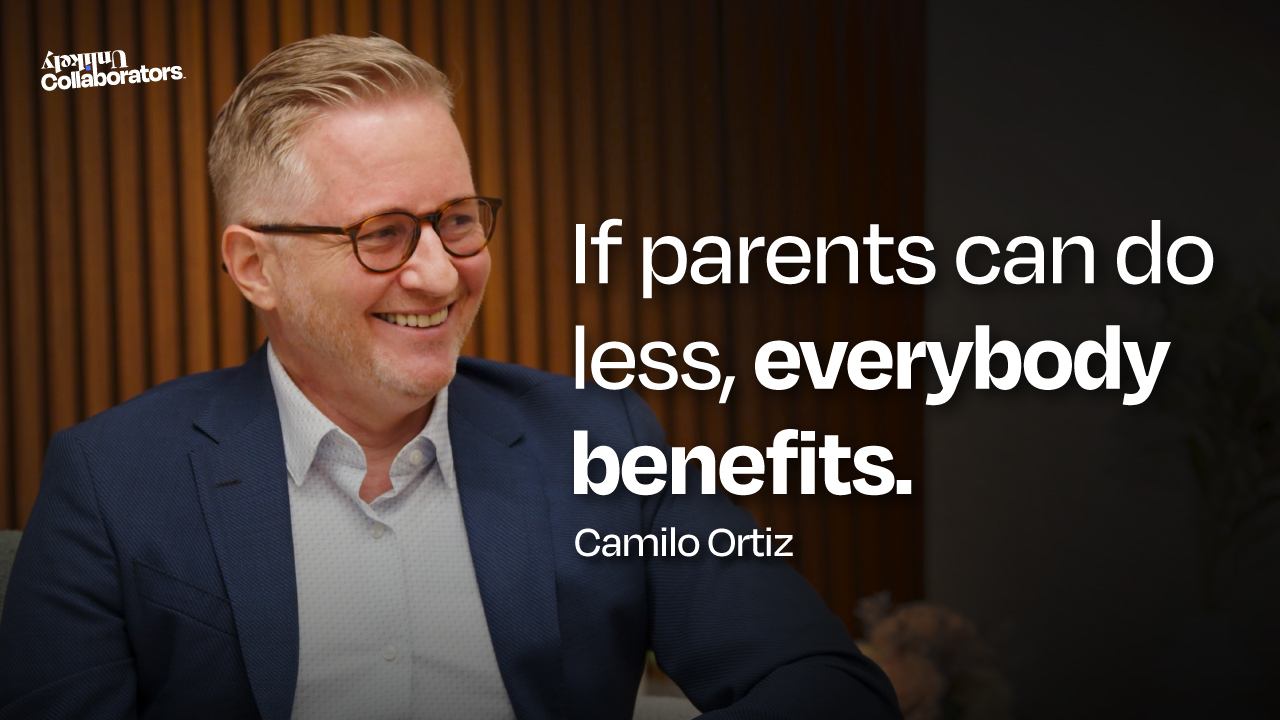
Dr. Camilo Ortiz, clinical psychologist and creator of Independence Therapy, joins hosts Dr. Heather Berlin and Dr. Christof Koch to unpack why the instinct in modern parenting is to protect kids from every risk may be backfiring. Dr. Ortiz explains how a child's Perception BoxTM starts forming almost as soon as they can speak, why parents today wildly overestimate danger despite living in the safest era on record, and how everyday tasks such as chopping vegetables, walking to the store alone can rebuild kids' confidence and resilience.
Dr. Camilo Ortiz is board-certified in behavioral and cognitive therapy. He holds an MS and PhD in Clinical Psychology from the University of Massachusetts, Amherst, and serves as a tenured associate psychology professor at Long Island University, bringing 20 years of clinical experience to his role.
Dr. Heather Berlin is a neuroscientist, clinical psychologist, and Professor of Psychiatry and Neuroscience at the Icahn School of Medicine at Mount Sinai in New York City.
Dr. Christof Koch is Chief Scientist for the Tiny Blue Dot Foundation and the current Meritorious Investigator and former President of the Allen Institute for Brain Science.
Chapters:
06:39 Independence With Guardrails
13:03 Freedom Versus Neglect
16:26 Getting Lost Builds Confidence
18:55 “When Then” Parenting
23:52 Why Parents Overprotect
28:27 Independence Therapy Basics
31:01 When Freedom Backfires
42:07 Independence Or Interference
Join us for new episodes of Science of Perception Box every Thursday. Follow the show on YouTube, Spotify, Apple Podcasts, Amazon Music, or wherever you get your podcasts.
Love Science of Perception Box? Write us a review on your podcast app, or tell a friend!
Visit unlikelycollaborators.com for more information.
.jpg)
Why do two people witness the same event and walk away with entirely different experiences of what happened? Dr. Heather Berlin and Dr. Christof Koch return for Season 2 of Science of Perception Box, exploring the invisible framework, the Perception Box™, that shapes how your brain constructs reality, interprets experience, and defines your sense of self. Each week, they sit down with guests including Mel Robbins, Andrew Huberman and Sam Harris to unpack how perception is built, and how you can gain more agency over your own. New episodes weekly.
Dr. Heather Berlin is a neuroscientist, clinical psychologist, and Professor of Psychiatry and Neuroscience at the Icahn School of Medicine at Mount Sinai in New York City.
Dr. Christof Koch is Chief Scientist for the Tiny Blue Dot Foundation and the current Meritorious Investigator and former President of the Allen Institute for Brain Science.
Join us for new episodes of Science of Perception Box every Thursday. Follow the show on YouTube, Spotify, Apple Podcasts, Amazon Music, or wherever you get your podcasts.
Love Science of Perception Box? Write us a review on your podcast app, or tell a friend. You can even do both!

Chris Gardner refused to let the circumstances of his childhood define the limits of his future.
In this episode of Corner Office, created in partnership with The Wall Street Journal Custom Content and Unlikely Collaborators, Gardner explores how questioning the beliefs shaped by poverty, violence, and rejection helped him transform hardship into possibility and inspired his lifelong mission to create opportunity for others.
.jpg)
BJ Miller, MD, Katherine Shear, MD, and Paul Bloom, PhD reframe grief as a natural, necessary response to love and loss — instead of a disorder to fix on a deadline. Drawing from neuroscience, psychiatry, and philosophy, they explain why grief can resemble love in the brain, why mourning often takes months or years, and how modern culture makes loss harder by rushing people toward “normal” before they’ve had time to change.
.jpg)
Science can explain how we think, connect, and perceive reality. But it also invites us into something deeper: awe, wonder, and a greater understanding of what it means to be human.
Neuroscientist and physician Andrew Newberg, psychiatrist and happiness researcher Robert Waldinger, and theoretical physicist Jim Al-Khalili explore the intersections of science, consciousness, meaning, and human flourishing—revealing how discovery itself can become a path to enlightenment and awe.
What do you do when you don’t feel loved?
In a world where we are more connected than ever, many people still feel unseen, misunderstood, or alone. The issue is not always about how much love we have in our lives, but how we experience it.
In this Spark Salon, renowned psychologist and best-selling author Sonja Lyubomirsky explores how our internal lens shapes the way we give, receive, and interpret love. Drawing from her book How to Feel Loved, she challenges the instinct to earn love by presenting our best selves, and instead points to the power of authenticity, including our imperfections and vulnerabilities.
This session explores how the way we show up in our relationships, what we express, what we hold back, and how we respond to others shapes whether love is actually felt on both sides. How do small shifts in how we communicate and engage change whether someone feels seen, valued, and understood? And how, in turn, does that transform our own experience of being loved?
Blending research from well-being and relationship science, Lyubomirsky introduces a set of core relational mindsets that can shift how we experience connection in everyday life, helping close the gap between being loved and actually feeling it.
What does it really mean when you feel lonely? The answer depends on your perception.
In this video, Robert Waldinger, MD, Kasley Killam, MPH, and Ethan Kross, PhD explore why loneliness has become so common and how it affects both the mind and the body. They explain why friendships are disappearing, how loneliness changes our health, and why being alone doesn’t always have to be a bad thing. Instead of treating loneliness as a personal failure, they suggest seeing it as a signal that helps us understand what we need and how to reconnect.

What if the voice in your head is less of a witness and more of an interpreter? Two neuroscientists discuss the brain’s drive to explain, narrate, and make everything add up.
Stories do not just entertain us; they may be one of the main ways our brains rehearse experience, assign meaning, and turn scattered moments into something that feels like a self. We are constantly sorting actions, memories and emotion into a version of events that feels coherent enough to live inside. Neuroscientists Michael Gazzaniga, PhD and Dean Buonomano, PhD draw on split-brain research to explain the left hemisphere’s “Interpreter”: the brain’s tendency to create explanations for behavior, even when it does not have the full picture. The instinct to create narratives likely shapes far more than self-understanding. It may underpin identity, belief, and the desire to belong in the world.
.jpg)

The brain isn't separate from the body. It depends on it. Three scientists explain the biology behind one of science's most under-explored relationships.
Your brain didn't evolve in isolation. It evolved to run the economy of your body, and every heartbeat, breath, and moment of thirst or anxiety is evidence of that system at work.
Neuroscientist and author Aditi Nerurkar, neuroscientist Wendy Suzuki, and neurologist-philosopher Antonio Damasio break down the science of the mind-body connection: why it exists, how it works, and why understanding it can change the way you experience the world.
Every time you move your body, your brain gets what one neuroscientist calls a “bubble bath” of dopamine, serotonin, and growth factors. Here’s how to activate it.
Neuroscientists Wendy Suzuki, PhD, Samuel Wang, PhD, and Gary Small, MD explain how movement increases blood flow, boosts growth factors like BDNF, and floods the brain with mood-lifting neurochemicals. The brain and body are in constant conversation, and plasticity means your wiring is never fixed. According to Suzuki, even ten minutes of walking can shift your brain’s chemistry immediately, flooding it in a ‘bubble bath’ of positive neurochemicals.
In other words, the way you use your body today shapes how your brain works tomorrow.
Bad news: your sense of self is made up. The good news is, you’re able to change it. Neuroscience and psychology explain.
Perception feels stable. Your sense of self feels solid. Yet neuroscientist Heather Berlin, psychologist Ethan Kross and neuroscientist Nicole Vignola explain that both are created by the brain. Through prediction, memory and neural pruning, the mind builds a narrative that feels coherent and fixed, even though modern science suggests that it’s continually shaped by pre-existing beliefs and experience. Seeing the construction clearly is the first step toward altering it.
Have you ever woken up after a dream and thought to yourself, “That made absolutely no sense”? According to modern neuroscience, there’s a reason why dreams feel so abstract and bizarre. Two sleep experts discuss.
Every 90 minutes, our bodies go paralyzed while our brains become more active than during waking life. Sleep psychologist Dr. Shelby Harris and neuroscientist Dr. Patrick McNamara, Associate Professor of Neurology at Boston University, dig into one of the most fascinating mysteries in human biology: why we dream and what our brains are actually doing during REM sleep. They explore competing theories of what dreaming is for, McNamara makes a compelling case that REM sleep may have been a key driver of early human creativity, and both reflect on why reclaiming our reverence for the dream state could change the way we think and create.
.jpg)
.jpg)
.jpg)
.jpg)
.jpg)
.jpg)
.jpg)
.jpg)
.jpg)
.jpg)
.jpg)
.jpg)
Happiness researchers Robert Waldinger MD, Tal Ben-Shahar PhD, and Peter Baumann explain why the happiest people aren’t happy all the time.
Psychiatrist Robert Waldinger, MD, psychologist Tal Ben-Shahar, PhD, and author-entrepreneur Peter Baumann share what 85 years of research and lived experience reveal about happiness. They explain why chasing it directly often backfires—and how strong relationships, mindfulness, and embracing every emotion can build a baseline of positivity that actually lasts.
.jpg)
Humans have always had religion. What does this say about our minds? Reza Aslan, PhD, Lisa Miller, PhD, and Rob Bell, MDiv, explain.
Why has religion been part of humanity since the beginning? Religious scholar Reza Aslan, PhD, clinical psychologist Lisa Miller, PhD, and former pastor Rob Bell, MDiv, explore innate spiritual instincts, the neuroscience of belief, and how faith and science both seek truth. They discuss substance dualism, religion’s role in resilience and mental health, and why our brains may be wired to find meaning, connection, and a sense of something greater.
About Reza Aslan, PhD:
Reza Aslan is a religious scholar, writer, and professor. Author of Zealot, he explores faith, identity, and culture, bringing religious history into contemporary conversations.
About Lisa Miller, PhD:
Lisa Miller is a clinical psychologist and Columbia University professor. She researches spirituality and mental health, authoring The Spiritual Child and The Awakened Brain on the science of faith.
About Rob Bell, MDiv:
Rob Bell is an author, teacher, and former pastor known for Love Wins. He explores spirituality, creativity, and the intersection of faith and modern life.
.jpg)
People make decisions about your confidence before you ever speak. Authors Robert Greene and Daniel Shapiro explain how posture, presence, and even silence communicate more than words ever could.
Oftentimes, our most effective form of communication happens before we even open our mouths. Best-selling author Robert Greene and conflict negotiation expert Daniel Shapiro reveal how body language silently shapes our identity, influence, and power. From nonverbal dominance to mastering conflict, they break down why we lose arguments and explain how to win them without conflict. By mastering these subtle signals, anyone can master their own influence and create deeper trust, stronger presence, and lasting impact without ever saying a word.
.jpg)
Your brain makes habits stick. The good news? The same science shows how to replace the bad ones.
Why are bad habits so hard to break?
Neuroscientist Carl Hart, PhD, journalist Charles Duhigg, and psychologist Adam Alter, PhD explain how your brain wires habits as cue-routine-reward loops that control nearly half of your daily life. They show why willpower alone rarely works, why technology fuels new forms of addiction, and why habits can only be replaced, not erased.
About Carl Hart, PhD:
Dr. Hart is an Associate Professor of Psychology in both the Departments of Psychiatry and Psychology at Columbia University, and Director of the Residential Studies and Methamphetamine Research Laboratories at the New York State Psychiatric Institute. A major focus of Dr. Hart’s research is to understand complex interactions between drugs of abuse and the neurobiology and environmental factors that mediate human behavior and physiology.
About Charles Duhigg:
Charles Duhigg is a Pulitzer Prize-winning journalist and the author of The Power of Habit, which spent over three years on bestseller lists and has been translated into 40 languages, and Smarter Faster Better, also a bestseller. Mr. Duhigg writes for The New Yorker magazine and is a graduate of Yale University and the Harvard Business School. He has been a frequent contributor to CNBC, This American Life, NPR, The Colbert Report, NewsHour, and Frontline.
About Adam Alter, PhD:
Adam Alter is an Associate Professor of Marketing at New York University’s Stern School of Business, with an affiliated appointment in the New York University Psychology Department.
.jpg)
Failure is inevitable, but your response to it is a choice – and it makes all the difference.
Journalist Tim Harford, PhD, psychologist Tal Ben-Shahar, and organizational behavior expert Robert Sutton, PhD, reveal how failure can become the foundation of success when it's examined and built upon. Reframing failure as information, rather than a personal setback, is what sets productive thinkers apart.
Our memories aren’t perfect records of the past — they’re reconstructions shaped by brain activity.
Neuroscientists Lisa Genova and André Fenton explain that a memory is created through neural patterns that can subtly shift each time we recall it. We may unknowingly add or lose details over time. Understanding this science helps us approach memory with more humility and empathy, and deepens our insight into how memories shape one’s identity and beliefs.

What happens when the boundaries of “you” disappear?
James Fadiman, PhD, Jamie Wheal, and Matthew Johnson, PhD explore how supported experiences with psychoactive drugs can dissolve identity and reveal a deeper reality.
What if one experience could make you lose your sense of self, forget time, and feel deeply connected to everything around you?
Experts Jamie Wheal, Matthew Johnson, PhD., and James Fadiman, PhD. give us a deeper look at psychedelic medicine, exploring how substances like psilocybin, LSD, and ayahuasca change the way we see ourselves and the world. Used carefully, they can bring insight and unity. However, without support, they can be overwhelming and reveal just how fragile our sense of reality can be. These researchers explain the difference.
About Matthew Johnson, PhD:
Matthew W. Johnson, PhD, is The Susan Hill Ward Endowed Professor of Psychedelics and Consciousness Research at Johns Hopkins. Working with psychedelics since 2004, he is one of the world’s most widely published experts on psychedelics. He has published research on psychedelics and mystical experience, personality change, tobacco smoking cessation, cancer distress treatment, and depression treatment.
About James Fadiman PhD:
Dr. James Fadiman is a leading scientific expert on the use of psychedelics for personal exploration, healing, and transformation. He has been researching, writing and lecturing on the topic for more than fifty years. His research focuses on exploring the potential of psychedelics to help individuals achieve a more meaningful, balanced and enlightened life.
About Jamie Wheal:
Jamie Wheal is the author of the global best-seller and Pulitzer Prize-nominated Stealing Fire: How Silicon Valley, Navy SEALs and Maverick Scientists are Revolutionizing the Way We Live and Work and the founder of the Flow Genome Project, an international organization dedicated to the research and training of ultimate human performance. Since founding the organization in 2011, it has gone on to become the leading voice of evidence-based peak performance in the world, counting award-winning academics, legendary professional athletes, special operations commanders, and Fortune 500 business leaders among the hundreds of thousands of people in its global community.
Around the world, small communities are preserving extraordinary skills and forms of knowledge that have endured for centuries, from rare crafts to rituals that require years of apprenticeship to master. These traditions are not simply artifacts of the past. They are living bodies of knowledge, sustained through discipline, memory, and care.In this Spark Salon, BBC journalist and author Eliot Stein shares stories from his search for the last keepers of remarkable traditions. Through immersive reporting and personal encounters, he explores what it takes to carry specialized knowledge across generations and what is lost when those skills disappear.As modern life accelerates and expertise becomes increasingly digital and disposable, Stein invites us to reflect on the value of embodied knowledge, apprenticeship, and continuity. What does it mean to inherit a skill? What responsibility comes with preserving it? And how do forms of knowledge shape the communities that sustain them?
A neuroscientist, a psychologist, and a psychotherapist discuss how emotions are stories built from old experiences.
By introducing new ones, you can shift the way your past shapes you.
Neuroscientist Lisa Feldman Barrett, PhD, psychologist Paul Eckman, PhD, and psychotherapist Esther Perel, PhD, explain how the brain constantly rebuilds emotions from memory and prediction. According to their research, by choosing new experiences today, we can reshape how our past influences us, gain more control over our feelings, and create new possibilities for connection and growth.
About Lisa Feldman Barrett, PhD:
Lisa Feldman Barrett is University Distinguished Professor of Psychology at Northeastern University, with appointments at Massachusetts General Hospital and Harvard Medical School. She directs the Interdisciplinary Affective Science Laboratory, where she researches the nature of emotion and the brain’s predictive processes.
About Esther Perel, PhD:
Esther Perel is a psychotherapist and author recognized worldwide for her work on modern relationships. Perel is also a sought-after public speaker with TED Talks reaching millions, and consults globally with organizations on relational intelligence.
About Paul Ekman, PhD:
Paul Ekman is professor emeritus of psychology at the University of California, San Francisco, and a leading authority on emotion and nonverbal communication. He pioneered research on microexpressions and developed the Facial Action Coding System (FACS), used widely in psychology, law enforcement, and security.
Krista Tippett has spent decades convening conversations at the intersection of spirituality, science, and the human condition. Through her work On Being, she has asked some of the most searching questions of our time: What does it mean to be human? How do we live wisely with one another across differences? What kind of inner life makes a different outer world possible?
In this Spark Salon, Krista reflects on the discipline of listening, not as politeness but as transformation. She explores how the stories we inherit, the assumptions we carry, and the meaning we make of our experiences quietly shape how we see ourselves and one another.
This conversation is not about quick fixes. It is an invitation to slow down, to widen our moral imagination, and to examine the interior patterns that shape how we show up in a fractured world. When we shift the way we listen to ourselves and to others . . . something larger becomes possible.
For most of human history, that question lived in myth and imagination. Today, it lives in scientific inquiry.
In this Spark Salon, astrophysicist and astrobiologist Dr. Lisa Kaltenegger, Founding Director of the Carl Sagan Institute and author of Alien Earths, takes us into the search for worlds beyond our own. As scientists explore distant planets orbiting other stars, they are not just gathering data; they are interpreting it.
What counts as life?
What makes a world “habitable”?
How do we recognize something we’ve never seen before?
The search for life beyond Earth is ultimately a search for meaning. It forces us to examine the assumptions we carry about what is normal, possible, and real.
As our view of the cosmos expands, so does our perspective on ourselves. Looking outward into the vastness of space, we may discover something equally profound about how we construct our understanding of life here at home.

📣 Unlikely Collaborators GAME JAM Theme Announcement:
Make AWE playable:
Consciousness and Identity through Awe and Wonder
Build mechanics that create wonder.
Design systems that move identity.
Create moments where perception changes in real time.
🏆 $10,000 in prizes
📅 March 21 – April 7, 2026🔗 igdafoundation.org/gamejam
Sponsored by Unlikely Collaborators in collaboration with IGDA Foundation, Girls Make Games, and International Game Developers Association (IGDA®).
Sleep influences far more than how rested we feel. It shapes how we regulate emotion, connect with others, generate new ideas, and grow from our experiences. But even those who appreciate its importance and want to prioritize rest often find themselves struggling to reach their ideal sleep. Even gadgets, supplements, and sleep hygiene don’t seem to help in the face of life’s changes and challenges.
In this Spark Salon, board-certified sleep psychologist and author Dr. Jade Wu explores a new way to approach sleep that is intuitive and resilient—treating sleep as a relationship to nurture rather than an engineering problem to hack.
Drawing from neuroscience, clinical practice, and her work with high-performing professionals, she helps us understand how working with, instead of against, our unique sleep physiology is the foundation of steadier moods, clearer thinking, and recovery from challenge. This talk offers a grounded, humane perspective on sleep, one that moves beyond rigid rules or quick fixes and instead focuses on the malleable tools we can use to build a healthier, more sustainable relationship with rest.
We are surrounded by bold claims about the future—what’s coming next, what’s inevitable, what we should prepare for. But what if the most important work isn’t predicting what’s ahead but understanding how we relate to it in the first place?
In this Spark Salon, futures designer and author Nick Foster invites us to turn our attention inward. Drawing from his new book, Could Should Might Don’t, Nick helps us notice the stories we carry about the future—and the quiet assumptions, habits, and mental shortcuts that shape our sense of fear, urgency, agency, and possibility. Rather than offering forecasts or frameworks, he offers something more radical: a way to see the future as an extension of the present, shaped by human choices, values, and imagination.
Nick equips audiences to become more discerning thinkers about the future—less reactive, less dazzled by hype, and more grounded in choice and care. Through sharp provocation and real-world examples, the talk brings structure to imagination and expands perspective, helping people navigate uncertainty with greater confidence.
Yum! Brands co-founder David Novak reflects on a lifetime of movement, ambition, and leadership at the highest level. From a nomadic childhood to building some of the world’s most iconic restaurant brands, Novak shares how slowing down, listening more closely, and reexamining his assumptions ultimately reshaped his definition of success and meaning.

Good anxiety isn’t the enemy. Good anxiety is actually your built-in superpower for focus, creativity, and connection when you learn how to harness it. In this Spark Salon, renowned neuroscientist, author, and NYU Dean Dr. Wendy Suzuki invites us to rethink our entire relationship with stress by revealing the remarkable science behind this often misunderstood emotion. Rather than something to avoid, control, or suppress, anxiety becomes a source of energy and insight when we understand the deeper purpose of our brain’s stress responses.
Drawing from her book Good Anxiety: Harnessing the Power of the Most Misunderstood Emotion, Dr. Suzuki shows us how to turn everyday stress into fuel for a stronger, more resilient, beautifully adaptive brain. By learning simple, science-backed strategies to support our brain’s natural responses, we can shift from feeling overwhelmed to feeling equipped. Ultimately, she demonstrates that anxiety isn’t something we simply have to endure. Rather, it’s something we can learn from, shape, and use to live a fuller, more grounded, and more empowered life.
In this provocative Spark Salon, neuroscientist and best-selling author Lisa Feldman Barrett, PhD, invites us to rethink everything we believe about perception, emotion, and reality itself. Drawing on groundbreaking neuroscience, she reveals that we don’t perceive reality in a more or less objective way., Reality exists only in relation to us. Every sound, color, and feeling is an act of construction by the brain, shaped by culture, context, and memory. Through vivid examples, from a falling tree to a racing heart, Dr. Barrett shows that signals from the world and body have no inherent meaning until the brain processes them. What we experience as reality is a story our brains are constantly writing. Ultimately, she challenges us to recognize that we are not spectators of reality but its architects, with the power to expand our agency, reshape meaning, and reimagine what it means to be fully human.
Grief transforms how we see the world, shaping identity, meaning, and connection in profound ways for all of us, especially for children and teens. In this Spark Salon, Brennan Wood, Executive Director of Dougy Center, and Dr. Donna Schuurman, Senior Director of Advocacy & Education and Executive Director Emeritus, invite us into the often-invisible narratives of kids who are grieving: how they make sense of loss, what they internalize, and the stories they carry forward. Together, they will explore the power of witnessing grief, in ourselves and others, without trying to fix it—how presence itself can be healing, and what it means to be truly “grief-informed.” Drawing from personal experience and decades of leadership in the field, Brennan and Donna will share practical reflections and hard-earned wisdom on how grief, when named and honored, can expand our understanding of resilience, empathy, and the human experience.
Neuroscientist and consciousness researcher Nicco Reggente, PhD, will explore the fascinating, science-backed connection between the heart and the brain in this mind-expanding Spark Salon. Drawing from the groundbreaking, soon-to-be-published study Heartbeat-Evoked Potentials as a Neural Marker of Meditative Depth, Nicco will unpack the ancient wisdom behind “listening to your heart” and what it actually means in modern neuroscience. You’ll discover how the body’s subtle signals, like your heartbeat, shape consciousness, mindfulness, and emotional regulation. Through the lens of interoception (our ability to sense internal bodily states), this session reveals how tuning in to the sensations of the body can help us respond more thoughtfully to life rather than react impulsively.
Nutrition therapist and author Kim Shapira, MS, RD, shares her transformative Six Simple Rules to Become Your Healthiest Self, based on her acclaimed book This Is What You're Really Hungry For. In this engaging session, Kim will introduce key principles from her Six Rules, guiding participants to reframe their relationship with food through science-backed strategies, self-awareness, and sustainable habits. Kim’s empowering and practical approach moves beyond restrictive diets, helping participants reconnect with their bodies, manage emotions in healthier ways, and build lasting behaviors that support physical and emotional well-being.
Join renowned psychologist and author Dr. Scott Barry Kaufman for a powerful Spark Salon exploring themes from his latest book, Rise Above: Overcome a Victim Mindset, Empower Yourself, and Realize Your Full Potential. In this engaging session, Dr. Kaufman challenges the limiting beliefs and cultural narratives that keep us feeling stuck, offering fresh insight into how we can move beyond a victim mindset to reclaim our agency and become the heroes of our own lives. Drawing on cutting-edge psychology and grounded in empathy and humor, he reveals how to harness emotional intelligence, reframe past experiences, and unlock the resilience and potential within each of us.
In this session, digital workplace expert and author Alexandra Samuel, PhD, explores how AI sycophancy is changing the stories we tell about ourselves and how those stories shape our work, relationships, and well-being. Drawing from her podcast, Me+Viv, and forthcoming book, she shares insights on the intersection of AI and the new workplace, including the hidden tools that can help surface new perspectives, challenge assumptions, and navigate the risks and possibilities of emerging technology.

In a world increasingly marked by isolation and division, artist and urban designer Candy Chang offers a powerful counterpoint: We can still design spaces—physical, emotional, and communal—that foster connection, reflection, and belonging. Best known for her global Before I Die project, Chang has transformed walls, museums, neighborhoods, and even casinos into places of shared vulnerability, creativity, and hope. In this deeply moving and visually rich session, she explores how art can help us process grief, spark dialogue, and bridge the spaces between us. Drawing on a career of participatory installations across more than 70 countries, Candy shows us how to leverage the power of creativity and community to design lives, and environments, where people feel seen, supported, and at home.
Renowned mythologist and story expert John Bucher explores the extraordinary power of story as a force for transformation. Drawing from ancient myths and modern movements, John will reveal how stories have historically reshaped cultural norms, shifted collective behavior, and expanded what people believed was possible. Through compelling examples, John will illuminate how stories can be tools for liberation or limitation, depending on how they shape our internal narrative frameworks. This session will inspire participants to examine the stories they live by and consider how re-authoring those narratives can lead to personal growth, deeper empathy, and even social change.
In this energizing session, Ellen Bennett, founder of Hedley & Bennett and author of Dream First, Details Later, shares the unfiltered truth about fear, failure, and forging your own path. With no safety net and no investors, Ellen built her company from scratch by embracing action over perfection, reframing setbacks as fuel, and turning limited resources into powerful assets. A bold, personal take on pushing through fear, self-doubt, and imposter syndrome, this talk is a powerful reminder that self-belief, persistence, and momentum matter more than credentials or ideal circumstances, and, importantly, that we each have the power to drive our own story forward.
In this mind-expanding Spark Salon, storyteller, illusionist, and entrepreneur Harris III draws from his forthcoming book Start with Wow to explore a powerful shift: the transition from the Information Age to the Imagination Age. Blending magic, neuroscience, and storytelling, Harris makes the case that the future belongs not to those who begin with "how" or even "why" but to those bold enough to begin with "wow." As artificial intelligence and automation reshape the world, Harris offers a compelling framework for human relevance rooted in wonder, curiosity, and creativity. This session invites participants to reawaken their imaginations and see how awe—not algorithms—is the key to innovation, leadership, and purpose in the age ahead.

Sabrina's film is an animated conversation between her past, present, and future selves. The whole film was made using actual audio clips from her self when she was younger and the entire script was based around the limited dialog she could find on old home videos.
The film is meant to capture the vulnerable conversations that happen late at night and the thoughts that keep you up when you're anticipating something important the next day.
Entrepreneur and cultural icon Daymond John opens up about the experiences that shaped his hustle, worldview, and success. From the streets of Hollis, Queens to becoming one of Shark Tank’s most trusted investors, Daymond’s story is one of perseverance, reinvention, and purpose.
.jpg)
Why are bad habits so easy to form and so hard to break? In this four-part Spark Salon series, renowned psychiatrist, neuroscientist, and mindfulness expert Dr. Jud Brewer will reveal how our brains get hooked on unhelpful behaviors like anxiety, overeating, doomscrolling, and more—and how we can disrupt these patterns by better understanding the science of habit formation. Drawing from cutting-edge research, Buddhist psychology, and clinical breakthroughs, Dr. Jud introduces a practical, compassionate approach to breaking habits, not through willpower but through awareness, curiosity, and kindness. The first session, held both in person and live-streamed from Unlikely Collaborators, will introduce Dr. Jud’s framework and set the stage for the series. The following three online-only sessions will each dive deep into one of the "three gears" of habit change, providing immersive, experiential opportunities for participants to apply these methods in real time. With interactive breakout discussions and practical tools, this series invites you to expand the walls of your Perception Box™ and build a new relationship with your mind.
Jud Brewer, MD, PhD (“Dr. Jud”) is a New York Times best-selling author and leading authority on habit change and the science of self-mastery. With over 25 years of mindfulness training combined with scientific research, he serves as the Director of Research and Innovation at the Mindfulness Center and as a professor at Brown University. An internationally recognized psychiatrist specializing in mindfulness for addiction, Dr. Jud has developed innovative mindfulness programs—both in-person and app-based—for smoking cessation, emotional eating, and anxiety. He has investigated the neural mechanisms of mindfulness using standard and real-time fMRI and EEG neurofeedback. He has trained U.S. Olympic athletes, coaches, and foreign government ministers. His work has been featured on 60 Minutes and in TED (one of the most-viewed talks of 2016 with over 20 million views), The New York Times, Time, Forbes, BBC, NPR, Al Jazeera, Bloomberg Businessweek, and more. Dr. Jud founded MindSciences—now part of Sharecare Inc.—to bring his discoveries directly to consumers. He also cofounded Mindshift Recovery, a nonprofit aiding those suffering from addiction. He is the author of The Craving Mind (Yale University Press, 2017), the New York Times Best Seller Unwinding Anxiety (Avery/Penguin Random House, 2021), and The Hunger Habit (Avery/Penguin Random House, 2024). For more information, visit www.drjud.com.
Learn more about Spark Salons at salons.unlikelycollaborators.com.
.jpg)
For Vijay Gupta, music is not entertainment. It is a lifeline. He sees art as a way to process pain and grief, transforming them into something that heals and sustains. Described by The New Yorker as “a visionary violinist and a radical thinker in the classical music world,” Gupta creates spaces where people feel seen, connected, and whole. In his talks, he invites us to reconsider how we relate to struggle and shows how creative expression can shift the inner stories that shape our lives.
Described by The New Yorker as “a visionary violinist and a radical thinker in the classical music world,” Vijay Gupta is an internationally celebrated musician, speaker, and advocate who bridges the worlds of art, justice, and healing.
He is the founder and Artistic Director of Street Symphony, a Los Angeles–based nonprofit that has presented thousands of musical workshops and performances in shelters, county jails, state hospitals, and prisons—creating spaces of connection for people in reentry from homelessness, addiction, and incarceration. For Gupta, music is not entertainment—it’s a lifeline, a way to process pain, reclaim dignity, and transform grief into belonging.
A member of the first violin section of the Los Angeles Philharmonic for 12 years, Gupta has performed globally as a recitalist, soloist, and chamber musician and is a founding member of the Darshan Piano Trio and Tesserae Baroque. His recordings span repertoire from Bach to contemporary composers, and in 2024, he was elected to the American Academy of Arts and Sciences.
A dynamic communicator, Gupta has given three TED talks that have garnered millions of views. He has delivered keynote addresses for the American Medical Association, The Richmond Forum, The Aspen Institute, Hallmark, Accenture, the Mayo Clinic, the U.S. Psychiatric and Mental Health Congress, and the League of American Orchestras. In 2026, Grand Central Publishing will release his memoir, Restrung, exploring loss, resilience, and the power of music to transform the human spirit.
Learn more about Spark Salons at salons.unlikelycollaborators.com.
.jpg)
From pregame traditions to team-building exercises, rituals are intertwined in every facet of our lives. Harvard Business School professor Michael Norton, author of The Ritual Effect, shows that rituals play a role in our everyday lives: from building connections to helping us leave work behind at the end of the day. We can transform our unconscious habits into conscious productivity—and rise to challenges and opportunities like never before. Named one of WIRED’s 50 People Who Will Change the World, Michael demonstrates the power of rituals in our teams, our workplaces, our families, and even our marriages.
Michael Norton is a Harvard Business School professor whose work dives into the psychological effects of ritual. His groundbreaking research has proved the importance and flexibility of rituals in our everyday lives—they affect our feelings, thoughts, and even behaviors. Michael shows that rituals can bind us together as a community, which makes for stronger teams who coordinate and find meaning in their work, and explores the role that rituals play in our families, our friendships, and our marriages. Michael shows us the power of ritual in our personal lives and our workplaces. His groundbreaking book, The Ritual Effect, has been called “endlessly fascinating” (Dan Pink, Drive) and “an eye-opening window into why we swear by certain routines—and how we can build more enriching ones” (Adam Grant, Think Again).
Michael has also researched personal finance and spending—specifically, how to use money to get happier. Along with fellow professor Elizabeth Dunn, he’s the co-author of the book Happy Money: The Science of Happier Spending, which proved that we’re going about spending our money all wrong. With five practical principles on how to increase happiness by changing the philosophy behind spending, Happy Money is “a rare combination of informed science writing, rollicking good fun, and practical pointers for a more flourishing and compassionate life” (David G. Myers, The Pursuit of Happiness). His TEDx talk, which draws on this research, has been viewed over four million times.
Michael has appeared on National Public Radio, CBS, Fox, and MSNBC, cohosted Talking Green, a podcast on how people really interact with money, and written op-eds for The New York Times, Forbes, and The Wall Street Journal. His research has been featured in publications like Psychological Science, Journal of Consumer Research, and Journal of Marketing Research, has been covered by The Economist, The Financial Times, and The Washington Post, and has been parodied by The Onion.
Learn more about Spark Salons at salons.unlikelycollaborators.com.
.jpg)
Curious minds. Brave questions. Unexpected connections.
From myth to mindfulness to the science of awe, the Spark Salon speaker series brings together voices that will challenge, inspire, and expand your perspective.
According to neuroscientists and psychiatrists, healing begins with awareness and compassionate connection.
Dr. Bessel van der Kolk, Dr. Wendy Suzuki, and Dr. James Doty explain how trauma and anxiety are processed through both the brain and body: trauma isn’t just what happens to us, but how our nervous system holds onto it, disrupting our ability to feel safe, connect with others, and think clearly.
Often a feeling people want to avoid, anxiety actually functions to motivate action and can be leveraged as a tool for focus and productivity. Through breathwork, mindfulness, and reshaping negative internal dialogue, we can begin to retrain the brain, regulate the body, and support a lifetime of growth.

Do Kids Think Rules Are Meant to Be Broken?
HiHo and Unlikely Collaborators teamed up to ask 100 kids just that—exploring how young minds view right, wrong, and everything in between.Inspired by the Perception Box framework.

What if the way you see the world is shaped by trauma you haven’t fully processed?
Psychiatrist Bessel van der Kolk, author of The Body Keeps the Score, explains how trauma isn't just remembered, it is physically lived and relived through the body and brain.
He describes how traditional talk therapy often fails to reach the survival centers of the brain where trauma resides. Instead, healing comes through visceral experiences that help rewire perception, build a sense of safety, and reconnect the self. Through movement, touch, psychodrama, and even psychedelics, the brain can learn to see the present as safe again.
About Bessel van der Kolk:
Bessel van der Kolk, M.D., is a pioneering psychiatrist and trauma researcher, best known for his work on post-traumatic stress disorder (PTSD). He authored the bestselling book The Body Keeps the Score, which explores how trauma reshapes both body and brain. As founder of the Trauma Research Foundation, he has led innovative treatments combining neuroscience, psychotherapy, and body-based approaches to healing trauma. His work has transformed trauma care worldwide.

“I want people to know that their lives matter and that their deaths ultimately will too.” How a journey to Cuba made Alua Arthur confront her own mortality, and ultimately led her to her career as a death doula.
Alua Arthur, a death doula, never expected to find her calling in the space between life and death. Struggling with depression and a sense of not belonging, she was searching for meaning when a chance encounter in Cuba changed everything.
After encountering death in her personal life, she began to confront her own mortality—and realize she wasn’t truly living. This moment, combined with the loss of her brother-in-law, set her on a path to becoming a death doula, someone who supports people through their final days. Now, she is an author, a (public speaker), and has dedicated her career to helping others embrace life by acknowledging its inevitable end.
About Alua Arthur:
Alua Arthur is a death doula, end-of-life care expert, and founder of Going with Grace, a nonprofit dedicated to helping individuals navigate the final chapter of their lives. After struggling with depression and identity, Alua found purpose in guiding others through the dying process with compassion and dignity. She has dedicated her life to empowering people to face death with grace, offering support to both individuals and their families.

Gracie Gold’s battle with mental health nearly ended her career—and her life. This is how she found her way back to herself.
Gracie Gold, a two-time national champion and Olympic medalist, seemed to embody perfection. But behind the medals and the headlines, her obsession with being flawless led her to a breaking point. After the 2016 World Championships, she spiraled into depression, binge-eating, and a complete loss of identity.
Feeling trapped and out of place, Gold hit rock bottom before seeking help at a treatment facility. There, she finally “met herself,” learning to let go of perfection and accepting “okay” as enough. Now, she’s a mental health advocate and a New York Times bestselling author.
About Gracie Gold:
Gracie Gold is an American figure skater known for her technical skill, artistry, and resilience. Born in 1995, she rose to prominence by winning the U.S. national title in 2014 and earning a bronze medal at the 2014 Winter Olympics in the team event. Gold also claimed silver at the 2016 World Championships, solidifying her status as one of the sport’s top competitors. After facing mental health challenges that led to a hiatus, she made a remarkable comeback, advocating for mental health awareness in athletics.

Can psychedelics under anesthesia heal trauma? What is the latest research around ketamine, MDMA, and psilocybin? That’s part of what we explore this week on Science of Perception Box. Stanford anesthesiologist Dr. Boris Heifets joins Dr. Heather Berlin and Dr. Christoph Koch to discuss the latest research on the first double-blind study on Ketamine, the placebo effect, and the therapeutic value of anesthesia-induced dreams.
Dr. Boris Heifets, MD, PhD, is a board certified anesthesiologist who specializes in providing anesthesia for neurological surgery. He has practiced at Stanford since 2010. After completing residency training at Stanford, Dr. Heifets completed fellowship training in neuroanesthesiology, also at Stanford. In addition to treating patients, Dr. Heifets directs both clinical research and basic neuroscience. His research group studies how new rapid-acting psychiatric therapies like ketamine, MDMA, and psilocybin produce lasting changes in nervous system function, behavior, and therapeutic outcomes.
Dr. Heather Berlin is a neuroscientist, clinical psychologist, and Professor of Psychiatry and Neuroscience at the Icahn School of Medicine at Mount Sinai in New York City.
Dr. Christof Koch is Chief Scientist for the Tiny Blue Dot Foundation and the current Meritorious Investigator and former President of the Allen Institute for Brain Science.
Join us for new episodes every Thursday. Follow the show on YouTube, Spotify, Apple Podcasts, Amazon Music, or wherever podcasts are found.
Love the show? Write us a review on your podcast app, or tell a friend about the show.

Ever wonder why time seems to fly or crawl? From ancient philosophers to modern neuroscientists, the nature of time has captivated human curiosity. This week on Science of Perception Box, we investigate the relationships among time, memory, and perception. Dr. Davachi shares the mechanisms of how the brain encodes and retrieves memories, including why emotions and feelings play a role in our perception of time.
Lila Davachi is a prominent neuroscientist known for her research in the field of memory. She earned her PhD from Yale University in 1999 and currently holds a faculty position at Columbia University, where she leads the Davachi Memory Lab. Her work primarily focuses on understanding the processes of memory encoding, consolidation, and retrieval through behavioral and cognitive neuroscientific methods.
Dr. Davachi has made significant contributions to the understanding of how memories are formed and maintained in the brain. She has published extensively in academic journals, with her research being highly cited within the scientific community. In addition to her research, she is actively involved in teaching and mentoring students in psychology and neuroscience.
Dr. Heather Berlin is a neuroscientist, clinical psychologist and Professor of Psychiatry and Neuroscience at the Icahn School of Medicine at Mount Sinai in New York City.
Dr. Christof Koch is Chief Scientist for the Tiny Blue Dot Foundation as well as the current Meritorious Investigator and Former President of the Allen Institute for Brain Science.
Join us for new episodes every Thursday. Follow the show on YouTube, Spotify, Apple Podcasts, Amazon Music or wherever podcasts are found.
Love the show? Write us a review on your podcast app or tell a friend about the show.

When was the last time you felt absolutely mesmerized by something beautiful? Whether it’s seeing a breathtaking vista, losing yourself in a piece of music, or being in a crowd cheering for the same team, the feeling of awe can be all-encompassing and expansive. This week on Science of Perception Box, Dr. Dacher Keltner, one of the world’s foremost emotion scientists and a scientific advisor behind Pixar’s Inside Out, shares how we can cultivate more awe in our life and why we need this sometimes overlooked emotion.
Dr. Keltner is a professor of psychology at UC Berkeley and the faculty director of the Greater Good Science Center. He has over 200 scientific publications and six books, including Born to Be Good, The Compassionate Instinct, and The Power Paradox. Dr. Keltner is involved with the education of health care providers and judges and has consulted extensively for Google, Apple, and Pinterest on issues related to emotion and well-being.
Dr. Heather Berlin is a neuroscientist, clinical psychologist and Professor of Psychiatry and Neuroscience at the Icahn School Of Medicine at Mount Sinai in New York City.
Dr. Christof Koch is Chief Scientist for The Tiny Blue Dot Foundation as well as the current Meritorious investigator and Former President of the Allen Institute For Brain Science.
Join us for new episodes every Wednesday. Follow the show on YouTube, Spotify, Apple Podcasts, Amazon Music or wherever podcasts are found.
Love the show? Write us a review on your podcast app or tell a friend about the show.

How can parents embrace science in order to give their children the best possible environment to thrive in? Cognitive development expert Dr. Alison Gopnik joins us to discuss how navigating challenges fosters healthier adults, likening caregiving to being a gardener creating an environment where various ”plants” can thrive in different conditions. Exposing children to diverse environments helps them develop better coping mechanisms, akin to how the immune system strengthens against viruses.
Dr. Gopnik is a professor at the University of California at Berkeley, where she has taught since 1988. She is a world leader in cognitive science, particularly the study of children’s learning and development. She is the author of over 100 journal articles and several books including the best-selling and critically acclaimed popular books The Scientist in the Crib, The Philosophical Baby, and The Gardener and the Carpenter. She is a fellow of the Cognitive Science Society and the American Association for the Advancement of Science and a member of the American Academy of Arts and Sciences.
Dr. Heather Berlin is a neuroscientist, clinical psychologist, and Professor of Psychiatry and Neuroscience at the Icahn School of Medicine at Mount Sinai in New York City.
Dr. Christof Koch is Chief Scientist for the Tiny Blue Dot Foundation and the current Meritorious Investigator and former President of the Allen Institute for Brain Science.
Join us for new episodes every Thursday. Follow the show on YouTube, Spotify, Apple Podcasts, Amazon Music, or wherever podcasts are found.

We long for love. We die for love. We kill for love. But why do we love? Cohosts Dr. Heather Berlin and Dr. Christoph Koch ask this question to Helen Fisher, PhD. who dedicated her career to researching romantic love. In this episode of Science of Perception Box, we explore how the act of being in love or out of love changes how we view ourselves and the world around us.
Dr. Fisher was a biological anthropologist, Senior Research Fellow at The Kinsey Institute, and Chief Science Advisor to Match.com. She used brain scanning (fMRI) to study the neural systems associated with the sex drive, romantic love, attachment, rejection, love addiction, long-term partnership happiness, and the biological foundations of human personality. She conducted extensive research on the evolution, biology, and psychology of human sexuality, monogamy, adultery, and divorce.
Dr. Heather Berlin is a neuroscientist, clinical psychologist, and Professor of Psychiatry and Neuroscience at the Icahn School of Medicine at Mount Sinai in New York City.
Dr. Christof Koch is Chief Scientist for the Tiny Blue Dot Foundation and the current Meritorious Investigator and former President of the Allen Institute for Brain Science.
Join us for new episodes every Thursday. Follow the show on YouTube, Spotify, Apple Podcasts, Amazon Music, or wherever podcasts are found.
Love the show? Write us a review on your podcast app, or tell a friend about the show.

What happens when an irredeemable person receives love, gratitude, and respect? After decades of drug and alcohol abuse, chef and television personality Andrew Zimmern learned firsthand.
As a teenager, Andrew Zimmern experienced deep pain when his mother became permanently disabled, and his father enforced a rule to avoid discussing feelings. Without an outlet, that pain grew into resentment and substance abuse. By 14, Zimmern was drinking daily, and his addiction followed him into adulthood, ultimately costing him his career, relationships, and home.
In January 1992, after hitting rock bottom, Zimmern attempted to take his own life. When he woke up, something shifted. For the first time, he asked for help. His friends intervened, sending him to rehab, where he began confronting his emotions and embracing a mindset of learning and giving.
Zimmern rebuilt his life, becoming a celebrated chef, author, and TV personality. Today, he credits that one vulnerable moment with saving his life and inspiring him to live with purpose and gratitude.
About Andrew Zimmern:
Andrew Zimmern is a chef, food writer, and television personality best known for hosting Bizarre Foods on the Travel Channel. A four-time James Beard Award winner, Zimmern has dedicated his career to exploring global cuisines and advocating for culinary diversity. Beyond television, he is a passionate philanthropist, focusing on hunger relief, food sustainability, and social justice. He founded the Andrew Zimmern Project to support food security initiatives and works with organizations like Second Harvest and Services for the Underserved. Through his work, Zimmern strives to create a more equitable food system and inspire cultural appreciation through cuisine.
The one phrase that changed Diana Nyad’s life, and set her on course to become the first person ever to conquer the 110 mile, 53 hour swim from Florida to Cuba.
At 64, Diana Nyad swam 110 miles from Cuba to Florida, facing jellyfish, exhaustion, and tough ocean currents for over 53 hours. But this feat was more than just physical - it was the result of a lifetime of mental endurance.
As a young swimmer, she faced sexual abuse from her coach, which derailed her Olympic dreams and left deep emotional scars. Instead of letting those experiences hold her back, she found a way to channel that pain into something powerful. She talks about developing a "steel trap mind," using her struggles as motivation to pursue her goals.
Diana's journey goes beyond breaking records. It’s a powerful reminder of the human spirit's ability to persevere and heal, no matter the odds. Her swim from Cuba to Florida, completed on her fifth attempt, showcases her incredible willpower and serves as an inspiration to people everywhere.
About Diana Nyad: Diana Nyad is an endurance swimmer, author, and motivational speaker best known for her 2013 record-breaking swim from Cuba to Florida at age 64. Completing the 110-mile journey without a shark cage, she demonstrated unparalleled resilience and determination. Nyad is also a bestselling author, journalist, and co-founder of EverWalk, a fitness initiative promoting community through walking. Her story of perseverance, chronicled in her memoir Find a Way, continues to inspire audiences worldwide.
“I saw that when I believed my thoughts, I suffered, and when I didn’t believe them, I didn’t suffer.”
Author and public speaker Byron Katie shares how she transformed her life after discovering ‘The Work’, a method for identifying the thoughts that cause pain and suffering. By asking herself four simple yet profound questions, she found a way to recover from her agoraphobia, reunite with her family, and begin teaching others how to heal.
Katie’s strategy for ending suffering lies in asking yourself four questions about the thoughts you’re having: Is it true? Can you absolutely know it’s true? How do you react when you believe it? Who are you without the thought?
By asking yourself these questions, Katie explains how you can begin to escape the mentalities that hold you back. Her method shows us that peace doesn’t come from changing the world—it comes from changing how we see it.
About Byron Katie: Byron Katie is an author and teacher who helps people find peace by questioning their stressful thoughts. In 1986, after years of depression, she experienced a life-changing realization that led her to create The Work, a simple process of self-inquiry. Her books, like Loving What Is and A Thousand Names for Joy, have touched millions. Through workshops and talks, Katie shares a path to clarity and freedom, helping people live with more acceptance and ease.

Our cultural lenses can expand our Perception Box or contract it, keeping us closed off to new opportunities. So how do we become aware of the personal influences that shape our perceptions? In this episode of Science of Perception Box, cohosts Dr. Heather Berlin and Dr. Christoph Koch discuss the impact of cultural differences on identity and mindsets with guest Dr. Daphna Oyserman. Dr. Oyserman shares her insights on how small changes in context can significantly affect our mindset and choices, impacting our health and academic performance.
Dr. Daphna Oyserman is a Dean’s Professor of Psychology and Professor of Psychology and Education at the University of Southern California. Dr. Oyserman received a PhD in psychology and social work from the University of Michigan and served on the faculty of The Hebrew University, Jerusalem, before returning to the University of Michigan where she last held appointments as the Edwin J. Thomas Collegiate Professor of Social Work, Professor of Psychology, and Research Professor in the Institute for Social Research.
Dr. Heather Berlin is a neuroscientist, clinical psychologist, and Professor of Psychiatry and Neuroscience at the Icahn School of Medicine at Mount Sinai in New York City.
Dr. Christof Koch is Chief Scientist for the Tiny Blue Dot Foundation and the current Meritorious Investigator and former President of the Allen Institute for Brain Science.
Join us for new episodes every Thursday. Follow the show on YouTube, Spotify, Apple Podcasts, Amazon Music, or wherever podcasts are found.
Love the show? Write us a review on your podcast app, or tell a friend about the show.

What is the mind? Does the mind exist only in your own Perception Box, or is there a greater connection of consciousness? In this episode of Science of Perception Box, cohosts Dr. Heather Berlin and Dr. Christoph Koch discuss the interconnectedness of the mind, the impact of implicit memories from infancy on childhood attachment, and the wheel of awareness with Dr. Dan Siegel. Dr. Siegel shares his research and practices on healing unresolved trauma, preventing burnout for caregivers and medical professionals, and channeling the Perception Box-expanding power of empathy.
Dr. Siegel is the Executive Director of the Mindsight Institute and Founding Co-Director of the Mindful Awareness Research Center at UCLA, where he was also Co-Principal Investigator of the Center for Culture, Brain, and Development and Clinical Professor at the School of Medicine. An award-winning educator, he is a Distinguished Fellow of the American Psychiatric Association and recipient of several honorary fellowships. He has authored numerous articles and books, including five New York Times bestsellers.
Dr. Heather Berlin is a neuroscientist, clinical psychologist, and Professor of Psychiatry and Neuroscience at the Icahn School of Medicine at Mount Sinai in New York City.
Dr. Christof Koch is Chief Scientist for the Tiny Blue Dot Foundation and the current Meritorious Investigator and former President of the Allen Institute for Brain Science.
Join us for new episodes every Thursday. Follow the show on YouTube, Spotify, Apple Podcasts, Amazon Music, or wherever podcasts are found.
Love the show? Write us a review on your podcast app, or tell a friend about the show.
Visit unlikelycollaborators.com for more information.
.png)
Humans have a symbiotic relationship with plants. Plants coevolved to suit our desires for nourishment, beauty, and altering consciousness. Journalist Michael Pollan has investigated the human connection to plants. This week on Science of Perception Box, Dr. Heather Berlin and Dr. Christof Koch ask Pollan about modern trends like ultra-processed foods, industrialized agriculture, and consciousness-altering drugs from plants including caffeine, cannabis, and psychedelics.
For more than 30 years, Michael Pollan has been writing books and articles about the places where the human and natural worlds intersect: on our plates, in our farms and gardens, and in our minds. Pollan is the author of eight books, six of which have been New York Times bestsellers. In 2003, Pollan was appointed the John S. and James L. Knight Professor of Journalism at UC Berkeley’s Graduate School of Journalism and the director of the Knight Program in Science and Environmental Journalism. In 2020, along with Dacher Keltner and others, he cofounded the UC Berkeley Center for the Science of Psychedelics.
Dr. Heather Berlin is a neuroscientist, clinical psychologist, and Professor of Psychiatry and Neuroscience at the Icahn School of Medicine at Mount Sinai in New York City.
Dr. Christof Koch is Chief Scientist for the Tiny Blue Dot Foundation and the current Meritorious Investigator and former President of the Allen Institute for Brain Science.
Join us for new episodes every Thursday. Follow the show on YouTube, Spotify, Apple Podcasts, Amazon Music, or wherever podcasts are found.
Love the show? Write us a review on your podcast app, or tell a friend about the show.
Jim McKelvey, co-founder of Square, overcame a challenging upbringing marked by social isolation and family tragedy, channeling those experiences into a life defined by action, innovation, and iconoclasm. Though he’s undeniably earned his reputation as a business trailblazer, McKelvey remains uncomfortable with any attempts to mythologize his journey.
As a child, Bob Stiller felt unmoored. His mother’s death was a loss that fueled anger, insecurity and, as a teenager, lots of partying. He founded rolling paper company E-Z Wider in 1971 and, a decade later, Green Mountain Coffee Roasters.
Sophia Amoruso (aka Nasty Gal) started a tiny online vintage clothing store that quickly turned into a $350 million business. Fame soon followed, but so did all of her insecurities.

Anxiety can make us feel like we’re trapped in our brain. So how do we open the door and gain freedom? This week in the inaugural episode of Science of Perception Box podcast, Dr. Heather Berlin and Dr. Christof Koch invite Dr. Judson Brewer to delve into the roots of anxiety, its impact on our perception, and how curiosity can be the key to lasting change.
Dr. Judson Brewer studies the neural mechanisms of mindfulness. He is the Director of Research and Innovation at Brown University’s Mindfulness Center, where he’s also an Associate Professor at the School of Medicine. Dr. Brewer is a leading expert in the science of self-mastery and breaking habits. His books include Unwinding Anxiety, The Craving Mind, and The Hunger Habit.
Dr. Heather Berlin is a neuroscientist, clinical psychologist, and Professor of Psychiatry and Neuroscience at the Icahn School of Medicine at Mount Sinai in New York City.
Dr. Christof Koch is Chief Scientist for the Tiny Blue Dot Foundation and the current Meritorious Investigator and former President of the Allen Institute for Brain Science.
Join us for new episodes every Thursday. Follow the show on YouTube, Apple Podcasts, Spotify, Amazon Music, or wherever podcasts are found.
Love the show? Write us a review on your podcast app, or tell a friend about the show.

Join renowned scientists Dr. Heather Berlin and Dr. Christof Koch on the Science of Perception Box, where they delve into the Perception Box—a groundbreaking concept developed by Elizabeth R. Koch, that reveals how our beliefs, biases, and neural wiring shape our reality and define how we experience the world.
Through captivating conversations with expert guests like psychiatrist Dr. Judson Brewer, anthropologist Dr. Helen Fisher, and journalist Michael Pollan, the show explores how the Perception Box expands in states of awe, curiosity, and love, and contracts during fear, anxiety, or anger.
From mindfulness and romantic relationships to psychedelics and human connection, each episode uncovers transformative insights into unlocking greater awareness, fostering curiosity, and reshaping how we perceive the world.
New episodes drop every Thursday on YouTube, Spotify, Apple Podcasts, Amazon Music, or wherever you listen to podcasts. Follow the journey and redefine your reality.
Don’t call yourself “a writer,” just write. Ryan Holiday on how the labels you give yourself can hold you back.
Who would you be without all the labels and identities you’ve collected over the course of your life?
Ego, titles, and societal expectations often shape who we think we are—or who we think we should be. Author, and for simplicity's sake, bookstore owner, Ryan Holiday explains the simple question “What do you do?” can turn into a trap, making us cling to roles that don’t really define us. But what happens when you let go of these labels? What if, instead of focusing on the identity of being a writer, you focused on the act of writing itself?
As Holiday got older, he learned that being busy “doing the verb” is far more valuable than obsessing over the noun. It’s easy to get caught up in trying to fit into the “right” categories and titles, but that often means copying, comparing, and losing sight of what really matters.
About Ryan Holiday: Ryan Holiday is a bestselling author, marketer, and one of today’s leading voices in modern Stoicism. He’s known for taking ancient wisdom and making it relatable and practical for everyday life. Before becoming an author, he led marketing at American Apparel. Now, he writes about strategy, self-discipline, and leadership, weaving history into real-world advice.

When a group of first responders were asked to confront the Perception Box question, "What need inside of yourself have you been neglecting?", their raw and honest responses were deeply moving and sparked profound reflection.
This series (a collaboration with Jubilee Media) is designed for communities with shared experiences to spark deeper self-understanding and connection by sharing their answers to specially selected Perception Box questions. This highlights the power of vulnerability and the importance of creating safe spaces for honest conversations.
“I feel like I had to lose my sight to fully gain my vision.” John Furniss on how becoming blind led him to drug abuse, rehab, woodworking, and finally, to a fulfilling life.
John Furniss, also known as the Blind Woodsman, opens up about his journey from a difficult past to finding peace and purpose. After losing his sight as a teenager, John struggled for years to accept his new reality, battling inner turmoil and substance abuse along the way. It wasn't until he discovered woodworking through a vocational rehab program that he found a way to channel his creativity and start healing.
Woodworking became more than just a skill for John; it allowed him to bring the designs he imagined in his mind to life. This craft also led him to meet his wife, Annie, who has been a constant source of love and support. Through his work and his relationship, John found a sense of belonging and a new way of seeing the world. He reflects on how losing his sight actually helped him gain a clearer vision of who he is and what he’s meant to do, ultimately finding peace in embracing his true self.
About John Furniss:
John Furniss, known professionally as The Blind Woodsman, is a skilled woodworker, author, and disability advocate recognized for his meticulous hand-turned creations. After losing his sight at 16, John faced significant challenges adapting to life with total blindness. In his 20s, he found his passion for woodworking through a class designed for the blind, which led to the development of his unique craft.
Today, John’s work has been featured on platforms such as Good Morning America and The Kelly Clarkson Show. He and his wife, Anni, who is also an artist, use their social media platforms to share their work and raise awareness about disability and mental health. John’s expertise in woodworking and his contributions to the art community have established him as a respected figure in his field.
Kaelynn Partlow shares her story about life with autism, ADHD, and dyslexia, and how finding the right diagnosis helped her embrace her neurodivergent identity.
Kaelynn Partlow, an author, autism advocate, and registered behavior technician, shares her own experiences living with autism, ADHD, dyslexia, and more. She talks about how these diagnoses shifted her self-perception from feeling "stupid" to understanding her unique challenges and strengths.
Kaelynn opens up about the misunderstandings neurodivergent people face and the difficulty of connecting in a world that often doesn't accommodate different ways of thinking. She also shares her fears—like wondering if her social difficulties will ever improve—and how she copes with loneliness, especially when not focused on work.
Through it all, Kaelynn emphasizes the value of recognizing your own strengths, even when it’s hard. By taking on challenges and thriving under pressure, she found new opportunities, from public speaking to creative writing. Her story shows that growth often comes from facing fears and redefining success on your own terms.
About Kaelynn Partlow:
In 2015, Kaelynn Partlow joined Project Hope Foundation as a Registered Behavior Technician. She is now a Lead Technician, providing services to middle and high-school-aged clients and contributing to staff training development.
In 2021, Kaelynn was featured on the Netflix series Love On The Spectrum. She has also been a guest on numerous national podcasts and has published several articles, offering insights from an autistic perspective.
With a large following on various social media platforms, Kaelynn uses her reach for autism advocacy, connecting with millions globally. In addition to her online work and role at Project Hope, she is an international public speaker, passionate about sharing tangible strategies for best practices when interacting with individuals on the autism spectrum
Your brain is wired to repeat the familiar. Change this wiring, and it will change your life.
Nicole Vignola, a neuroscientist and organizational psychologist, explains how deeply rooted beliefs can limit our potential and keep us trapped in patterns of thought. These perceptions, often shaped by our upbringing and environment, aren’t necessarily our own—but they can be changed.
Nicole shares how the brain’s natural biases, like negativity bias and confirmation bias, reinforce these limiting beliefs. However, with the right approach, it’s possible to reshape our mental patterns. By practicing metacognition—observing and naming our thoughts—we can start to rewire our perception and create new, empowering narratives.
Our brains are capable of change at any age. By focusing on small wins and challenging automatic thoughts, we can break free from old beliefs and begin using a mindset that better serves ourselves and our futures.
About Nicole Vignola:
Nicole Vignola is a neuroscientist, author and corporate consultant. With a BSc in Neuroscience and an MSc in Organizational Psychology, Nicole works with companies and individuals worldwide, educating them on the science of human optimisation, health and longevity, and how to enable employees to perform better in their daily lives and in turn, bring peak performance to the workplace. Recent clients include Lloyds Bank, Makers Mark and Smeg Ltd.
.jpg)
Expanding your worldview starts with understanding your brain. Stanford neuroscientist David Eagleman explains.
David Eagleman, a neuroscientist at Stanford and host of the Inner Cosmos podcast, explores how our brains shape the reality we experience and why we often accept our perceptions as the only truth. From a young age, we develop our understanding of the world based on limited experiences and biases, which can lead us to form narrow views about what's true.
Eagleman explains that our genetics and life experiences wire our brains in unique ways, meaning that each of us sees the world a little differently. He introduces the idea of "perceptual genomics," which looks at how slight genetic differences influence our perception of reality. He also discusses how our brains naturally create in-groups and out-groups, a tendency rooted in evolution that affects how much empathy we feel for others.
To overcome these biases, Eagleman suggests that we start by recognizing our own prejudices, understanding the tactics of dehumanization, and connecting with others through shared interests. This approach helps us appreciate the diverse realities others experience, ultimately contributing to a more empathetic and understanding society.
About David Eagleman:
David Eagleman is a neuroscientist at Stanford University and an internationally bestselling author. He is co-founder of two venture-backed companies, Neosensory and BrainCheck, and he also directs the Center for Science and Law, a national non-profit institute. He is best known for his work on sensory substitution, time perception, brain plasticity, synesthesia, and neurolaw.
Challenging the loneliness stigma can change your life. Here’s how to start.
From a young age, many of us are taught that being alone means something is wrong, leading to negative thought patterns that reinforce feelings of isolation. Kasley Killam, author of The Art and Science of Connection and an expert in social health, explains how these perceptions of loneliness can shape our experiences and influence our lives.
According to Killam, this stigma around loneliness can trigger a stress response in the body, affecting both mental and physical well being. However, by challenging these narratives and reminding ourselves of how much control we really have, it’s possible to redirect our mindsets. It also helps, she says, to understand the difference between individualistic and collectivist cultures, and how each one can influence the way we interpret and discuss our feelings with others.
For those who have struggled with loneliness or felt trapped in a cycle of negative thinking, this perspective can help us break free. By shifting our thought patterns, we can transform our relationships, enhance our sense of connection, and improve our overall well-being.
About Kasley Killam:
Kasley Killam is a social health expert, author, and advocate focused on strengthening connections and enhancing community well-being. With a background in behavioral science and public health from Harvard University, she is a leading voice on the impact of social relationships on mental and physical health.
As the founder of Social Health Labs, Killam collaborates with organizations to develop innovative solutions for combating loneliness and social isolation. Her work has been featured in major publications, and she is a sought-after speaker on the importance of social well-being in creating healthier, more resilient communities.

Ever wonder why your partner goes Tasmanian Devil in traffic jams while you just shrug? Or why you have such a hard time setting boundaries with parents when your sibling has no problem saying "hell no!" Everyone has something that triggers panic or turns their blood cold…and it all starts with the story you made up about yourself when you were too young to know the difference…your Perception Box Seed Story.
A group of LGBTQ+ individuals courageously answered the Perception Box question, "Who or what have you left behind on your journey to become who you are today?" Their honest and insightful responses were deeply moving.
This series (a collaboration with Jubilee Media) is designed for communities with shared experiences to spark deeper self-understanding and connection by sharing their answers to specially selected Perception Box questions. This highlights the power of vulnerability and the importance of creating safe spaces for honest conversations.

How has Kel Mitchell navigated self-doubt, isolation, and the desire to “hit the off button”? He says it’s all faith, community, and personal forgiveness.
After his debut on Nickelodeon, Kel Mitchell began a life-long career as an actor and comedian. He got married, started a family, and basked in professional success. However, behind the scenes, he faced intense personal hardships that pushed him to the brink, testing his resilience and strength in ways he never imagined.
Kel guides us through the lowest points of his life, showing us how faith in himself and his religion helped him rebuild and achieve a fulfilling existence. He reminds us that blessings can often be hidden in hardships and that mistakes play a crucial role in shaping who we are.
By expressing his pain and opening up to others about the things he was struggling with, he was able to find unity, community, and support from those who had experienced similar drawbacks. Mitchell stresses the importance of understanding others, and how deep relationships can change – and even save – lives.
If you or someone you know is considering suicide, please contact the National Suicide Prevention Lifeline at 1-800-273-TALK (8255), text “STRENGTH” to the Crisis Text Line at 741-741 or go to suicidepreventionlifeline.org.
------------------------------------------------------------------------
Kel Mitchell is a two-time Emmy Award-nominated actor, producer, comedian, and youth pastor hailing from Chicago, Illinois.
Mitchell executive produced and appeared in the new iteration of the beloved Nickelodeon series All That, bringing him full circle to the original award-winning show that was his big break. All That was Nickelodeon's longest-running live-action series, with 171 episodes across ten seasons from 1994 to 2005. The franchise paved the way for a number of successful spin-offs, including Kenan & Kel, The Amanda Show, The Nick Cannon Show, and the feature-length film Good Burger, all of which cemented Mitchell's impact on pop culture.

A two-part visualization to help you gain distance from any overpowering emotion so you can respond to the true need of the moment with something closer to calm.
Harvard physician Aditi Nerukar explains how to rewire your brain’s stress response to live a more resilient life.
If you’ve ever heard the phrase “pressure makes diamonds,” this video is for you.
Harvard physician Aditi Nerurkar was working 80 hours a week, and, despite what she was telling herself about resilience, the stress was taking a major toll. She explains how there are two different kinds of stress, aptly named “adaptive” and “maladaptive.” But how can you tell the difference between the two?
Dr. Nerukar explains that healthy, adaptive stress moves your life forward, while unhealthy, maladaptive stress wears you down and diminishes your productivity. When experiencing maladaptive stress, you may find yourself plummeting closer to burnout, or a complete shutdown. To combat these consequences, Dr. Neurkar offers two easily achievable methods for resetting your brain in high-stress situations.
Whether you're navigating a demanding job, balancing multiple life roles, or simply looking to improve your stress management, this information can help you thrive without compromising your well-being. Remember to slow down, take deep breaths, and regularly check in with yourself to ensure your stress remains healthy and manageable!
Neuroanatomist Dr. Jill Bolte Taylor explains the 4 key ”characters” of the brain, and how understanding each can expand your perception of yourself, and the world, forever.
At age 37, neuroanatomist Dr. Jill Bolte Taylor suffered a stroke that would take her eight years to fully recover from. This is how it changed her understanding of the brain.
In this interview, Dr. Jill draws a map of the human brain, explaining how it is comprised of four distinct modules, each serving a unique role in function and personality. This combination of cognitive and emotional components gives rise to the multidimensional characters within each of us.
Are you looking to be more rational, more creative, more forgiving, or perhaps less rigid in your thinking? Dr. Jill suggests that by becoming aware of the four modules of our brains, we can consciously choose to engage specific parts. This awareness allows us to harness the true power of our brains and shape who we want to become, ultimately fostering less anxiety, more inner peace, and a vastly more purposeful life.
Carrie Berk reveals how she transformed her struggle with anxiety and internet fame by changing her perception and finding her true voice as a writer.
Carrie Berk, author, journalist, and social media influencer with nearly 4 million TikTok followers, shares her journey through anxiety, internet fame, and personal growth.
Amid the pandemic and sudden online fame, Carrie faced intense anxiety, receiving harmful threats from strangers and grappling with the pressures of social media. Sharing her most vulnerable moments, including her first heartbreak at sixteen, Carrie emphasizes the importance of authenticity. Through therapy and self-discovery, she learned that while she couldn’t switch off her anxiety, she could change her response to it.
Carrie’s story is a perfect example of the resilience it takes to be a young person in today’s social climate, and proves how powerful self-confidence and inner strength can be.

This group of people who have experienced homelessness were asked the Perception Box question, "In moments of deep solitude, what major concerns and questions about YOU tend to dominate your thoughts?" Their honest answers were deeply moving and insightful.
This series (a collaboration with Jubilee Media) is designed for communities with shared experiences to spark deeper self-understanding and connection by sharing their answers to specially selected Perception Box questions. This highlights the power of vulnerability and the importance of creating safe spaces for honest conversations.

In this episode, a group of formerly incarcerated individuals was asked the Perception Box question, "What are you most afraid is true about you?" Their candid responses were incredibly moving and thought-provoking.
This series (a collaboration with Jubilee Media) is designed for communities with shared experiences to spark deeper self-understanding and connection by sharing their answers to specially selected Perception Box questions. This highlights the power of vulnerability and the importance of creating safe spaces for honest conversations.
Explore more


