
Science of Perception Box Podcast
Renowned scientists Dr. Heather Berlin and Dr. Christof Koch are back for a second season of the Science of Perception Box. We return to further explore the Perception BoxTM, a powerful framework developed by Elizabeth R. Koch that reveals how our beliefs, biases, and neural wiring shape our reality and define how we experience the world.
Through discussions with expert guests including New York Times bestselling author Mel Robbins, neuroscientist Andrew Huberman, theoretical physicist Michio Kaku, and author and philosopher Sam Harris, the series explores how our perspective influences our relationships, decisions, and experiences.
From mindfulness and human connection to science and society, each episode provides transformative insights into unlocking greater awareness, fostering curiosity, and reshaping how we perceive the world.
Season 2 premieres on August 5, with new episodes every Wednesday on YouTube, Spotify, Apple Podcasts, Amazon Music, or wherever you get your podcasts. Subscribe today and redefine your reality.


Can psychedelics under anesthesia heal trauma? What is the latest research around ketamine, MDMA, and psilocybin? That’s part of what we explore this week on Science of Perception Box. Stanford anesthesiologist Dr. Boris Heifets joins Dr. Heather Berlin and Dr. Christoph Koch to discuss the latest research on the first double-blind study on Ketamine, the placebo effect, and the therapeutic value of anesthesia-induced dreams.
Dr. Boris Heifets, MD, PhD, is a board certified anesthesiologist who specializes in providing anesthesia for neurological surgery. He has practiced at Stanford since 2010. After completing residency training at Stanford, Dr. Heifets completed fellowship training in neuroanesthesiology, also at Stanford. In addition to treating patients, Dr. Heifets directs both clinical research and basic neuroscience. His research group studies how new rapid-acting psychiatric therapies like ketamine, MDMA, and psilocybin produce lasting changes in nervous system function, behavior, and therapeutic outcomes.
Dr. Heather Berlin is a neuroscientist, clinical psychologist, and Professor of Psychiatry and Neuroscience at the Icahn School of Medicine at Mount Sinai in New York City.
Dr. Christof Koch is Chief Scientist for the Tiny Blue Dot Foundation and the current Meritorious Investigator and former President of the Allen Institute for Brain Science.
Join us for new episodes every Thursday. Follow the show on YouTube, Spotify, Apple Podcasts, Amazon Music, or wherever podcasts are found.
Love the show? Write us a review on your podcast app, or tell a friend about the show.
.jpg)
Why do two people witness the same event and walk away with entirely different experiences of what happened? Dr. Heather Berlin and Dr. Christof Koch return for Season 2 of Science of Perception Box, exploring the invisible framework, the Perception Box™, that shapes how your brain constructs reality, interprets experience, and defines your sense of self. Each week, they sit down with guests including Mel Robbins, Andrew Huberman and Sam Harris to unpack how perception is built, and how you can gain more agency over your own. New episodes weekly.
Dr. Heather Berlin is a neuroscientist, clinical psychologist, and Professor of Psychiatry and Neuroscience at the Icahn School of Medicine at Mount Sinai in New York City.
Dr. Christof Koch is Chief Scientist for the Tiny Blue Dot Foundation and the current Meritorious Investigator and former President of the Allen Institute for Brain Science.
Join us for new episodes of Science of Perception Box every Thursday. Follow the show on YouTube, Spotify, Apple Podcasts, Amazon Music, or wherever you get your podcasts.
Love Science of Perception Box? Write us a review on your podcast app, or tell a friend. You can even do both!
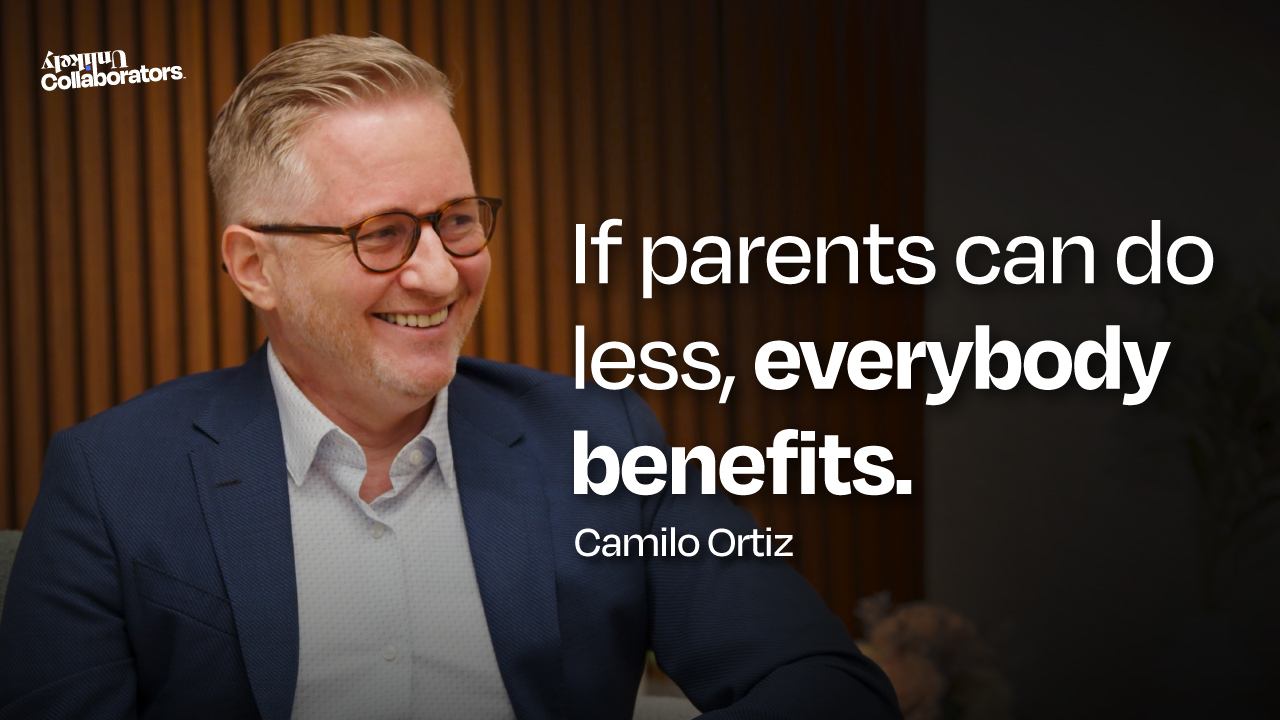
Dr. Camilo Ortiz, clinical psychologist and creator of Independence Therapy, joins hosts Dr. Heather Berlin and Dr. Christof Koch to unpack why the instinct in modern parenting is to protect kids from every risk may be backfiring. Dr. Ortiz explains how a child's Perception BoxTM starts forming almost as soon as they can speak, why parents today wildly overestimate danger despite living in the safest era on record, and how everyday tasks such as chopping vegetables, walking to the store alone can rebuild kids' confidence and resilience.
Dr. Camilo Ortiz is board-certified in behavioral and cognitive therapy. He holds an MS and PhD in Clinical Psychology from the University of Massachusetts, Amherst, and serves as a tenured associate psychology professor at Long Island University, bringing 20 years of clinical experience to his role.
Dr. Heather Berlin is a neuroscientist, clinical psychologist, and Professor of Psychiatry and Neuroscience at the Icahn School of Medicine at Mount Sinai in New York City.
Dr. Christof Koch is Chief Scientist for the Tiny Blue Dot Foundation and the current Meritorious Investigator and former President of the Allen Institute for Brain Science.
Chapters:
06:39 Independence With Guardrails
13:03 Freedom Versus Neglect
16:26 Getting Lost Builds Confidence
18:55 “When Then” Parenting
23:52 Why Parents Overprotect
28:27 Independence Therapy Basics
31:01 When Freedom Backfires
42:07 Independence Or Interference
Join us for new episodes of Science of Perception Box every Thursday. Follow the show on YouTube, Spotify, Apple Podcasts, Amazon Music, or wherever you get your podcasts.
Love Science of Perception Box? Write us a review on your podcast app, or tell a friend!
Visit unlikelycollaborators.com for more information.
.jpg)
How much of your energy is focused on trying to change people who aren't ready to change? Best-selling author and podcast host Mel Robbins joins Dr. Heather Berlin and Dr. Christof Koch to explore what happens when you stop trying to control others and start reclaiming your own life. Robbins calls it the “Let Them Theory”: a deceptively simple idea that has struck a nerve with millions worldwide who are using it to address frustration, anxiety, their need for control, and more.
Mel’s “Let Them Theory” touches on a central idea of the Perception Box, a framework developed by Elizabeth R. Koch for understanding the forces within us that shape how we see ourselves, relate to others, and move through the world.
Mel Robbins is a #1 New York Times bestselling author and host of the award-winning “Mel Robbins Podcast”, with more than 40 million followers worldwide. Her book The Let Them Theory was the top-selling nonfiction title of 2025, selling seven million copies in nine months.
Dr. Heather Berlin is a neuroscientist, clinical psychologist, and Professor of Psychiatry and Neuroscience at the Icahn School of Medicine at Mount Sinai in New York City.
Dr. Christof Koch is Chief Scientist for the Tiny Blue Dot Foundation and the current Meritorious Investigator and former President of the Allen Institute for Brain Science.
Join us for new episodes of Science of Perception Box every Thursday. Follow the show on YouTube, Spotify, Apple Podcasts, Amazon Music, or wherever you get your podcasts.
Love Science of Perception Box? Write us a review on your podcast app, or tell a friend!
Visit unlikelycollaborators.com for more information.
Chapters:
05:09 Introducing Mel Robbins
06:43 Parents And Instinct to Rescue
12:32 Helping Without Pushback
14:27 Annoying Spouse Habits
19:00 “Let Them, Let Me” Boundaries
21:03 Losing Control In Modern Life
26:01 The Cold Tea Test
27:12 Flow State Reset
28:51 Why Let Them Works
31:48 Let Them Let Me Boundaries
33:28 Radical Acceptance in Relationships
37:17 Perception Box Reflections
40:24 People Pleasing as Control
43:01 Let Them or Step In Game
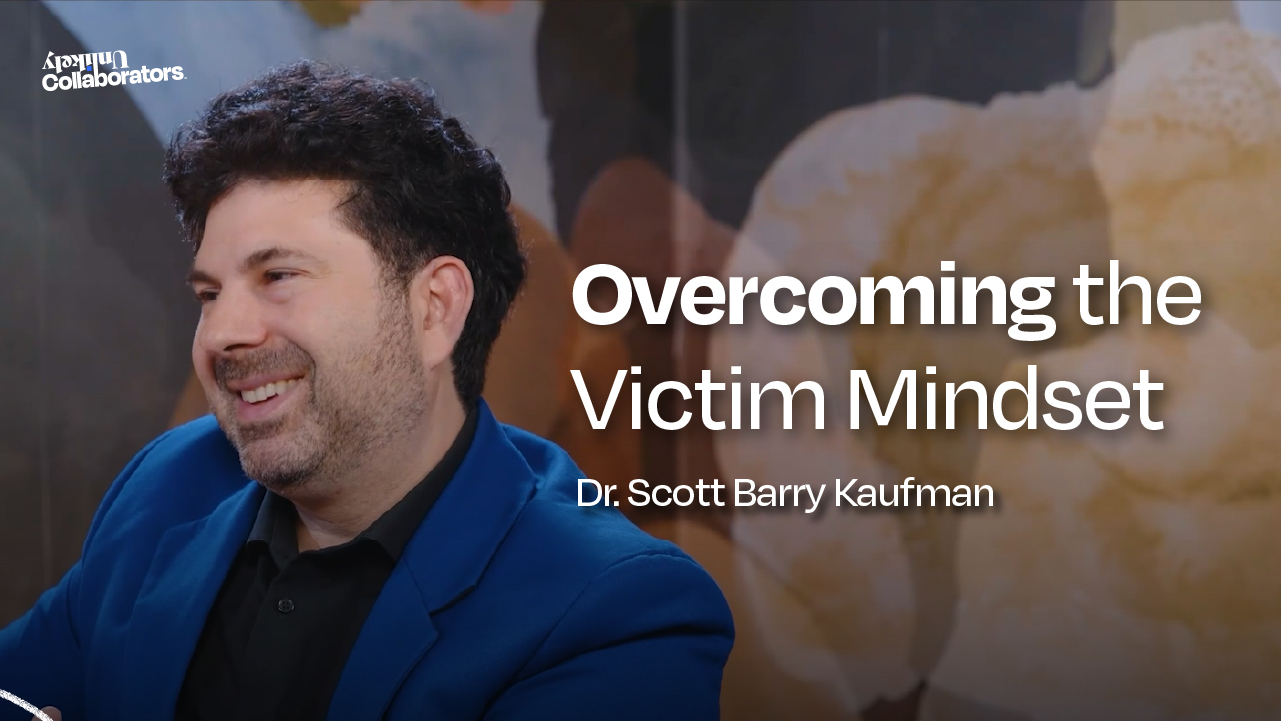
Psychologist Dr. Scott Barry Kaufman explores the difference between victimhood and victim mindset, explaining why learned helplessness is actually our default state—and how developing agency is the key to breaking free. He discusses vulnerable narcissism, the dangers of excessive accommodation, and why growth requires embracing adversity rather than avoiding discomfort. Plus: why Darth Vader is actually an example of overcoming a victim mindset. Dr. Kaufman’s exploration of the victimhood mindset reveals a central idea of the Perception Box, a framework developed by Elizabeth R. Koch for understanding the forces within us that shape how we see ourselves, relate to others, and move through the world.
Scott Barry Kaufman is a psychologist focused on untapped potential and reframing intelligence. He is a professor of psychology at Columbia University and director of the Center for Human Potential. He has written and edited 11 books, with the most recent being Rise Above: Overcome a Victim Mindset. He has written articles for widely respected publications, including The Atlantic, Scientific American, and Harvard Business Review, and he’s also the host of The Psychology Podcast. In addition to teaching at Columbia, he also taught as a professor at NYU and the University of Pennsylvania.
Dr. Heather Berlin is a neuroscientist, clinical psychologist, and Professor of Psychiatry and Neuroscience at the Icahn School of Medicine at Mount Sinai in New York City.
Dr. Christof Koch is Chief Scientist for the Tiny Blue Dot Foundation and the current Meritorious Investigator and former President of the Allen Institute for Brain Science.
Join us for new episodes every Thursday. Follow the show on YouTube, Spotify, Apple Podcasts, Amazon Music, or wherever podcasts are found.
Love the show? Write us a review on your podcast app, or tell a friend about the show.
Episode Chapters:
00:00 Opening
02:53 Defining the Victim Mindset
03:30 Rumination and Entitlement
05:42 Rethinking Learned Helplessness
08:01 Victimhood vs Victim
09:04 Empowerment Traits
09:44 Genes and Resilience
12:22 Vulnerable Narcissism Link
15:59 Escaping Emotional Victimhood
17:00 Agency Over Accommodations
19:18 Letting Kids Fail
24:56 Villain Or Victim Game
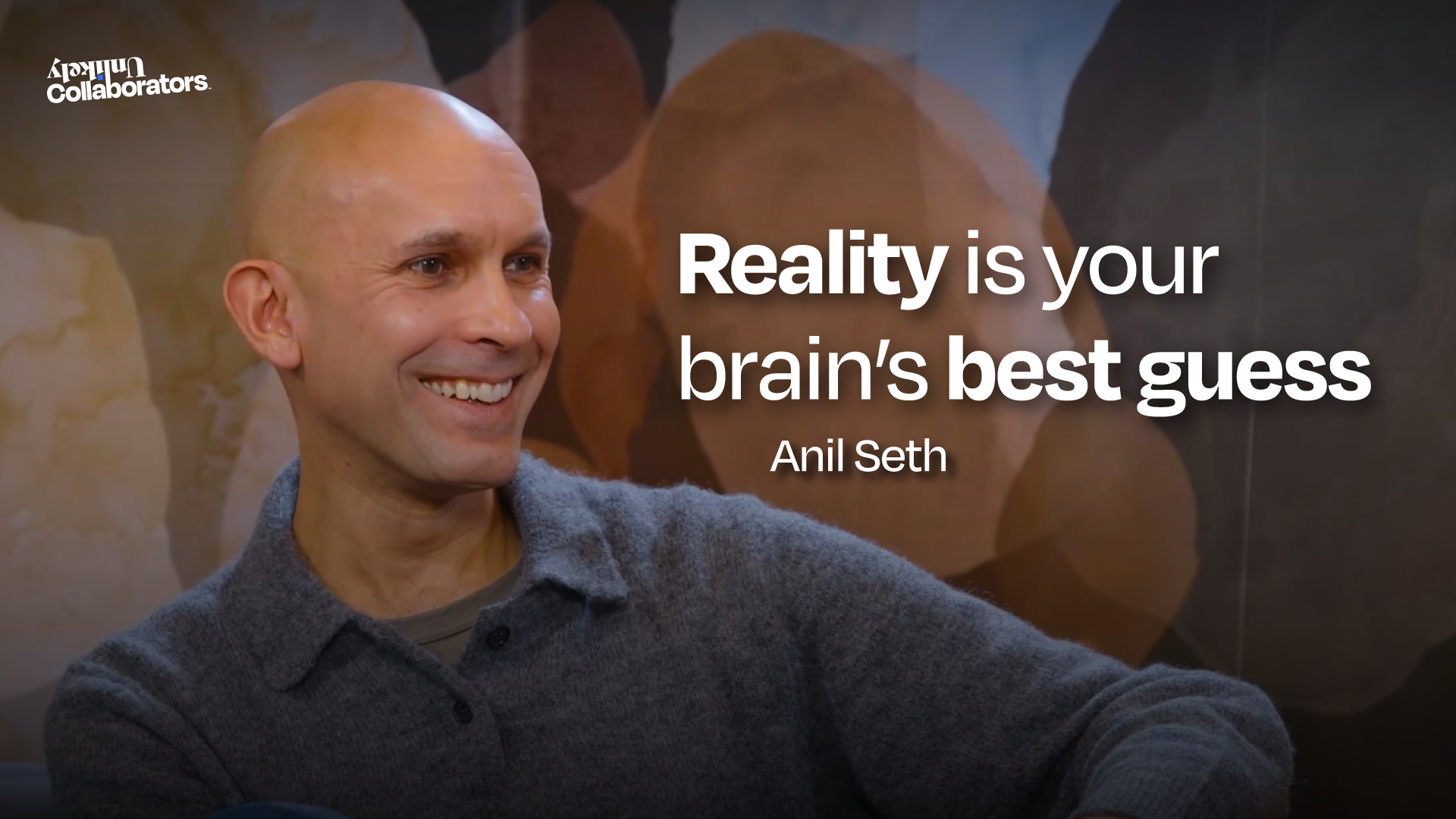
What if everything you see, hear, and feel isn't real? What if it's just your brain's best prediction of what's real? Dr. Heather Berlin and Dr. Christof Koch sat down with neuroscientist and consciousness researcher Anil Seth to explore the profound question of: What is consciousness? Seth's answer might surprise (and even unsettle) you. Consciousness isn't a window onto reality. It's a controlled hallucination constructed by your brain to make sense of a world it can never directly access. These questions of consciousness illuminate central ideas of the Perception Box, a framework developed by Elizabeth R. Koch for understanding the forces within us that shape how we see ourselves, relate to others, and move through the world.
Anil Seth is Professor of Cognitive and Computational Neuroscience and Director of the Centre for Consciousness Science at the University of Sussex. He is the author of Being You: A New Science of Consciousness and more than 200 scientific papers.
Dr. Heather Berlin is a neuroscientist, clinical psychologist, and Professor of Psychiatry and Neuroscience at the Icahn School of Medicine at Mount Sinai in New York City.
Dr. Christof Koch is Chief Scientist for the Tiny Blue Dot Foundation and the current Meritorious Investigator and former President of the Allen Institute for Brain Science.
Join us for new episodes of Science of Perception Box every Thursday. Follow the show on YouTube, Spotify, Apple Podcasts, Amazon Music, or wherever you get your podcasts.
Love Science of Perception Box? Write us a review on your podcast app, or tell a friend!
Visit unlikelycollaborators.com for more information.
Chapters:
00:00 Escaping the echo chamber
01:43 Defining consciousness
09:05 Perception as "controlled hallucination"
11:26 Why perception feels like reality (an adaptive illusion)
17:06 When perception shapes social and historical "truth"
19:03 Hallucination as uncontrolled perception
21:57 What is the self?
33:38 Intelligence vs. consciousness
35:42 Anthropomorphizing AI and "bio-chauvinism"
36:10 Biological naturalism: can AI be conscious?
39:44 Should AI be designed to seem conscious?
40:52 Perception Box question
