
Spark Salon Speaker Series
Curious minds. Brave questions. Unexpected connections.
A speaker series of short, soul-stirring gatherings designed to expand the way we see ourselves, one another, and the world around us.
Think of them as little jolts of insight—ideas, stories, and questions that nudge your thinking in unexpected directions. From mythology to mindfulness to generational tension in the workplace, each session is a chance to stretch beyond your usual lens. Some will feel expansive. Some might tenderize you. All are designed to spark something real and gently expand your Perception Box™.
Learn more at salons.unlikelycollaborators.com.


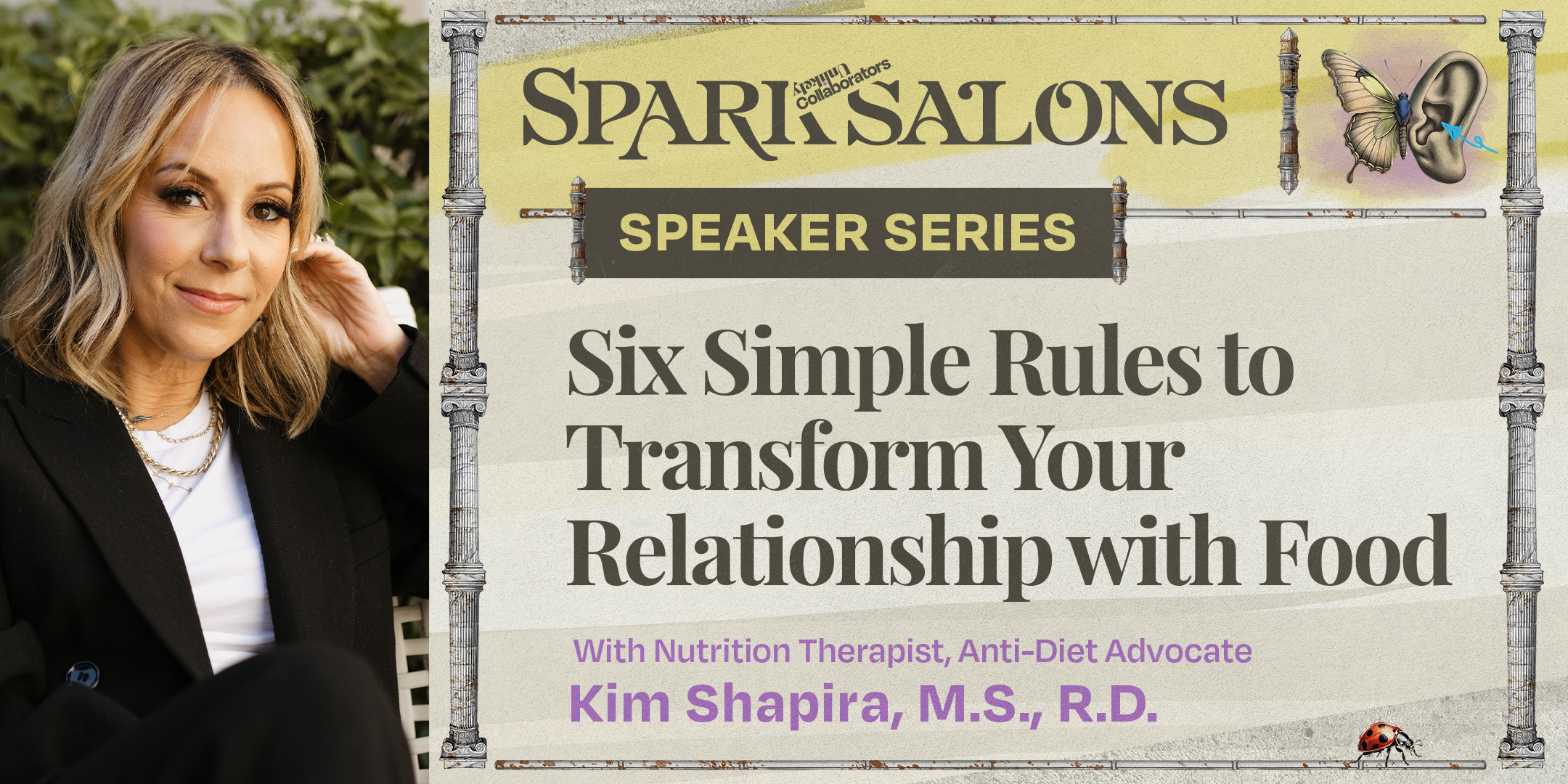
Nutrition therapist and author Kim Shapira, MS, RD, shares her transformative Six Simple Rules to Become Your Healthiest Self, based on her acclaimed book This Is What You're Really Hungry For. In this engaging session, Kim will introduce key principles from her Six Rules, guiding participants to reframe their relationship with food through science-backed strategies, self-awareness, and sustainable habits. Kim’s empowering and practical approach moves beyond restrictive diets, helping participants reconnect with their bodies, manage emotions in healthier ways, and build lasting behaviors that support physical and emotional well-being.
.jpg)
From pregame traditions to team-building exercises, rituals are intertwined in every facet of our lives. Harvard Business School professor Michael Norton, author of The Ritual Effect, shows that rituals play a role in our everyday lives: from building connections to helping us leave work behind at the end of the day. We can transform our unconscious habits into conscious productivity—and rise to challenges and opportunities like never before. Named one of WIRED’s 50 People Who Will Change the World, Michael demonstrates the power of rituals in our teams, our workplaces, our families, and even our marriages.
Michael Norton is a Harvard Business School professor whose work dives into the psychological effects of ritual. His groundbreaking research has proved the importance and flexibility of rituals in our everyday lives—they affect our feelings, thoughts, and even behaviors. Michael shows that rituals can bind us together as a community, which makes for stronger teams who coordinate and find meaning in their work, and explores the role that rituals play in our families, our friendships, and our marriages. Michael shows us the power of ritual in our personal lives and our workplaces. His groundbreaking book, The Ritual Effect, has been called “endlessly fascinating” (Dan Pink, Drive) and “an eye-opening window into why we swear by certain routines—and how we can build more enriching ones” (Adam Grant, Think Again).
Michael has also researched personal finance and spending—specifically, how to use money to get happier. Along with fellow professor Elizabeth Dunn, he’s the co-author of the book Happy Money: The Science of Happier Spending, which proved that we’re going about spending our money all wrong. With five practical principles on how to increase happiness by changing the philosophy behind spending, Happy Money is “a rare combination of informed science writing, rollicking good fun, and practical pointers for a more flourishing and compassionate life” (David G. Myers, The Pursuit of Happiness). His TEDx talk, which draws on this research, has been viewed over four million times.
Michael has appeared on National Public Radio, CBS, Fox, and MSNBC, cohosted Talking Green, a podcast on how people really interact with money, and written op-eds for The New York Times, Forbes, and The Wall Street Journal. His research has been featured in publications like Psychological Science, Journal of Consumer Research, and Journal of Marketing Research, has been covered by The Economist, The Financial Times, and The Washington Post, and has been parodied by The Onion.
Learn more about Spark Salons at salons.unlikelycollaborators.com.
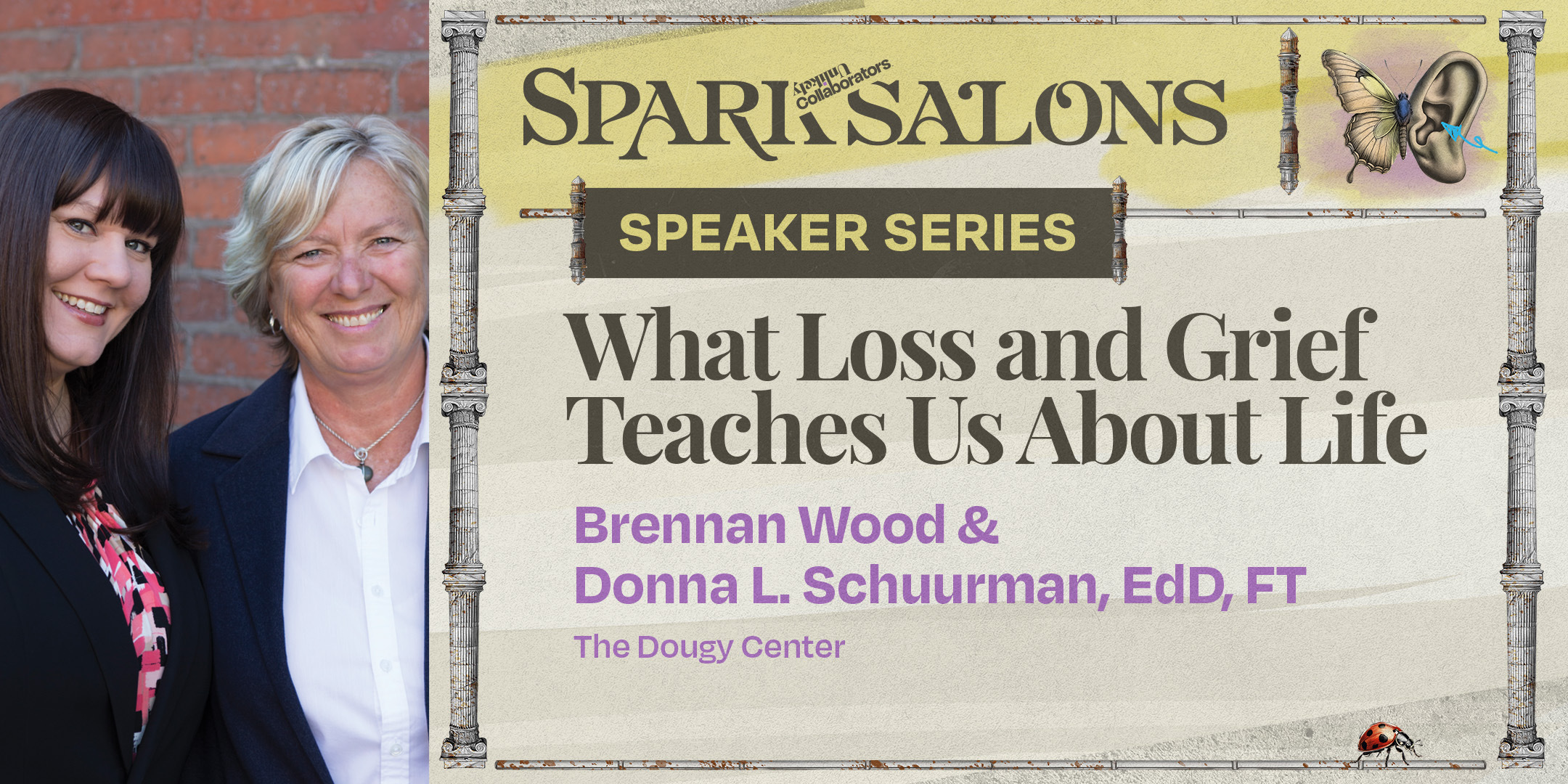
Grief transforms how we see the world, shaping identity, meaning, and connection in profound ways for all of us, especially for children and teens. In this Spark Salon, Brennan Wood, Executive Director of Dougy Center, and Dr. Donna Schuurman, Senior Director of Advocacy & Education and Executive Director Emeritus, invite us into the often-invisible narratives of kids who are grieving: how they make sense of loss, what they internalize, and the stories they carry forward. Together, they will explore the power of witnessing grief, in ourselves and others, without trying to fix it—how presence itself can be healing, and what it means to be truly “grief-informed.” Drawing from personal experience and decades of leadership in the field, Brennan and Donna will share practical reflections and hard-earned wisdom on how grief, when named and honored, can expand our understanding of resilience, empathy, and the human experience.
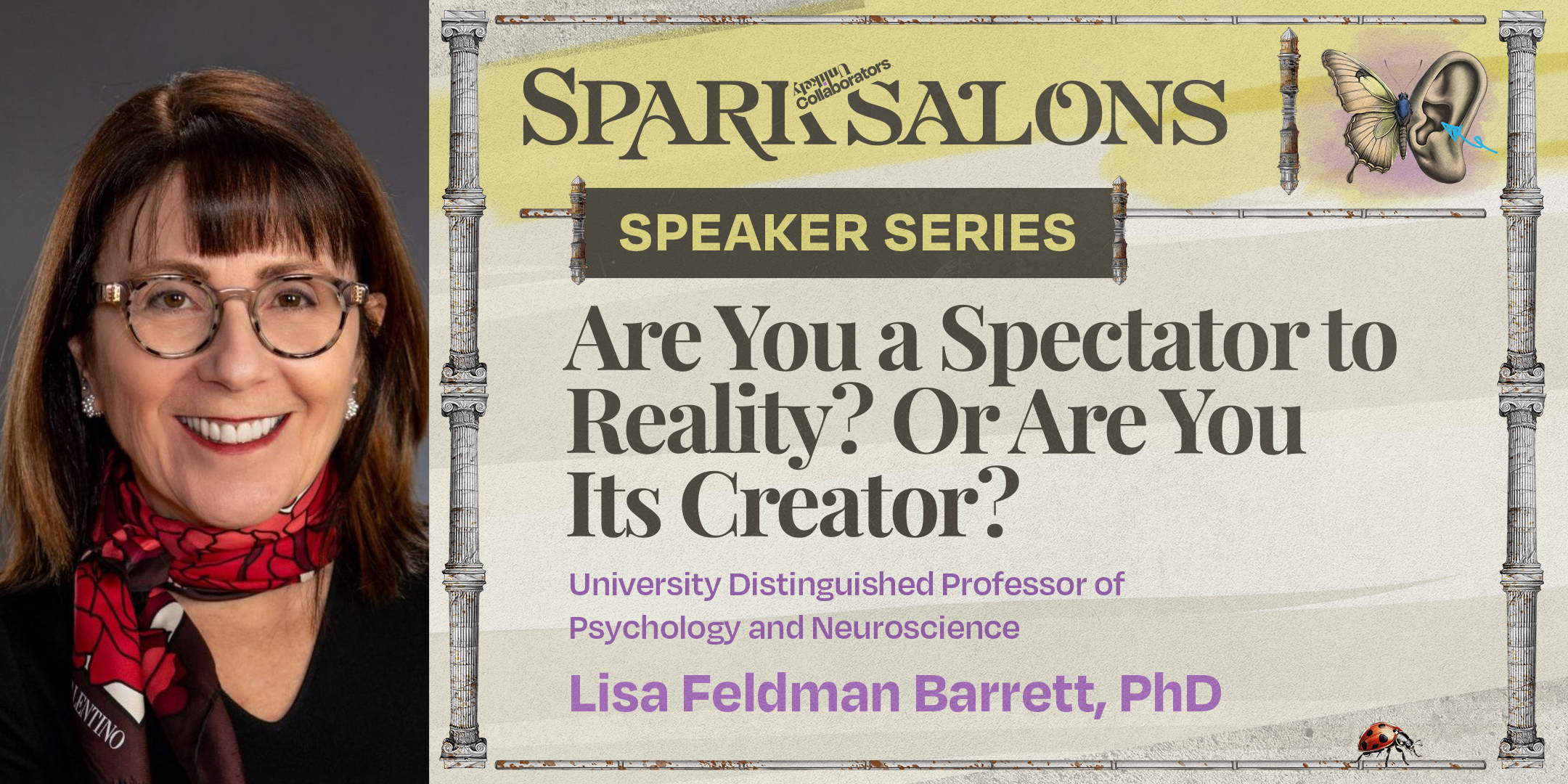
In this provocative Spark Salon, neuroscientist and best-selling author Lisa Feldman Barrett, PhD, invites us to rethink everything we believe about perception, emotion, and reality itself. Drawing on groundbreaking neuroscience, she reveals that we don’t perceive reality in a more or less objective way., Reality exists only in relation to us. Every sound, color, and feeling is an act of construction by the brain, shaped by culture, context, and memory. Through vivid examples, from a falling tree to a racing heart, Dr. Barrett shows that signals from the world and body have no inherent meaning until the brain processes them. What we experience as reality is a story our brains are constantly writing. Ultimately, she challenges us to recognize that we are not spectators of reality but its architects, with the power to expand our agency, reshape meaning, and reimagine what it means to be fully human.

Good anxiety isn’t the enemy. Good anxiety is actually your built-in superpower for focus, creativity, and connection when you learn how to harness it. In this Spark Salon, renowned neuroscientist, author, and NYU Dean Dr. Wendy Suzuki invites us to rethink our entire relationship with stress by revealing the remarkable science behind this often misunderstood emotion. Rather than something to avoid, control, or suppress, anxiety becomes a source of energy and insight when we understand the deeper purpose of our brain’s stress responses.
Drawing from her book Good Anxiety: Harnessing the Power of the Most Misunderstood Emotion, Dr. Suzuki shows us how to turn everyday stress into fuel for a stronger, more resilient, beautifully adaptive brain. By learning simple, science-backed strategies to support our brain’s natural responses, we can shift from feeling overwhelmed to feeling equipped. Ultimately, she demonstrates that anxiety isn’t something we simply have to endure. Rather, it’s something we can learn from, shape, and use to live a fuller, more grounded, and more empowered life.
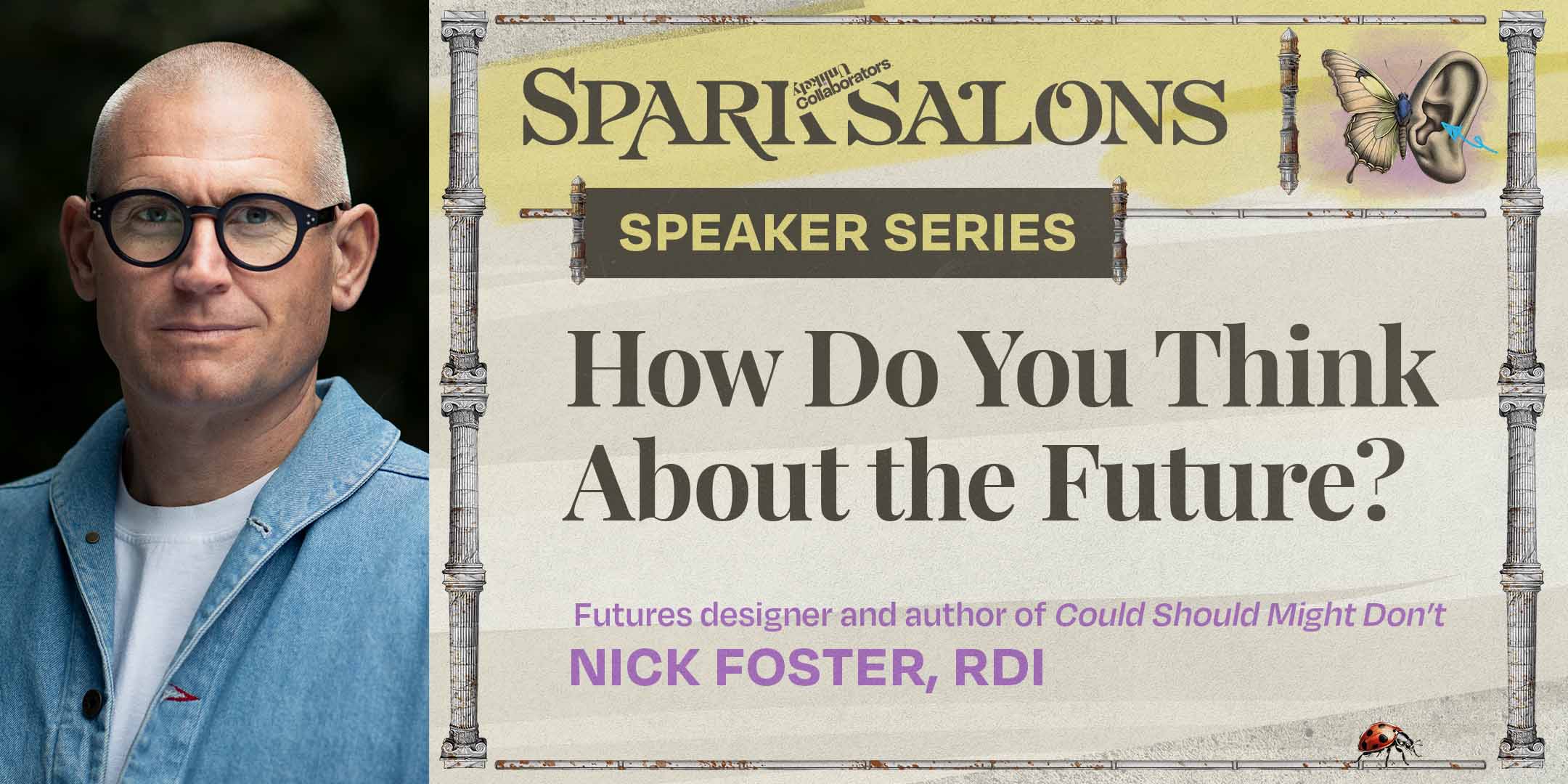
We are surrounded by bold claims about the future—what’s coming next, what’s inevitable, what we should prepare for. But what if the most important work isn’t predicting what’s ahead but understanding how we relate to it in the first place?
In this Spark Salon, futures designer and author Nick Foster invites us to turn our attention inward. Drawing from his new book, Could Should Might Don’t, Nick helps us notice the stories we carry about the future—and the quiet assumptions, habits, and mental shortcuts that shape our sense of fear, urgency, agency, and possibility. Rather than offering forecasts or frameworks, he offers something more radical: a way to see the future as an extension of the present, shaped by human choices, values, and imagination.
Nick equips audiences to become more discerning thinkers about the future—less reactive, less dazzled by hype, and more grounded in choice and care. Through sharp provocation and real-world examples, the talk brings structure to imagination and expands perspective, helping people navigate uncertainty with greater confidence.
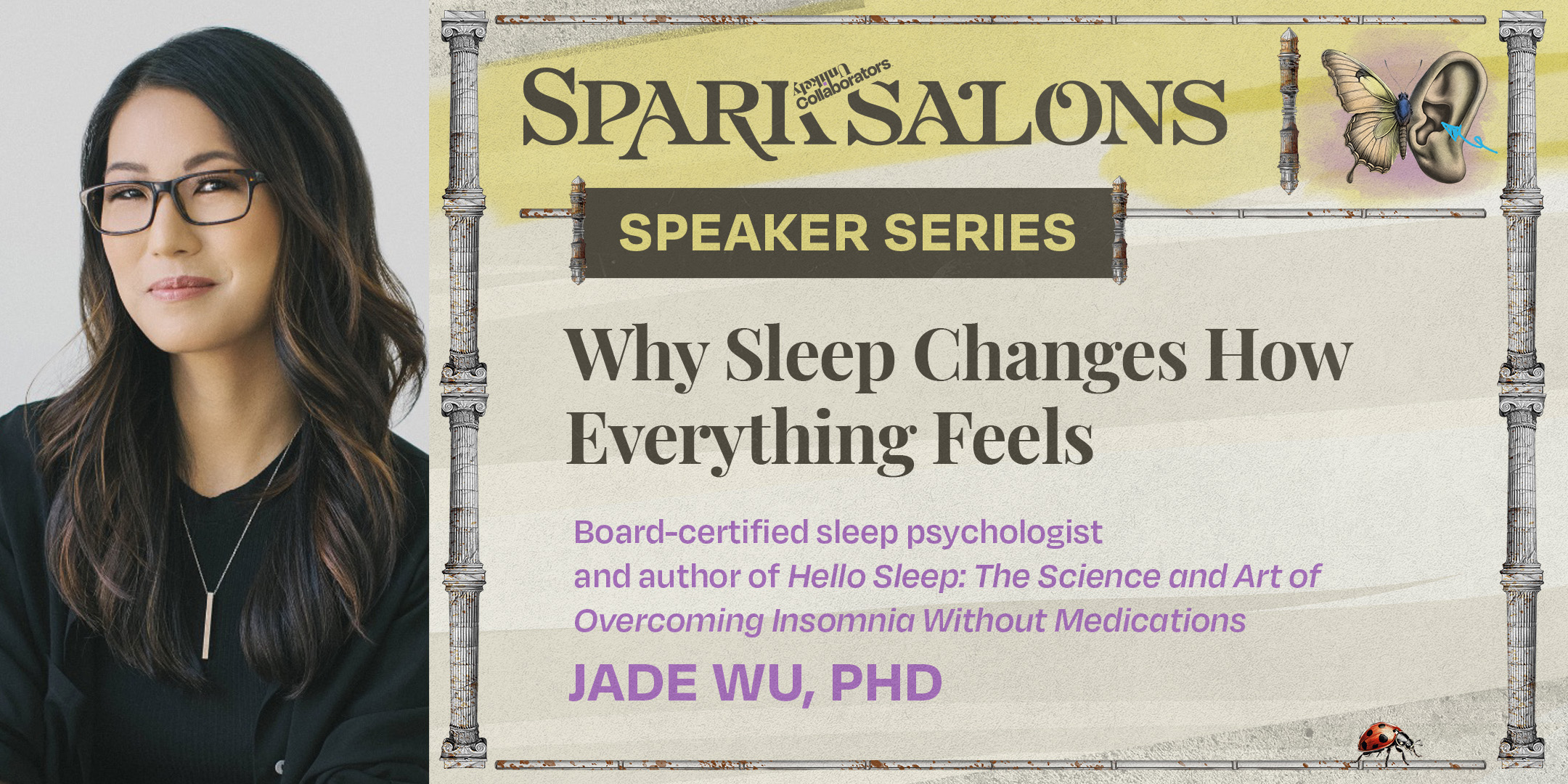
Sleep influences far more than how rested we feel. It shapes how we regulate emotion, connect with others, generate new ideas, and grow from our experiences. But even those who appreciate its importance and want to prioritize rest often find themselves struggling to reach their ideal sleep. Even gadgets, supplements, and sleep hygiene don’t seem to help in the face of life’s changes and challenges.
In this Spark Salon, board-certified sleep psychologist and author Dr. Jade Wu explores a new way to approach sleep that is intuitive and resilient—treating sleep as a relationship to nurture rather than an engineering problem to hack.
Drawing from neuroscience, clinical practice, and her work with high-performing professionals, she helps us understand how working with, instead of against, our unique sleep physiology is the foundation of steadier moods, clearer thinking, and recovery from challenge. This talk offers a grounded, humane perspective on sleep, one that moves beyond rigid rules or quick fixes and instead focuses on the malleable tools we can use to build a healthier, more sustainable relationship with rest.
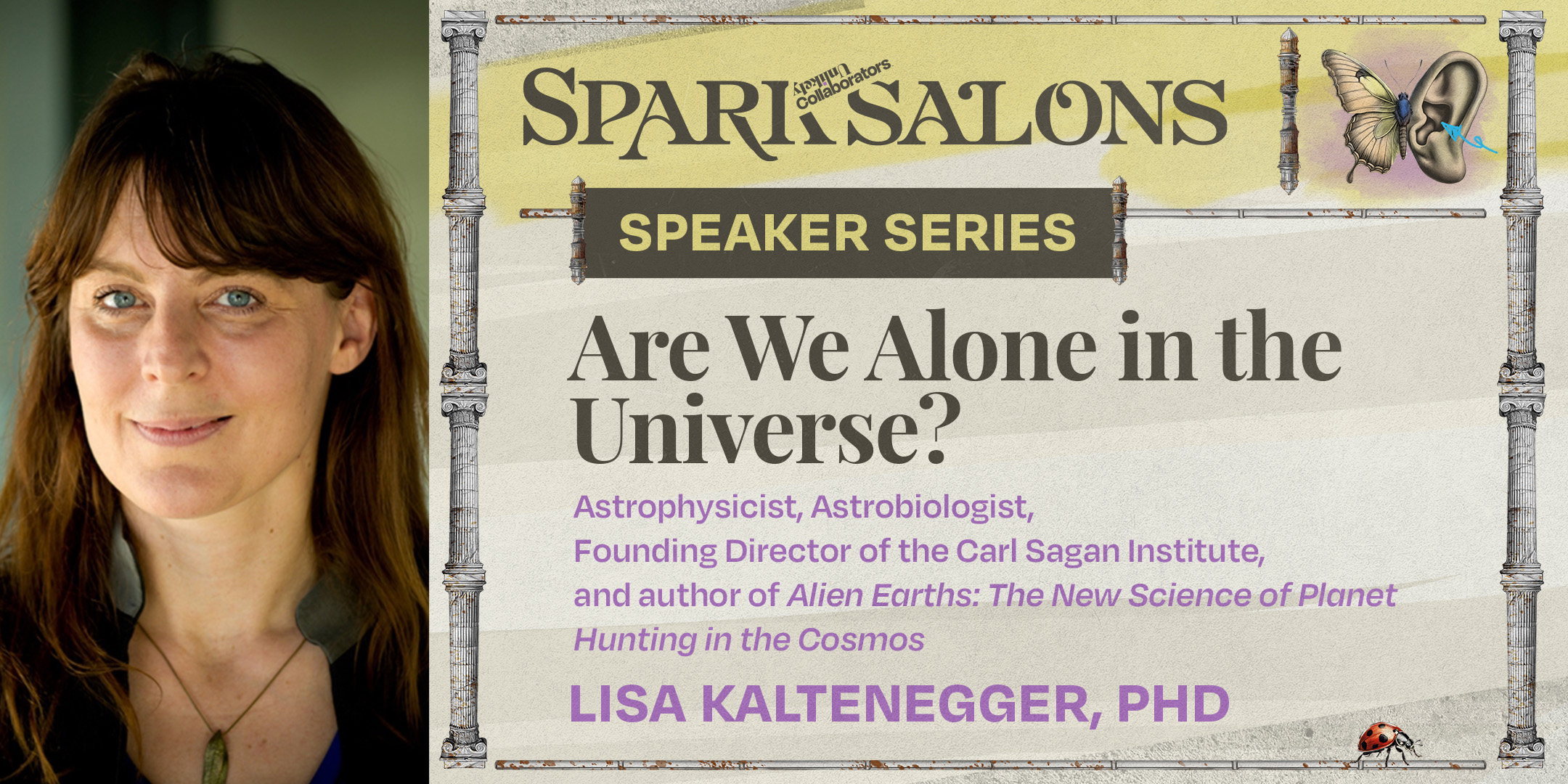
For most of human history, that question lived in myth and imagination. Today, it lives in scientific inquiry.
In this Spark Salon, astrophysicist and astrobiologist Dr. Lisa Kaltenegger, Founding Director of the Carl Sagan Institute and author of Alien Earths, takes us into the search for worlds beyond our own. As scientists explore distant planets orbiting other stars, they are not just gathering data; they are interpreting it.
What counts as life?
What makes a world “habitable”?
How do we recognize something we’ve never seen before?
The search for life beyond Earth is ultimately a search for meaning. It forces us to examine the assumptions we carry about what is normal, possible, and real.
As our view of the cosmos expands, so does our perspective on ourselves. Looking outward into the vastness of space, we may discover something equally profound about how we construct our understanding of life here at home.
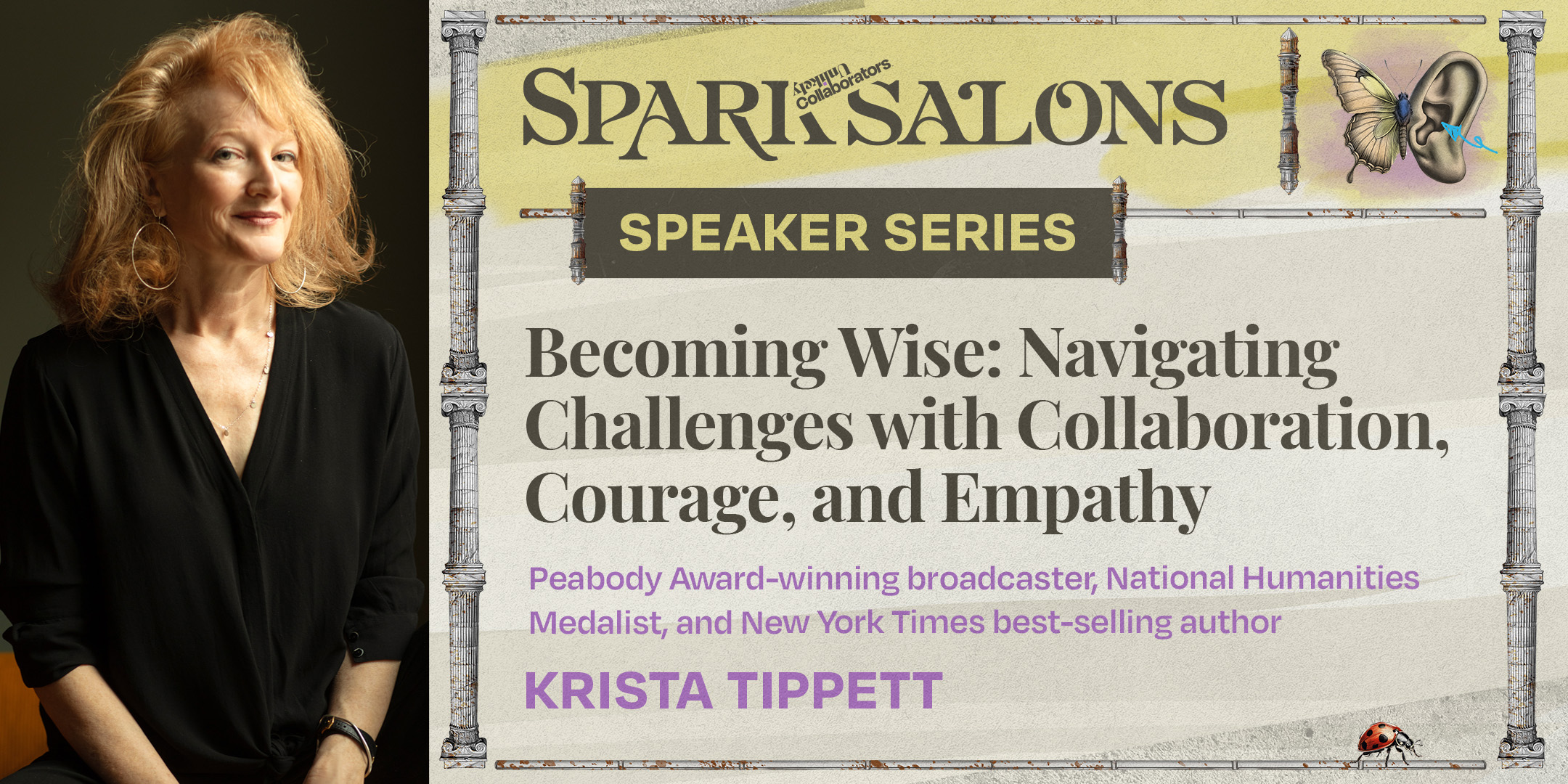
Krista Tippett has spent decades convening conversations at the intersection of spirituality, science, and the human condition. Through her work On Being, she has asked some of the most searching questions of our time: What does it mean to be human? How do we live wisely with one another across differences? What kind of inner life makes a different outer world possible?
In this Spark Salon, Krista reflects on the discipline of listening, not as politeness but as transformation. She explores how the stories we inherit, the assumptions we carry, and the meaning we make of our experiences quietly shape how we see ourselves and one another.
This conversation is not about quick fixes. It is an invitation to slow down, to widen our moral imagination, and to examine the interior patterns that shape how we show up in a fractured world. When we shift the way we listen to ourselves and to others . . . something larger becomes possible.
